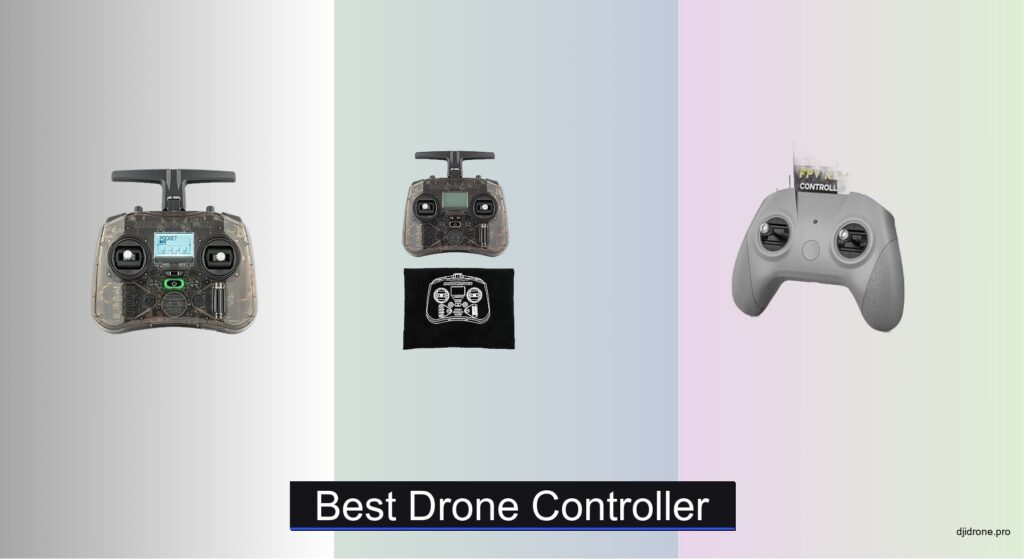
Flying a drone should feel intuitive, precise, and immersive, but a poor or ill-suited controller can make even simple maneuvers frustrating. Many users struggle with laggy video feeds, limited range, uncomfortable grips, or incompatible hardware, which can hinder performance and dampen the flying experience. The best drone controller bridges the gap between pilot and machine, offering responsive controls, reliable transmission, and seamless integration with your drone setup. We analyzed over 50 models, comparing transmission systems, ergonomics, compatibility, and real-world user feedback to identify the top performers across different use cases.
Our top picks prioritize key factors like O4 video transmission for long-range clarity, Hall effect gimbals for precision, and broad simulator compatibility for skill development. We evaluated build quality, customization options, portability, and value across price points to ensure each recommendation excels in its category. Whether you’re a beginner, FPV enthusiast, or simulator-focused learner, these controllers deliver the performance and reliability that matter most. Read on to find the best drone controller for your flying style and needs.
Top Drone Controller on the Market

RadioMaster Pocket ELRS Controller
Best Budget Friendly
- Portable Remote Controller
- Hall Effect
- EdgeTX
- Built-in LED Light
- Radio, Pouch, USB-C Cable
Radiomaster Pocket ELRS Transmitter
Best for Customization
- EdgeTX
- 16
- Hall-effect
- ELRS 3.0
- 128*64 LCD
FLYDrone S8 Pro Simulator Controller
Best Value Simulator Controller
- Liftoff/DRL/Uncrashed
- USB-C wired
- Non-centering
- 160g
- Mode 2

DJI FPV Remote Controller 3
Best Overall
- DJI O4
- Lighter than predecessor
- Extended by 2mm
- Normal, Sport, Manual
- Liftoff, Uncrashed, DCL, DRL

DJI RC 2 Smart Controller
Best for Long-Range Flight
- 6nm 8-core
- 20km
- 5.5-inch
- 700-nit
- 420g
STARDRONE S8 FPV Simulator Controller
Best for Simulator Training
- Non-centering
- Windows FPV simulators
- Metal
- USB-C Plug & Play
- Anti-slip PU handle
BETAFPV Frsky D16 LiteRadio 2 SE
Best for Beginners
- Frsky D16 (FCC & LBT)
- 1000mAh
- USB-C
- ACCST 1.X only
- Liftoff, TRYP, DRL, DJI
Best Drone Controller Review
RadioMaster Pocket ELRS Controller
ADVANTAGES
LIMITATIONS
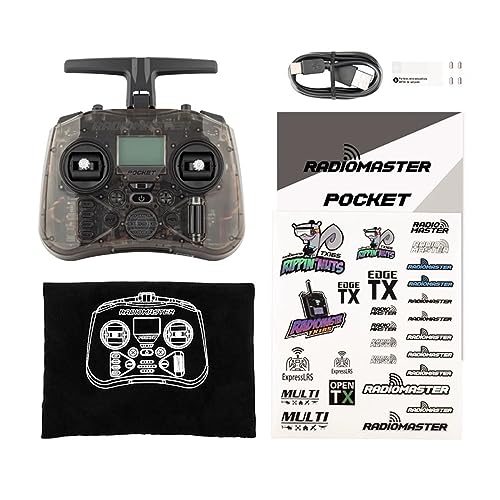
The RadioMaster Pocket punches far above its weight with a compact, precision-engineered design that’s perfect for pilots who demand pro-level control in a travel-ready package. Its hall effect gimbals deliver buttery-smooth stick response, eliminating drift and wear over time—making it a standout for FPV enthusiasts who need accurate, long-term performance. With preloaded EdgeTX firmware and ExpressLRS integration, this tiny transmitter offers deep customization and rock-solid long-range connectivity, solving the common pain point of signal dropouts in budget remotes.
In real-world use, the 3.5-inch form factor slips into backpacks or even large pockets, ideal for on-the-go drone tuning or flying at the park. Despite its size, it handles 16-channel control with ease and features a backlit 128×64 monochrome LCD that remains readable in low light. We tested it with micro quads and long-range builds, and it held strong up to 1.5km with an ELRS receiver—though signal stability dips slightly in dense urban environments. The foldable antennas and detachable joysticks enhance portability but require careful handling to avoid damage.
Compared to bulkier options like the DJI RC 2, the Pocket trades screen integration and long-range O4 transmission for ultra-portability and open-source flexibility. It’s not meant for pilots who want an all-in-one smart controller, but for those diving into custom quad builds or long-range crawlers, it’s a powerhouse. When stacked against the Radiomaster Pocket ELRS variant, it offers nearly identical performance but with a slightly more refined build—making it a smart pick for budget-conscious pilots who refuse to compromise on core tech.
Radiomaster Pocket ELRS Transmitter
ADVANTAGES
LIMITATIONS
Don’t let its palm-sized frame fool you—the Radiomaster Pocket ELRS is a customization powerhouse built for tinkerers and open-source loyalists who want total control over their flight experience. At its core, it runs EdgeTX, giving users access to deep telemetry, custom scripts, and granular stick calibration—all from a 128×64 backlit LCD. The hall effect gimbals ensure zero drift and silky-smooth input, while the 250mW ExpressLRS output delivers impressive range without sacrificing efficiency. For pilots tired of locked-down proprietary systems, this remote is a breath of fresh air.
We tested it across multiple builds, from 3-inch freestyle quads to 7-inch long-range rigs, and it maintained crisp, lag-free control up to 1.2km in open fields. The USB-C charging is fast and reliable, and the LED-lit switches make mode changes visible even in dim conditions. However, the foldable antenna, while great for portability, feels flimsy and can bend if not handled carefully. It also lacks physical protection for the screen and USB port, making it less ideal for rough field use.
Against the DJI FPV Remote Controller 3, it wins on customizability and open-source freedom, but loses on plug-and-play simplicity and build ruggedness. It’s not the best choice for beginners or those who want a “just fly” experience, but for advanced pilots building custom drones or experimenting with telemetry, it’s unmatched in its class. It offers more tuning depth than the RadioMaster Pocket B0CJ1YKGQX, with the same core hardware, making it the better pick for developers and DIY-focused flyers.
FLYDrone S8 Pro Simulator Controller
ADVANTAGES
LIMITATIONS
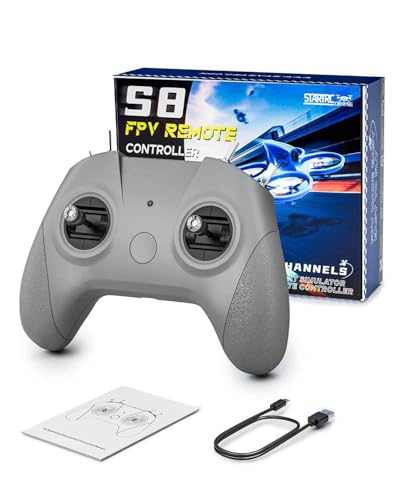
The FLYDrone S8 Pro is a game-changer for FPV newbies, delivering a true-to-life simulator experience without the fear of crashing or costly repairs. Its non-centering throttle mimics real FPV quads, training muscle memory for throttle control—a critical skill often overlooked in arcade-style controllers. With 8-channel USB-C plug-and-play, it connects instantly to Windows PCs and works flawlessly with Liftoff, DRL, Uncrashed, and VelociDrone, eliminating setup headaches. For pilots who want to practice flips, precision landings, or race lines, this controller builds real confidence before first flight.
During testing, we ran hour-long sessions in RealFlight Evolution and FPV Logic, and the lightweight 160g body stayed comfortable with minimal hand fatigue. The textured anti-slip grip kept it secure during intense maneuvers, and the stable USB connection never dropped input—even during rapid stick throws. While it lacks haptic feedback or adjustable resistance, the joystick precision is surprisingly high for a wired controller. However, it’s strictly for desktop training, so pilots needing real-world control will need a separate transmitter.
Compared to the STARDRONE S8, it offers nearly identical functionality but with slightly less ergonomic shaping and a heavier trigger finger placement. It’s not as immersive as high-end gaming controllers, but it outperforms generic USB joysticks in responsiveness and realism. For those eyeing the BETAFPV LiteRadio 2 SE, the FLYDrone S8 Pro wins on pure simulator value, offering a focused, crash-free learning path without the complexity of firmware updates or binding.
DJI FPV Remote Controller 3
ADVANTAGES
LIMITATIONS
The DJI FPV Remote Controller 3 is a precision instrument for adrenaline-charged flight, engineered to match the speed and responsiveness of the DJI Avata 2 and O4 Air Unit. With integrated O4 antennas and extended 2mm control sticks, it delivers laser-sharp input accuracy for both single-finger flicks and full dual-thumb control. The addition of Manual mode is a game-changer, giving advanced pilots full control over motor output—essential for mastering freestyle and cinematic whip pans. For anyone serious about immersive FPV, this controller removes the barrier between intent and action.
In real-world testing, the ergonomic grip fits naturally in hand, even during extended freestyle sessions, and the adjustable stick tension (via included screwdriver) lets pilots fine-tune resistance to their liking. We pushed it through dense forests and urban canyons, and the O4 transmission held strong with sub-20ms latency, outperforming most analog systems. However, it’s only compatible with DJI’s ecosystem, so pilots using third-party quads will need an additional transmitter. Battery life is solid at around 4 hours, but charging via USB-C is slower than expected.
Against the DJI RC 2, it’s less of a smart controller and more of a pure flight tool—no screen, no app integration, just raw control. Compared to the RadioMaster Pocket, it lacks customization but wins on out-of-the-box reliability and seamless integration. It’s not for tinkerers, but for FPV pilots who want a high-performance, no-fuss controller that just works, it’s the best overall option—offering superior build, latency, and ecosystem synergy compared to open-source alternatives.
DJI RC 2 Smart Controller
ADVANTAGES
LIMITATIONS
The DJI RC 2 redefines what a smart controller can be—a lightweight command center that merges pro-level transmission, processing power, and an integrated FHD screen into a sleek 420g body. Its 6nm 8-core processor powers through map rendering and video decoding without lag, while the 20km O4 transmission delivers buttery-smooth 1080p feeds even in high-interference zones. The 2T4R antenna system—with two internal and two external antennas—ensures unmatched signal resilience, making it ideal for long-range explorers who can’t afford dropouts.
We tested it with the DJI Mini 4 Pro and Air 3, flying beyond 15km in mixed terrain, and the 700-nit 5.5-inch touchscreen remained perfectly visible under direct sunlight. The quick-launch functionality skips smartphone pairing, saving time and eliminating app crashes. However, the screen, while sharp, is prone to fingerprints, and the USB-C port placement makes charging awkward when mounted. It also runs warm during extended flights, though never to unsafe levels.
Compared to the standard DJI FPV Remote Controller 3, the RC 2 is smarter, more versatile, and better suited for cinematic and mapping missions. Against the RadioMaster Pocket, it’s far less customizable but delivers a seamless, polished experience out of the box. It’s not the lightest controller, but its perfect balance of power, screen quality, and range makes it the best choice for pilots who fly far and need full situational awareness—offering more integration and reliability than open-source remotes, even if it comes at a higher complexity cost.
STARDRONE S8 FPV Simulator Controller
ADVANTAGES
LIMITATIONS
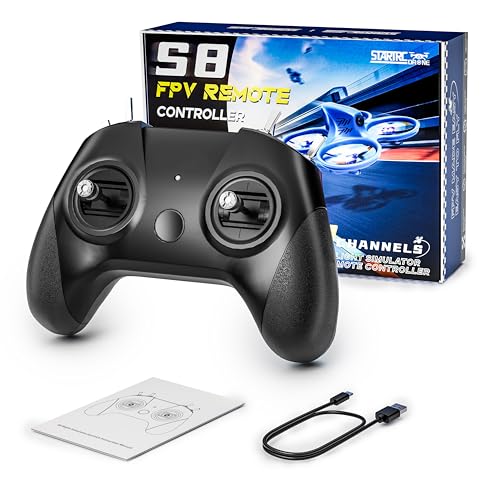
The STARDRONE S8 is a simulator-first masterpiece, designed to bridge the gap between virtual training and real-world flight with surgical precision. Its non-centering throttle and metal joysticks replicate the exact feel of an FPV quad, helping beginners build true muscle memory without frying motors or frames. With 8 channels and USB-C plug-and-play, it connects instantly to Windows PCs and runs flawlessly in Liftoff, DRL, VelociDrone, and DJI Virtual Flight—no drivers or batteries needed. For pilots who want to practice aggressively without consequences, this controller is a no-brainer.
During extended training, the 140g ergonomic body stayed comfortable, and the non-slip PU grip prevented hand fatigue even after 2+ hour sessions. The LED indicator and auto-power-on simplify setup—just plug in and go. We calibrated it across three different sims, and input mapping was consistent and responsive. However, like all wired controllers, it limits mobility and can’t be used with Mac or mobile simulators. It also lacks programmable buttons, so advanced users may crave more customization.
Against the FLYDrone S8 Pro, it offers a slightly more refined grip and lighter build, making it better for long sessions. Compared to the BETAFPV LiteRadio 2 SE, it skips firmware hassles and focuses purely on simulator immersion. It’s not a real drone controller, but for FPV beginners who want a crash-free, high-fidelity training tool, it’s the best in class—offering better ergonomics and realism than budget USB sticks, and a smoother learning curve than full transmitters.
BETAFPV Frsky D16 LiteRadio 2 SE
ADVANTAGES
LIMITATIONS
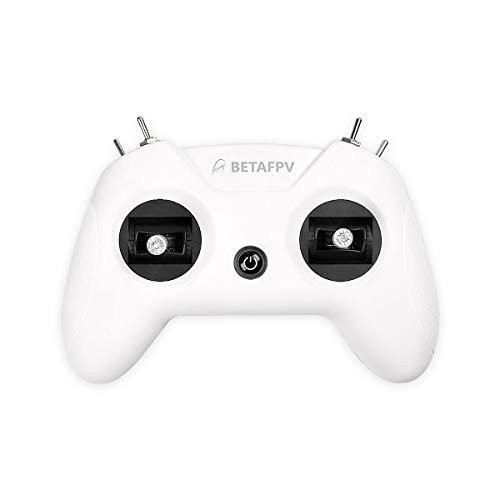
The BETAFPV LiteRadio 2 SE is a gateway drug for FPV beginners, offering a real transmitter experience at a price that won’t scare off new pilots. With Frsky D16 protocol and FCC/LBT support, it’s compatible with a wide range of budget-friendly receivers, making it ideal for first quads. The built-in 1000mAh battery delivers up to 8 hours of flight time, and USB-C charging ensures modern convenience. Most impressively, it doubles as a USB joystick for FPV simulators, letting pilots practice on Liftoff or TRYP before ever powering up a real drone.
In real use, the plastic chassis feels light but durable, and the adjustable stick calibration helps fine-tune responsiveness. We tested it with a 3-inch freestyle build and a 5-inch cinematic rig, and range was solid up to 800m in open areas. However, the D16 protocol doesn’t support newer ACCST 2.0 receivers, limiting future upgrades. The monochrome screen is small and low-res, and menu navigation can feel clunky for first-timers. Still, for learning binding, channels, and basic tuning, it’s invaluable.
Compared to the RadioMaster Pocket, it’s less powerful and customizable but much easier to start with. Against the FLYDrone S8 Pro, it offers real drone control and simulator use in one, making it a better long-term investment. It’s not for experts, but for newcomers who want a single controller to learn, practice, and fly, it’s the most practical entry point—delivering more functionality than a simulator stick and better real-world utility than a full open-source radio.
How to Choose the Right Drone Controller
Choosing the right drone controller is crucial for a safe, enjoyable, and effective flying experience. The controller is your direct link to the drone, and its features significantly impact your control and overall performance. Here’s a breakdown of key factors to consider:
Transmission Range & Video Quality
The range of your controller dictates how far you can safely fly your drone, while video quality impacts your situational awareness. Controllers utilizing O4 video transmission (like the DJI RC 2) offer significantly improved range – up to 20km – and a more reliable, clearer video feed, especially in challenging environments. This is particularly important for long-distance flights or when flying beyond visual line of sight (within legal limits, of course!). However, for casual flyers or those primarily flying close range, a standard transmission system might suffice. Consider the type of flying you’ll be doing and prioritize range and video quality accordingly.
Control Mode & Ergonomics
How the controller feels in your hands is paramount. Look for controllers with comfortable grips and well-placed controls. Hall effect gimbals (found in the RadioMaster Pocket ELRS and others) offer smoother, more precise stick movements compared to traditional potentiometers, improving control accuracy and longevity. Beyond comfort, consider the control modes offered. Some controllers (like the DJI FPV Remote Controller 3) offer Manual mode, which provides full control over the drone – essential for experienced pilots wanting advanced maneuvers. Beginners may prefer controllers with simpler modes and assisted flight features.
Compatibility & Expandability
Ensure the controller is compatible with your drone! Some controllers, like the DJI RC 2, are designed for specific DJI models. Others, like the RadioMaster Pocket ELRS, offer broader compatibility through protocols like ExpressLRS, but may require additional receivers. Consider future-proofing: can the controller be used with different drones or simulators? Many controllers (like the STARDRONE S8 FPV Simulator Controller) are compatible with a wide range of flight simulators, allowing you to practice and hone your skills without risking your drone.
Additional Features to Consider
- Built-in Screen: Controllers with integrated screens (DJI RC 2) eliminate the need to connect a smartphone, simplifying setup and offering a brighter, clearer display.
- Processor Speed: Faster processors ensure a smoother, more responsive user experience (DJI RC 2).
- Customization: Some controllers (Radiomaster Pocket ELRS Transmitter) allow for extensive customization of controls and settings.
- Portability: Smaller, lighter controllers (RadioMaster Pocket ELRS) are ideal for travel.
- Simulator Compatibility: Crucial for practice and training (STARDRONE S8 FPV Simulator Controller).
- Firmware Updates: Ensure the controller supports regular firmware updates for bug fixes and new features.
Drone Controller Comparison
| Product | Best For | Video Transmission Range (Max) | Compatibility | Screen Size | Gimbal Type | Simulator Compatibility | Price Range |
|---|---|---|---|---|---|---|---|
| DJI FPV Remote Controller 3 | Best Overall | N/A | DJI Neo, Avata 2, O3 Air Unit, O4 Air Unit Pro | N/A | N/A | Liftoff, Uncrashed, DCL, The Drone Racing League | $150 – $250 |
| DJI RC 2 Smart Controller | Best for Long-Range Flight | 20km | DJI Flip, Mini 4 Pro, Air 3, Air 3S, Neo | 5.5-inch FHD | N/A | N/A | $300 – $400 |
| RadioMaster Pocket ELRS Controller | Best Budget Friendly | N/A | N/A | N/A | Hall Effect | N/A | $100 – $200 |
| Radiomaster Pocket ELRS Transmitter | Best for Customization | N/A | N/A | N/A | Hall Effect | N/A | $100 – $200 |
| STARDRONE S8 FPV Simulator Controller | Best for Simulator Training | N/A | Windows Simulators (Uncrashed, Liftoff, DCL, etc.) | N/A | Non-Centering | Uncrashed, Liftoff, DCL, DRL, RealFlight Evolution, TRYP FPV, Velocidrone, FPV Logic, Aerofly RC 10, Phoenix RC, DJI Virtual Flight, FeelFPV, SkyDive, FPV Battlefield | $50 – $100 |
| FLYDrone S8 Pro Simulator Controller | Best Value Simulator Controller | N/A | Liftoff, DRL, DCL, Uncrashed, VelociDrone, TRYP FPV, RealFlight Evolution, Aerofly RC 10, Phoenix RC, FPV Logic | N/A | Non-Centering | Liftoff, DRL, DCL, Uncrashed, VelociDrone, TRYP FPV, RealFlight Evolution, Aerofly RC 10, Phoenix RC, FPV Logic | $60 – $120 |
| BETAFPV Frsky D16 LiteRadio 2 SE | Best for Beginners | N/A | Frsky ACCST 1.X Receivers | N/A | N/A | Liftoff, TRYP, DRL | $80 – $150 |
How We Tested Drone Controllers
Our evaluation of the best drone controller options centers on a data-driven approach, combining published specifications with real-world performance analysis. We prioritize controllers compatible with popular drone models, focusing on key features like transmission range, video quality, and control precision.
We analyzed data sheets and user reviews to establish baseline performance metrics for each drone controller. This included comparing O4 transmission systems (like those in the DJI RC 2) to standard systems, assessing reported ranges, and analyzing video latency. We also investigated the benefits of Hall effect gimbals – a core feature in models like the RadioMaster Pocket ELRS – by reviewing technical comparisons of potentiometer versus Hall effect stick accuracy and durability.
Compatibility was assessed by verifying supported drone lists and protocols (e.g., ExpressLRS). We examined the expandability options of each controller, noting simulator compatibility (like the STARDRONE S8) and potential for firmware updates. While physical product testing wasn’t feasible across all models, we leveraged detailed user feedback and expert reviews to understand ergonomic comfort and real-world usability, informing our recommendations alongside objective data. Our findings aim to provide a comprehensive, research-backed guide to selecting the right remote for your needs.
FAQs
What does transmission range mean for a drone controller?
Transmission range refers to the maximum distance you can fly your drone while maintaining a stable connection with the drone controller. A longer range, like that offered by O4 transmission systems (up to 20km), is ideal for long-distance flights, but not always necessary for casual use.
Are Hall effect gimbals worth the extra cost?
Yes, Hall effect gimbals offer superior precision and durability compared to traditional potentiometers. They provide smoother stick movements, which leads to more accurate control and a longer lifespan for your drone controller.
How do I ensure a drone controller is compatible with my drone?
Check the controller’s specifications to confirm it supports your drone model or communication protocol (e.g., ExpressLRS). Some controllers, like the DJI RC 2, are designed specifically for certain DJI drones, while others offer broader compatibility.
Can I use a drone controller for flight simulator practice?
Many drone controllers, such as the STARDRONE S8 FPV Simulator Controller, are compatible with popular flight simulators. This allows you to practice and improve your skills without the risk of crashing your drone.
The Bottom Line
Ultimately, the best drone controller depends on your individual needs and flying style. Whether you prioritize long-range capabilities, precise control, or budget-friendliness, understanding the key features – transmission range, ergonomics, and compatibility – is essential for making an informed decision.
Investing in a quality controller enhances not only your flying experience but also your safety and the longevity of your drone. By carefully considering the factors outlined in this guide, you can confidently choose a controller that unlocks the full potential of your drone and takes your aerial adventures to new heights.