Your RC car sits in the corner of your workshop, covered in a thin layer of dust after your last run. You’re excited to take it out again next weekend, but when you power it on, something feels off—the steering is sluggish, the motor sounds strained, and that perfect handling you remember is gone. This common scenario happens to RC enthusiasts who don’t follow proper storage protocols. Knowing the best way to store RC cars properly between adventures is crucial for maintaining peak performance and extending your investment’s lifespan. Whether you’re a weekend hobbyist with a single vehicle or a serious collector with multiple models, implementing these storage techniques will keep your RC cars ready to perform at their best whenever you’re ready to race or bash.
Improper storage accounts for more RC car damage than most enthusiasts realize—dust infiltration, battery degradation, and component warping can silently destroy your vehicle’s performance while it sits idle. In this guide, you’ll discover the exact storage protocols professional RC racers use to keep their vehicles competition-ready, even after months in storage. You’ll learn specific techniques for different RC types (on-road, off-road, crawlers), proper battery handling procedures that prevent dangerous swelling, and affordable storage solutions that outperform expensive commercial options.
Essential Pre-Storage Cleaning Process for Peak Performance
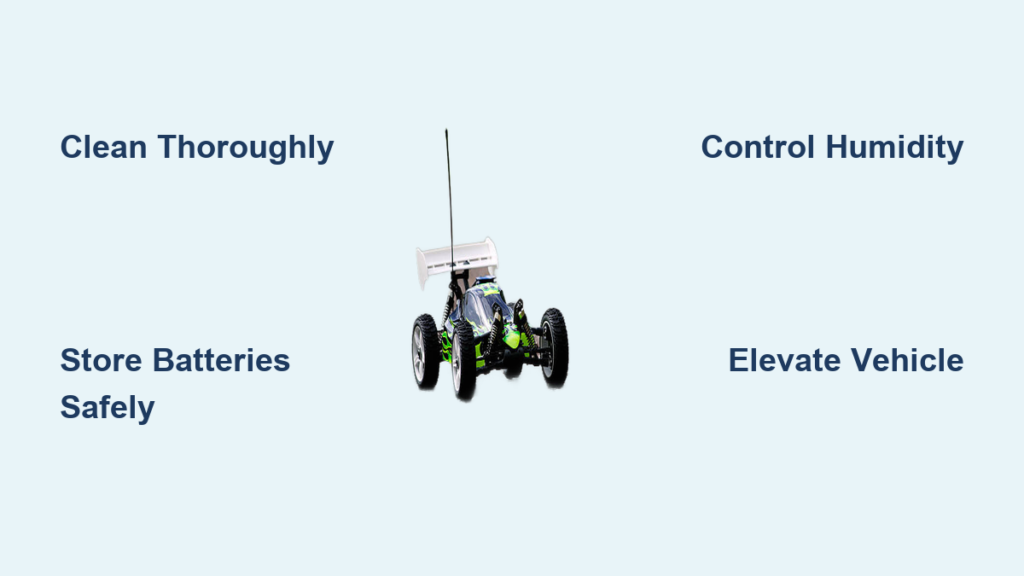
Before your RC car enters storage, thorough cleaning separates enthusiasts who maintain pristine vehicles from those constantly replacing parts. Dirt and debris left on your vehicle during storage act like sandpaper, slowly wearing down critical components even when the car sits idle.
Complete Post-Run Cleaning Protocol
Begin cleaning immediately after your last run while dirt is still damp—it removes more easily than when dried. Start by removing the body shell and setting it aside in a safe location. Use compressed air (maximum 30 PSI) to blast out sand, grass, and water from hard-to-reach areas around the motor, servo, and suspension components. For stubborn mud, use a soft brush with mild soapy water—never high-pressure water which forces contaminants into bearings and electronics.
Focus special attention on the drivetrain: remove the driveshafts and clean the universal joints thoroughly, as dried mud here causes binding and premature wear. Inspect all bearings for grit; if they don’t spin freely after cleaning, replace them before storage. Pay particular attention to the differential—any grit left inside will destroy the gears over time.
Drying Techniques That Prevent Corrosion
Never store your RC car while damp—moisture causes rust on steel components and corrosion on electrical contacts. After cleaning, disassemble critical areas like the motor, electronics compartment, and differentials to allow complete air circulation. Place the vehicle in a warm, dry area (not direct sunlight) for at least 24 hours. For faster drying, use a fan on low setting directed at the vehicle from 2 feet away—never use heat guns or hair dryers which can melt plastic components.
Pro tip: Place silica gel packets near metal components like shocks, screws, and drive shafts before final storage. These moisture absorbers prevent the “mystery rust” that appears after months in storage, especially in humid climates.
Optimal Battery Storage Methods to Prevent Damage and Hazards

Improper battery storage causes more RC car damage—and potential fire hazards—than any other storage mistake. Understanding how to store your power source properly isn’t just about performance; it’s a critical safety issue.
LiPo Battery Storage Guidelines Every RC Owner Must Follow
LiPo batteries require specific storage protocols to maintain capacity and prevent dangerous swelling. Never store LiPo batteries fully charged or completely drained—maintain a storage voltage of 3.8V per cell (approximately 50% charge). Most modern RC chargers have a dedicated “storage” mode that automatically adjusts to this optimal level.
Store LiPo batteries in fireproof containers specifically designed for RC use—never in regular plastic bins or cardboard boxes. Keep them in a cool, dry place between 40-70°F (4-21°C); extreme temperatures accelerate capacity loss. Check stored batteries monthly for swelling or damage; discard any battery showing physical deformation immediately using proper disposal procedures.
NiMH and Other Battery Types: Special Considerations
While less volatile than LiPos, NiMH batteries also require proper storage techniques. Fully discharge these batteries before long-term storage (most modern chargers have a discharge function), then store them at room temperature. Unlike LiPos, NiMH batteries perform better when stored fully discharged rather than partially charged.
For all battery types, remove them from the vehicle before storage. Leaving batteries connected allows slow discharge through the electronic speed controller, potentially damaging both components. Wrap battery connectors in electrical tape to prevent accidental short circuits during storage.
Ideal Storage Environment Conditions for RC Vehicles

The location where you store your RC cars dramatically impacts their longevity and readiness for your next run. Many enthusiasts unknowingly damage their vehicles by choosing convenient but inappropriate storage locations.
Temperature and Humidity Control Essentials
RC cars perform best when stored in stable environments between 60-75°F (15-24°C) with humidity below 50%. Avoid garages, sheds, or basements with significant temperature fluctuations—these cause condensation inside components when temperatures change. During summer months, extreme heat softens plastic parts causing them to warp; in winter, cold temperatures make plastics brittle and prone to cracking.
If you live in a humid climate, include a small dehumidifier in your storage area or use moisture-absorbing products like DampRid. For valuable collection vehicles, consider climate-controlled storage solutions that maintain consistent conditions year-round.
Proper Positioning to Prevent Component Damage
How you position your RC car during storage affects multiple components. Never store vehicles on their wheels for extended periods—this puts constant pressure on tires, suspension components, and drivetrain, causing flat spots and binding. Instead, elevate the vehicle using a storage stand or blocks that support the chassis without compressing suspension.
For vehicles with oil-filled shocks, store them upright to prevent oil migration. If storing long-term (more than 3 months), partially disassemble suspension components to relieve spring tension, preventing permanent set in the springs. Remove tires from wheels if storing for more than 6 months to prevent tire deformation.
Long-Term Storage Solutions for Seasonal RC Enthusiasts
For hobbyists who only run RC cars seasonally, proper long-term storage techniques become critical. Vehicles stored improperly over winter often require extensive repairs before they’re race-ready again.
Comprehensive Pre-Winterization Checklist
Before putting your RC car away for months, complete these critical steps:
– Clean thoroughly as described in section one
– Apply light lubrication to metal components prone to rust
– Remove and properly store all batteries
– Loosen any belts or rubber components under tension
– Place moisture absorbers inside the electronics compartment
– Store in a rigid container with ventilation holes
For nitro-powered vehicles, drain all fuel from the tank, lines, and engine—old fuel varnishes and clogs critical components. Electric vehicles need special attention to electronic speed controllers; remove them if possible for separate storage in anti-static bags.
Spring Revival Procedures for Perfect Post-Storage Performance
When you retrieve your RC car from long-term storage, don’t just power it on immediately. First, inspect all components for moisture damage or pest intrusion. Re-lubricate moving parts as original lubricants may have dried out. Check all screws and fasteners—they often work loose during storage due to temperature changes.
Perform a complete systems check before your first run: test steering, throttle response, and braking without the motor running. Then conduct a brief low-speed test run in a controlled environment to verify everything functions properly before pushing the vehicle to its limits.
Budget-Friendly Storage Systems That Outperform Commercial Solutions

You don’t need expensive custom storage to properly protect your RC vehicles. These DIY solutions provide superior protection at a fraction of commercial system costs.
Garage Wall Storage System for Multiple Vehicles
Install heavy-duty shelving with individual compartments sized for your specific RC models. Line shelves with anti-static mats to protect electronics. For elevated storage, build simple wall-mounted brackets that support the chassis without compressing suspension. Include dedicated bins for batteries, tools, and spare parts—all clearly labeled for quick access.
The key advantage of this system is visibility—you can immediately see the condition of each vehicle without unpacking. Add small LED task lights to illuminate each shelf for quick pre-run inspections.
Travel Case Repurposing for Safe Storage
RC vehicle travel cases make excellent storage containers when not in use for transport. Remove the foam inserts and replace with custom-cut EVA foam that holds your vehicle securely without pressure points. Add compartments for batteries (in their fireproof bags) and essential tools. These cases provide excellent protection from dust while allowing some air circulation.
For maximum protection, store these cases inside a larger plastic bin with a tight-fitting lid containing moisture absorbers—this creates a microclimate that protects against humidity fluctuations.
Final Note: Implementing these storage techniques ensures your RC cars maintain peak performance between runs while significantly extending their operational lifespan. Remember that proper storage isn’t just about preventing damage—it’s about preserving your investment and ensuring maximum enjoyment from your hobby. Before your next storage period, complete the pre-storage cleaning checklist, verify your battery storage protocols, and confirm your storage environment meets optimal conditions. These simple steps transform frustrating “why isn’t my RC car performing” moments into seamless transitions from storage to high-performance operation. For serious RC enthusiasts, proper storage isn’t optional—it’s the foundation of a sustainable, enjoyable hobby experience.