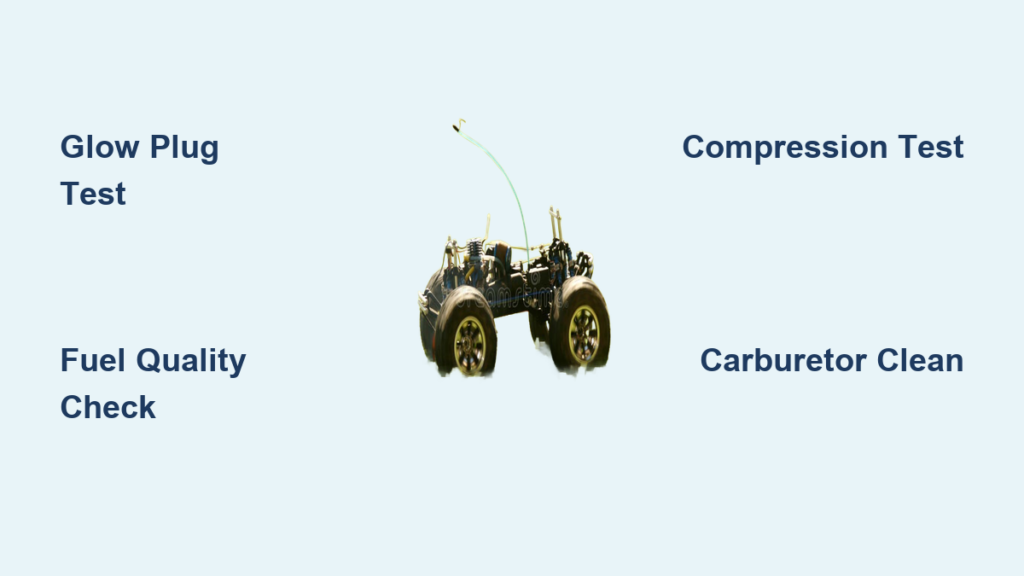
Your RC nitro car sits silent on the track while competitors rev their engines, and that frustrating “why won’t it start?” feeling creeps in. Unlike electric RC cars that fire up instantly, nitro-powered vehicles require precise coordination of fuel delivery, ignition systems, and mechanical components. When any one element fails, your thrilling nitro experience grinds to a halt. Understanding RC nitro car starting problems transforms frustrating moments into manageable fixes that get you back on the track faster.
Nitro engines rely on glow plug ignition rather than traditional spark ignition, creating unique failure points. The glow plug must reach specific temperatures to ignite the fuel-air mixture, and any disruption prevents combustion. Beyond ignition, fuel quality, carburetor settings, compression, and environmental conditions all influence whether your engine fires on the first pull. This guide provides actionable solutions to diagnose and fix these common RC nitro car starting problems.
Diagnose Glow Plug Failures

A failing glow plug causes more starting problems than any other single component in your nitro system. This tiny platinum-based element must reach temperatures exceeding 1,000 degrees Celsius to initiate combustion, and when it degrades, your engine won’t fire regardless of other systems’ condition.
Test Glow Plug Performance
Standard copper-core glow plugs typically last 2-4 hours of runtime before performance degrades, while premium iridium variants may last 8-12 hours. Weak plugs show as extended cranking times, intermittent firing, or complete failure to ignite despite fresh battery power. Don’t rely solely on visual inspection—what looks “orange enough” to beginners may actually be marginal. Use a dedicated glow plug tester that simulates actual operating conditions to reveal weak plugs that pass visual checks but fail under load. Carbon deposits from low-quality fuel or silicone-based after-run oils can insulate the heating element, requiring either careful cleaning or replacement.
Check Glow Plug Battery and Connections
Your glow plug battery must deliver sufficient current to rapidly heat the ignition element—insufficient voltage prevents proper ignition even with a good glow plug. Test batteries regularly with a multimeter to verify they maintain voltage under load, especially in cold conditions where battery performance naturally diminishes. Inspect alligator clips for spring tension loss and clean connector terminals to remove oxidation that introduces resistance. Some hobbyists upgrade to high-current connectors or implement dedicated glow plug circuits with heavier gauge wiring to minimize voltage drop during ignition.
Verify Glow Plug Installation
Proper glow plug installation requires specific torque (15-20 inch-pounds) to maintain compression integrity. Over-tightening cracks the glow plug body or strips threads, while under-tightening allows compression leakage. Use appropriate thread sealants only on the threads—excess material entering the combustion chamber contaminates the glow plug. Match the glow plug heat range to your engine specifications and operating conditions: cold-range plugs with shorter tips work better for high-compression engines or cold weather, while hot-range plugs with longer tips suit lower-compression applications or extreme heat.
Fix Fuel System Problems
Your nitro engine requires precise fuel delivery for combustion, and disruptions in this delivery create common starting difficulties that frustrate even experienced hobbyists.
Evaluate Fuel Quality and Composition
Nitro fuel contains methanol, nitromethane (10-30%), and lubricating oils (16-25%). Fuel with nitromethane below your engine’s minimum creates starting difficulties due to insufficient volatility, while excessive nitromethane leads to overly rich mixtures that flood the engine. Castor-based oils provide excellent lubrication but leave stubborn carbon deposits, while synthetics burn cleaner but may not offer equivalent protection. Store fuel in climate-controlled environments, use fuel filters during filling, and replace fuel stored for extended periods—methanol absorbs moisture from humid air, degrading performance.
Clean and Adjust the Carburetor
The carburetor’s idle circuit most significantly impacts starting behavior since the engine operates in this regime during cranking. Residue from fuel components accumulates in passages over time, restricting flow and creating lean conditions that prevent ignition. Regular carburetor cleaning using specialized solvents maintains fuel system integrity. Incorrect high-speed needle valve settings directly influence starting mixture strength—an overly lean setting prevents adequate fuel delivery during starting. Many carburetors feature separate idle mixture screws that require proper adjustment even when the high-speed circuit is correctly configured.
Inspect Fuel Lines and Tank
Air leaks in fuel line connections, tank cap, or tank body disrupt consistent fuel delivery, causing intermittent fuel supply that manifests as sputtering, stalling, or complete starting failure. Inspect all connections and use appropriate fuel-resistant tubing secured with clamps. Vent systems that become clogged restrict airflow into the tank as fuel level decreases, creating vacuum conditions that impede fuel flow. Ensure adequate fuel level above the pickup tube to prevent fuel slosh from uncovering it during clutch engagement.
Repair Engine Mechanical Issues
Mechanical problems within the engine itself can prevent starting even when ignition and fuel systems function perfectly.
Test and Restore Compression
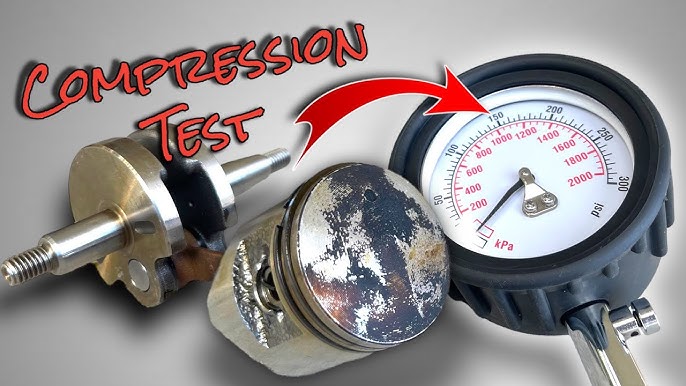
Perform a compression test by removing the glow plug and rotating the engine while covering the hole with your thumb. Healthy engines typically develop 80-120 PSI (5.5-8.3 bar). Gradual piston ring wear creates compression leakage past the rings, reducing peak pressure during compression. Ring replacement combined with cylinder inspection restores compression to specification. Head gasket integrity affects compression at the cylinder-head interface—any compromise allows leakage that prevents proper combustion.
Inspect Pull Start Mechanism
Pull start problems manifest as inability to engage the engine, slipping during cranking, or failure to rotate smoothly. The pull start spring can lose tension or break entirely, eliminating energy storage for engine rotation. Spring replacement requires careful disassembly noting the winding direction. Damaged gears create noise or inconsistent engagement, while worn engaging dogs fail to properly engage the crankshaft groove. Ensure clean, positive engagement between the pull start and engine.
Master Starting Techniques
Even with perfect components, incorrect technique prevents successful ignition. Proper starting procedure significantly impacts success rates.
Prime the Engine Correctly
Squeeze the prime bulb until resistance increases, indicating the float bowl has filled, then release to allow natural reinflation. Insufficient priming leaves air in the fuel line delaying fuel delivery, while excessive priming floods the engine. Adjust choke position based on ambient conditions—excessive choke creates overly rich mixtures that flood the engine, while insufficient choke provides inadequate enrichment.
Crank with Proper Speed and Technique
Rotate the engine rapidly enough to achieve sufficient compression velocity while maintaining glow plug activation throughout cranking. Insufficient rotation speed fails to develop adequate compression pressure. Maintain glow plug activation until the engine fires and runs steadily—don’t activate briefly then begin cranking, as the plug cools during engagement time.
Systematic Troubleshooting Sequence
Effective troubleshooting follows a logical sequence that eliminates potential causes systematically.
Begin with Simple Checks
Start by verifying fuel presence and quality, confirming glow plug battery charge and connection security, and ensuring glow plug condition. Watch fuel lines while squeezing the prime bulb to verify flow. Air in lines or weak prime bulb operation indicates fuel delivery problems. These simple checks resolve most starting problems without deeper investigation.
Perform Compression Testing
If fuel and ignition systems check out, assess mechanical condition through compression testing. Poor compression indicates mechanical wear requiring service. This test quickly narrows the diagnostic path—if compression is good, the problem lies in fuel delivery or ignition rather than internal engine condition.
Preventive Maintenance for Reliable Starting
Consistent maintenance prevents starting problems before they occur, extending engine life and improving reliability.
After Every Session
Apply after-run oil treatment by removing the glow plug, adding several drops through the hole, and rotating the engine manually to distribute oil across cylinder walls, piston, and bearings. Store the engine with after-run oil in place, applying fresh oil before storage periods exceeding several days.
Component Replacement Schedule
Replace standard glow plugs every 3-5 hours of operation and premium variants every 8-12 hours. Keep records of operating hours and replacement dates for proactive maintenance. Replace fuel lines annually or when showing signs of hardening, cracking, or swelling. Replace fuel filters immediately upon visible contamination.
Keep Your Nitro Car Starting Reliably
RC nitro car starting problems test every hobbyist’s patience, but understanding the interplay between glow plug ignition, fuel delivery, and mechanical condition enables quick diagnosis. By following this systematic approach—starting with common causes and progressing through logical diagnosis—you’ll resolve most starting issues. Maintain fresh glow plugs, clean fuel, and proper engine maintenance. Master the starting procedure for your specific engine, adapt to environmental conditions, and your RC nitro car will deliver the thrilling performance that makes nitro power the choice of dedicated enthusiasts worldwide.