Nothing kills your RC car’s speed and responsiveness faster than dirty, gummed-up bearings. When dust, dirt, and old lubricant build up in these precision components, your vehicle loses precious acceleration and top speed while generating excess heat that shortens bearing life. Learning how to clean rc car bearings properly is one of the most cost-effective performance upgrades you can perform without spending a dime on new parts. This comprehensive guide delivers the exact steps competitive RC enthusiasts use to restore bearings to like-new condition, helping you squeeze maximum performance from your vehicle while extending component life significantly.
Diagnose Dirty RC Car Bearings Before Cleaning
Your RC car’s bearings silently degrade performance long before complete failure occurs. Watch for reduced top speed and sluggish acceleration as the first warning signs that dirt and old lubricant are increasing friction in your drivetrain. Listen carefully during operation for unusual grinding, clicking, or humming sounds coming from wheel hubs or drivetrain components—these noises signal serious contamination requiring immediate attention.
Perform a simple spin test by removing each wheel and rotating the bearing by hand. A clean bearing spins freely for several seconds with smooth, almost silent motion. If your bearing feels rough, gritty, or catches intermittently during rotation, contaminants have compromised its performance. Visually inspect bearings for accumulated dirt around the seals, discoloration of metal components, or rust spots indicating significant contamination. Catch these problems early through regular inspection, and you’ll prevent permanent bearing damage while maintaining peak performance.
Assemble Your RC Bearing Cleaning Toolkit
Gather these essential supplies before starting your how to clean rc car bearings project to avoid interruptions mid-process. You’ll need a bearing puller tool or small flathead screwdriver for safe removal, compressed air for drying, and a container for soaking bearings. Select appropriate cleaning solvents based on contamination level: 90%+ isopropyl alcohol works for regular maintenance, acetone tackles severe buildup, and brake cleaner provides powerful flushing action for heavily contaminated bearings.
Don’t forget lint-free cloths for drying, a small brush like an old toothbrush for external debris, and fresh lubricant matching your driving conditions. Thin oil maximizes speed for racing applications, while thicker grease protects bearings in muddy off-road environments. If you race frequently, consider investing in an ultrasonic cleaner that dramatically reduces cleaning time while reaching areas manual methods miss. Always work in a well-ventilated area with good lighting to protect yourself from fumes and clearly see all bearing locations.
Extract RC Bearings Without Damage
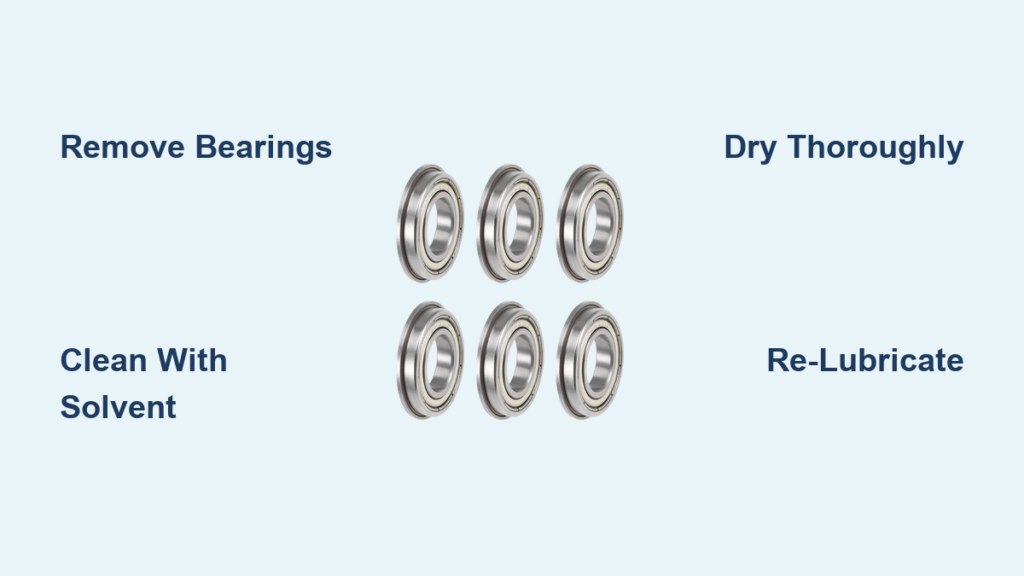
Start by securing your RC vehicle on a stable work surface and removing body shells to access all bearing locations. Take photos or notes documenting each bearing’s position before removal, as sizes often vary between wheel hubs, steering components, and drivetrain systems. Carefully extract each bearing using proper tools, applying pressure only to the outer race to avoid damaging internal balls and races.
For bearings with rubber shields, gently pry them out using a needle or small flathead screwdriver, working around the shield edge without bending or cracking the rubber. Many experienced hobbyists permanently remove shields for easier future maintenance, but keep them organized if you plan to reinstall. Place each bearing in labeled containers corresponding to their original locations—this ensures you return each bearing to its specific spot where it’s already worn to that position.
Execute Professional-Grade Solvent Cleaning

Isopropyl Alcohol Method: Submerge bearings completely in 90%+ concentration isopropyl alcohol and gently agitate the container to help solvent penetrate internal components. Remove each bearing and spin it by hand to work the alcohol through the mechanism, then repeat with fresh solvent until it remains clear after agitation. This gentle method works for routine maintenance without damaging rubber components.
Acetone Deep Cleaning: For stubborn contamination, submerge bearings in acetone for 5-10 minutes while occasionally agitating the solution. Remove bearings and allow complete evaporation (several hours) before lubrication, as residual acetone will degrade new lubricant. Test acetone on a small area first and ensure excellent ventilation, as fumes are flammable and potentially harmful.
Brake Cleaner Flush: Spray brake cleaner directly into spinning bearings to force out debris and old lubricant. Continue spraying and spinning until bearings rotate freely with minimal resistance. This quick method requires thorough drying time before lubrication—never skip this critical step.
Achieve Deep Cleaning with Ultrasonic Technology
Ultrasonic cleaners create microscopic bubbles through high-frequency sound waves that implode against bearing surfaces, dislodging contaminants from impossible-to-reach areas. Fill your ultrasonic cleaner with a mixture of water and specialized solution or isopropyl alcohol following manufacturer recommendations. Place bearings in the included basket, ensuring they don’t touch each other or tank sides to prevent damage during cleaning.
Run the cleaning cycle for 3-10 minutes depending on contamination severity, then inspect bearings to determine if additional cycles are needed. The cavitation action reaches crevices manual cleaning can’t access, making this method invaluable for bearings with long service history. Avoid over-cleaning, as extended exposure can potentially damage seals or cause micro-pitting on bearing balls over time.
Dry and Inspect Bearings Thoroughly
Proper drying separates successful bearing cleaning from future performance problems. Use compressed air on low pressure to blow solvent from multiple angles, ensuring complete penetration inside the bearing mechanism. After compressed air drying, allow bearings to air dry for 2-4 hours minimum (overnight is better) to guarantee complete evaporation—any remaining moisture will cause rust and degrade new lubricant.
Inspect each bearing carefully under bright light, checking for damaged balls, rust spots, pitting on races, or visible wear. Spin bearings slowly while listening for smooth operation and feeling for roughness or catching. Bearings passing visual and tactile inspection receive fresh lubricant, while those showing damage require replacement with identical specifications.
Apply Correct Lubrication for Your RC Application
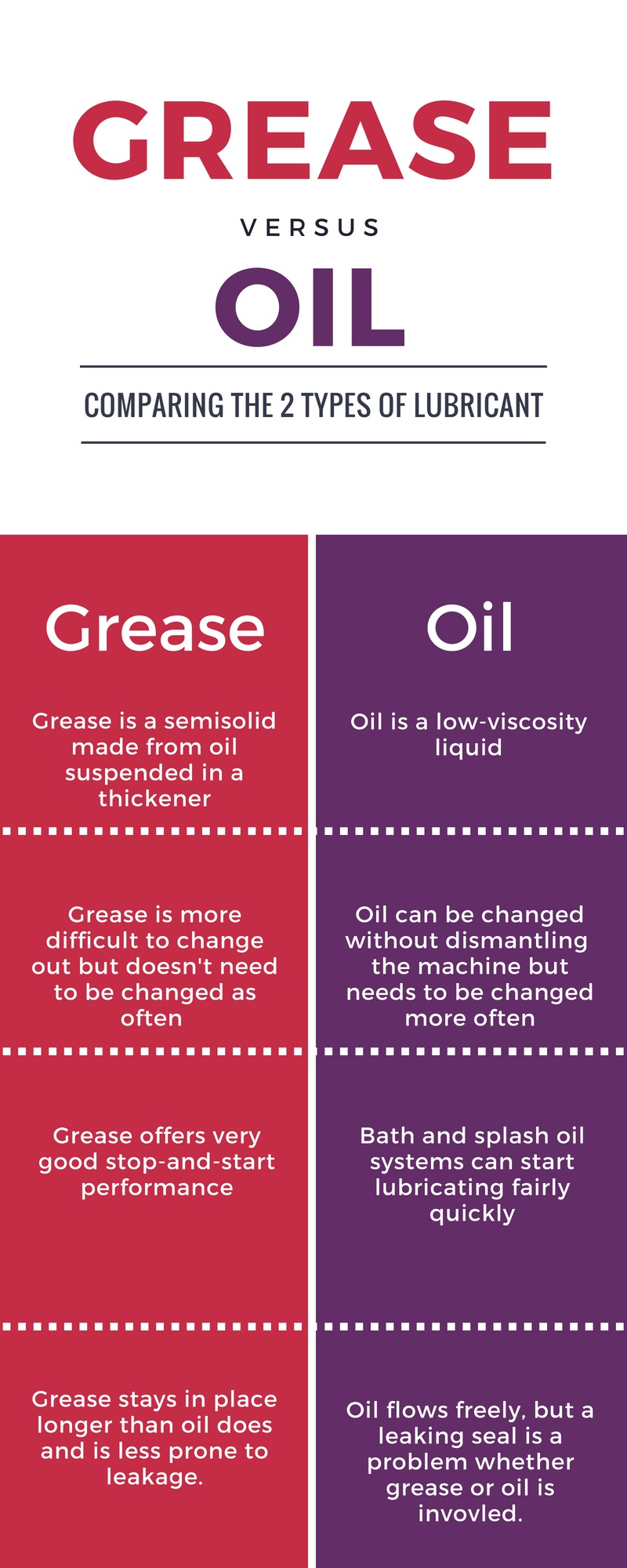
Choose lubricant based on your specific driving conditions—thin oil minimizes drag for racing applications where every millisecond counts, while thicker grease provides superior protection against debris in muddy off-road environments. Apply lubricant sparingly using a precision applicator: 1-2 drops of oil directly onto bearing balls, then spin to distribute evenly.
For grease application, use a tiny amount on your fingertip and work it carefully into races and around balls for complete coverage without overpacking. Never over-lubricate—excess lubricant attracts new contaminants and creates drag that robs performance. Bearings require only a thin film of lubrication to function optimally, so when in doubt, use less product.
Reinstall RC Bearings for Optimal Performance
Return each bearing to its original position using appropriate tools that apply force only to the outer race—never press against the inner race or balls, as this damages internal components. If you removed rubber shields, decide whether to reinstall them or run bearings open for easier future maintenance (most competitive racers prefer open bearings).
After installation, test free rotation by spinning each wheel or component before full reassembly. Wheels should spin freely for several seconds with minimal resistance—if you feel binding or resistance, investigate immediately rather than proceeding. Properly installed and lubricated bearings transform your RC car’s performance, delivering noticeably improved speed and acceleration after reassembly.
Establish a Bearing Maintenance Schedule
Create a regular bearing cleaning routine to maximize performance and longevity. Clean bearings after every 2-3 runs in dusty, muddy, or snowy conditions, as moisture and debris accelerate contamination. For regular terrain use on cleaner surfaces, monthly inspection and cleaning maintains optimal performance.
During each maintenance session, inspect bearings for early signs of wear before problems escalate. Store your RC vehicle properly when not in use to minimize dust exposure, and consider bearing covers during off-season storage. Despite excellent maintenance, bearings wear out over time—replace them annually for competitive use or immediately when inspection reveals worn balls, pitted races, or persistent roughness.
Troubleshoot Common RC Bearing Issues
If bearings feel rough after thorough cleaning, inspect for worn balls or damaged races requiring replacement—further cleaning won’t fix physical damage. Grinding noises typically indicate either remaining debris or insufficient lubrication, so revisit your cleaning process and verify lubricant application. Overheating bearings suggest improper installation, incorrect lubricant viscosity, or internal damage requiring replacement.
Wheels that don’t spin freely after reinstallation often have bearings installed incorrectly, with the inner race pressed against a surface preventing normal rotation. Remove and reinstall these bearings carefully, ensuring proper alignment. Addressing bearing problems promptly prevents cascading damage to your RC vehicle’s drivetrain components, saving both time and money in the long run.
Mastering how to clean rc car bearings transforms your vehicle’s performance while extending component life significantly. This essential maintenance task delivers immediate improvements in speed, acceleration, and reliability with minimal investment of time or money. By following these precise steps consistently, you’ll maintain peak performance run after run while avoiding expensive replacement costs—keeping you focused on what matters most: enjoying your RC vehicle to its fullest potential.