RC car enthusiasts often face the frustrating moment when they need to remove wheels for maintenance or upgrades but aren’t sure of the proper technique. Whether you’re replacing worn tires, installing new rims, or accessing internal components, knowing how to safely remove RC car wheels is essential for any hobbyist. This guide explains the common methods used across most RC vehicle types, helping you avoid damaging your investment while keeping your maintenance sessions efficient. You’ll learn the specific approaches for different wheel attachment systems and discover professional tips that make the process smoother.
Identifying Your RC Car Wheel Attachment System
Before attempting removal, correctly identifying your wheel attachment method prevents unnecessary damage to your RC vehicle. Most RC cars use one of three primary wheel mounting systems, each requiring a different removal approach. Understanding which system your model uses saves time and prevents stripped components that can turn a simple maintenance task into an expensive repair.
Set Screw Wheels: The Most Common Attachment Method
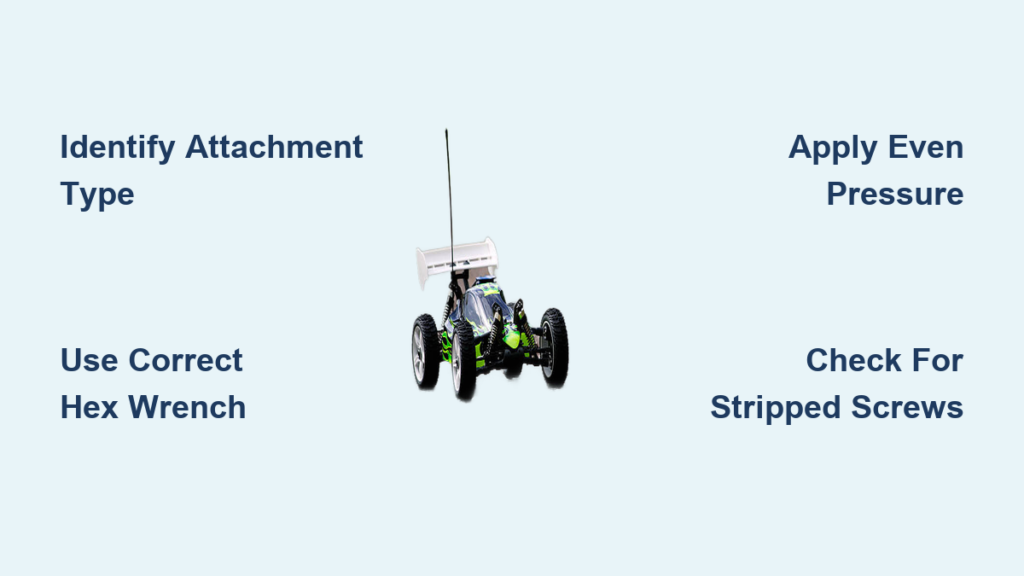
How to identify set screw wheels: Look for a small hexagonal indentation on the wheel hub face – this is where the set screw secures the wheel to the axle. These systems typically use miniature Allen (hex) screws ranging from 1.5mm to 2.5mm in size depending on your RC scale.
Step-by-step removal process:
1. Select the correctly sized hex wrench that fits snugly in the set screw head
2. Turn the wrench counterclockwise to loosen the set screw (remember “lefty loosey”)
3. Continue turning until the screw is completely removed or sufficiently backed out
4. Gently pull the wheel straight off the hex drive hub
Common mistakes to avoid: Forcing the wheel when the set screw isn’t fully loosened often strips the screw head. Never use pliers on the wheel itself as this damages the tire surface. If the screw feels stuck, apply a small amount of penetrating oil and wait 5-10 minutes before trying again.
Press-Fit Wheels: Secured by Friction Fit
How to identify press-fit wheels: These wheels have no visible screws and fit tightly onto a hexagonal drive hub. They’re common on entry-level and some mid-range RC vehicles where quick wheel changes aren’t a priority.
Effective removal techniques:
– Two-screw method: Insert two small screws into opposite wheel hex holes (if present), then use them as leverage points to gently pry the wheel off
– Rubber mallet approach: Place the car upside down and tap around the wheel’s inner edge with a rubber mallet
– Specialized puller tool: Use an RC-specific wheel puller that grips the wheel and applies even pressure
Critical warning: Never use metal tools directly against plastic components as this causes permanent damage. Apply steady, even pressure rather than sudden force to prevent cracking the wheel hub.
Hex Adapter Systems: Common on High-Performance Models
How these systems work: Many higher-end RC cars use separate hex adapters that attach to the axle, with wheels then secured to these adapters. This allows for quick wheel changes during racing events.
Removal procedure:
1. Remove the set screw from the wheel itself (if present)
2. Locate the adapter set screw on the hex adapter
3. Loosen and remove the adapter set screw
4. Slide both the wheel and adapter off the axle together
Pro tip: Keep all small screws organized in a magnetic tray to prevent loss. Mark each adapter with its corresponding position (front left, rear right, etc.) since they may have slight variations.
Essential Tools for RC Wheel Removal

Having the right tools makes wheel removal faster and prevents damage to your RC vehicle’s components. While some basic models can be serviced with common household tools, investing in RC-specific equipment pays off in precision and longevity.
Must-Have Basic Tool Kit
- Precision hex wrench set (1.5mm, 2.0mm, 2.5mm most common sizes)
- Small needle-nose pliers for gripping stubborn wheels
- Rubber mallet for applying gentle force
- Magnetic parts tray to prevent losing tiny screws
- Magnifying glass for inspecting small components
Time-saving note: Keep your hex wrenches organized in a dedicated case labeled with sizes. This eliminates fumbling during maintenance sessions when you need the right tool immediately.
Advanced Tools for Frequent Maintenance
- RC-specific wheel puller with adjustable arms
- Thread locker remover for seized set screws
- Precision screwdriver set with magnetic tips
- Cleaning brushes for removing debris from hex hubs
- Digital calipers for measuring wear on components
Expert insight: The Hudy Wheel Puller is considered industry standard among serious RC hobbyists because it applies even pressure without damaging wheels. While more expensive than basic tools, it prevents costly wheel replacements caused by improper removal techniques.
Troubleshooting Stuck RC Car Wheels
Even with the correct tools and techniques, you’ll occasionally encounter wheels that refuse to budge. These situations require specific approaches to avoid damaging your RC vehicle while freeing the stubborn components.
Dealing with Stripped Set Screws
When you encounter a stripped screw:
– Try using a rubber band between the screw head and wrench for additional grip
– Apply gentle heat with a hair dryer to expand the metal slightly
– Use a specialized screw extractor tool designed for miniature hardware
– As a last resort, carefully drill out the screw using a precision drill
Prevention tip: Always apply thread locker (blue Loctite) when reinstalling set screws to prevent them from vibrating loose, but never use red Loctite as it creates a permanent bond that requires extreme heat to remove.
Removing Corroded or Rusty Components
Effective solutions for corroded parts:
– Apply penetrating oil and wait 15-30 minutes before attempting removal
– Use a wire brush to clean corrosion from hex drive surfaces
– Gently tap around the wheel with a plastic hammer to break corrosion bonds
– For severe cases, soak the assembly in rust remover overnight
Important safety note: Always work in a well-ventilated area when using chemical solvents, and wear protective gloves to prevent skin contact.
Proper Wheel Installation After Removal

Correct reinstallation is just as important as proper removal to ensure your RC car performs reliably. Many hobbyists focus solely on removal techniques but neglect the critical steps for proper wheel reinstallation.
Achieving the Perfect Wheel Fit
Critical installation steps:
1. Clean both the hex drive hub and wheel interior with a soft brush
2. Ensure no debris is lodged in the hex interface
3. Slide the wheel fully onto the hub until it seats completely
4. Tighten the set screw to proper tension (snug but not overtightened)
5. Apply blue thread locker to prevent loosening during operation
Warning: Overtightening set screws is the leading cause of stripped threads in RC wheels. The screw should be tight enough to prevent movement but still allow removal with standard tools.
Torque Specifications for Different Models
While exact torque values vary by manufacturer, these general guidelines apply to most RC vehicles:
- 1/10 scale electric models: 1.5-2.0 inch-pounds
- 1/8 scale nitro models: 2.0-2.5 inch-pounds
- Miniature RC cars: 0.5-1.0 inch-pounds
Practical tip: Develop a “feel” for proper tightness by practicing on spare components. When the wrench stops turning with light finger pressure, you’ve likely reached the correct tension.
Preventing Future Wheel Removal Difficulties
Implementing these preventive measures during reassembly will make future maintenance sessions significantly easier and protect your investment in RC equipment.
Regular Maintenance Practices
- Clean wheel hubs and hex adapters after every use
- Apply a light coating of silicone lubricant to hex drive surfaces
- Check set screw tightness before and after each run
- Replace worn tires before they deteriorate and bond to the rim
- Store your RC car in a climate-controlled environment
Seasoned hobbyist advice: Create a simple maintenance log for your RC vehicles, noting when wheels were last removed and any observations about component wear. This helps anticipate problems before they affect performance.
Component Upgrades Worth Considering

- Replace steel set screws with titanium versions that resist corrosion
- Install aluminum hex hubs that reduce weight and resist stripping
- Use nylon-insert lock nuts instead of standard set screws for vibration resistance
- Apply anti-seize compound to metal-to-metal contact points
Cost-benefit insight: While these upgrades represent a small investment, they prevent costly repairs down the line and make routine maintenance quicker and more enjoyable.
Final Wheel Removal Checklist
Before storing your tools after a maintenance session, complete these final steps to ensure your RC car is ready for its next run:
- Verify all wheels spin freely without binding
- Confirm set screws are properly tightened with thread locker
- Check that tires are mounted evenly without twisting
- Inspect for any debris caught in the drivetrain
- Test wheel movement through full suspension travel
By following these comprehensive procedures, you’ll master the art of RC car wheel removal while protecting your valuable hobby equipment. Remember that patience and the right technique always produce better results than forceful methods that risk damaging expensive components. With practice, what once seemed challenging will become a quick, routine part of your RC maintenance workflow.