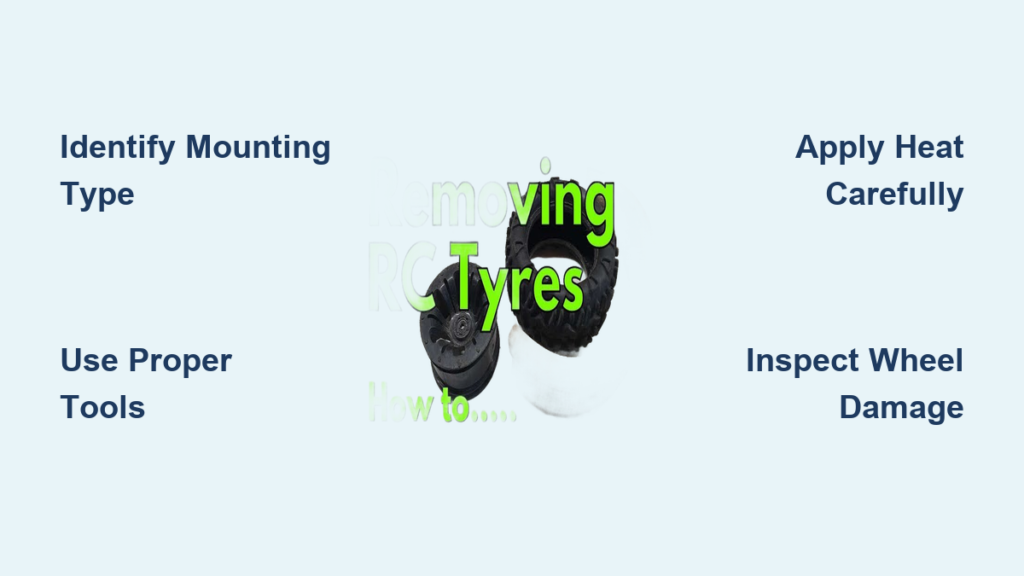
Removing tires from your RC car is a fundamental maintenance skill that every hobbyist needs to master. Whether you’re replacing worn rubber, switching to terrain-specific tires, or troubleshooting handling issues, knowing how to properly remove RC car tires without damaging the wheels or suspension components will save you time, money, and frustration. This comprehensive guide covers everything from identifying your tire mounting system to executing safe removal techniques that preserve your RC car’s performance.
Over time, RC car tires wear down from normal use, lose traction on specific surfaces, or become damaged from crashes and debris. When these situations arise, you’ll need to remove the old tires and install fresh replacements. The process varies significantly depending on your RC car’s wheel type—screw-on hex hubs require different handling than glued-on rims, and foam inserts need careful extraction to avoid damaging the wheel structure. Understanding your specific setup before you begin prevents costly mistakes and ensures your RC car returns to peak performance quickly.
Determine Your RC Tire Attachment Method
Before attempting any tire removal, you must identify what type of mounting system your RC wheels use. RC cars typically employ one of three primary tire attachment methods, and using the wrong removal technique can strip screws, crack wheels, or damage suspension components.
Screw-on hex hub systems represent the most common mounting method in modern RC cars, particularly in 1:10 and 1:8 scale buggies and truggies. In this setup, the tire attaches to a hexagonal hub that screws onto a corresponding hex adapter on the wheel axle. The hub typically uses small hex screws (often 2mm or 3mm) to secure the tire to the wheel. These systems offer easy tire changes and allow for precise wheel offset adjustments, but the small screws can loosen from vibration and require periodic retorquing during your RC car tire removal process.
Glue-on rim systems dominate entry-level RC cars and many monster trucks, where cost savings and simplicity take priority over convenience. In this configuration, the rubber tire bonds directly to the wheel rim using cyanoacrylate (CA) glue or specialized tire adhesive. While this creates a secure, permanent bond that handles high torque situations well, removal requires softening the adhesive and carefully prying the tire away—rush this process and you’ll likely crack the wheel or leave stubborn adhesive residue on your RC car tires.
Snap-on bead systems appear primarily in high-performance racing tires and some rock crawling applications. These tires feature internal beads that lock into corresponding grooves on the wheel rim, allowing tire changes without adhesive or screws. The trade-off is that these systems require specific wheel designs and tend to be more expensive than traditional mounting options.
Select Proper Tools for Your RC Car Tire Removal

Having the right tools before you start prevents mid-project interruptions and reduces the risk of damaging components. RC tire removal requires a specific set of hex wrenches, pliers, and specialty tools that vary based on your mounting system.
For screw-on wheel systems, gather quality hex wrenches sized between 1.5mm to 3mm. Ball-end hex wrenches are particularly valuable as they allow you to reach screws at angles when working in tight wheel wells. A small flathead screwdriver protects wheel surfaces when prying against them, and needle-nose pliers assist in gripping and removing stubborn hex screws that have seated too deeply during your RC car tire removal.
Glue-on tire removal demands a heat source to soften the adhesive, with a hair dryer or heat gun set to low heat being the safest options. High temperatures can deform plastic wheels and damage rubber tires, so work gradually and test heat levels first. A thin, flexible putty knife or dedicated tire lever helps separate the rubber from the rim once the adhesive weakens. Professional RC mechanics often keep dental floss on hand to slice through adhesive without scratching wheel surfaces.
Foam insert removal—if your tires use separate foam inserts—requires hook-shaped extractors designed to grip and pull foam without damaging the tire rubber. Standard flathead screwdrivers often tear foam rather than extracting it cleanly, so dedicated tools save frustration on this specific task during your RC car tire removal process.
Execute Screw-On Hex Hub Tire Removal Safely
Screw-on hex hub systems offer the most straightforward removal process, but the small screws used in these setups can present challenges if they’ve been overtightened or if thread-locking compound was applied during assembly.
Begin by securing the wheel to prevent it from spinning while you work. Holding the tire firmly between your knees works for smaller wheels, though a vise with protective jaw covers provides more security. Apply steady pressure rather than excessive force—rounding off screw heads creates significant problems that require drill-out procedures to resolve during your RC car tire removal.
Locate all hex screws around the hub perimeter before attempting removal. Most hex hub systems use four to six screws depending on tire size and application. Loosen each screw by one full turn before removing any completely, working in a cross-pattern (opposing screws alternately) to distribute stress evenly through the hub. This technique prevents the hub from binding unevenly and potentially galling the threads.
If a screw refuses to turn, apply a small amount of penetrating oil to the threads and let it sit for five to ten minutes. For stubborn screws, a screw extractor kit provides the best chance of removal without drilling, though this requires matching the extractor size to your screw head precisely. As a last resort, carefully drill out the screw head—this damages the screw but preserves the hub and wheel threads.
Once all screws are removed, carefully pull the hex hub straight away from the wheel. The hub should separate cleanly, though years of vibration can cause minor corrosion or debris buildup at the contact points. A rubber mallet tap on the hub back helps break any adhesion without damaging the hub mounting surface.
Remove Glue-On Tires Without Damaging Wheel Rims
Glue-on tire removal requires patience and controlled heat application to avoid damaging wheels or tires. The adhesive bonds that secure these tires strengthen over time, making older installations progressively harder to remove—but rushing the process with excessive force or heat causes more problems than it solves during your RC car tire removal.
Apply heat gradually to the tire sidewall, working in small sections and keeping the heat source moving to avoid concentrating warmth in one spot. A hair dryer on medium heat works well for most rubber compounds, though thicker tires or cold weather conditions may require a heat gun on its lowest setting. You’re aiming to soften the adhesive, not burn it—rubber begins degrading at temperatures above 300°F.
Once a section of tire feels warm and slightly flexible, work a thin putty knife or dedicated tire lever between the tire bead and wheel rim. Apply steady, controlled pressure rather than attempting to pry aggressively—the goal is to separate the rubber from the adhesive without cracking the wheel rim. Work around the circumference gradually, reapplying heat as needed to keep the adhesive softened.
After the tire separates, you’ll likely find adhesive residue on the wheel rim. Remove this residue using isopropyl alcohol, acetone (on plastic wheels only), or commercial adhesive remover. Sand lightly with fine-grit sandpaper (400 grit or higher) if residue remains stubborn, then clean the surface thoroughly before mounting new tires.
Troubleshoot Common RC Car Tire Removal Problems

Several common issues arise during RC tire removal, and knowing how to address them before they derail your project saves significant frustration.
Stripped hex screws represent perhaps the most frequent headache in screw-on hub systems. When standard hex wrenches spin without gripping, try a larger wrench that fits more tightly, a torx bit, or a screw extractor kit. As a temporary measure during active racing, a small flathead screwdriver placed across the stripped head can provide enough grip for removal.
Wheel cracking during glue-on removal typically results from excessive prying force or applying heat too concentrated in one spot. If a wheel cracks, assess whether the crack affects mounting surfaces or structural integrity—minor cracks in non-critical areas can be repaired with CA glue and fiberglass reinforcement.
Frozen or corroded threads on screw-in components respond well to penetrating oil and patient work. If a screw won’t budge after oil treatment and gentle attempted loosening, apply heat to expand the metal slightly, then try again. In extreme cases, you may need to drill out the screw entirely and tap the hub for a slightly larger replacement screw.
Maintain Wheels After RC Car Tire Removal
Before mounting new tires, inspect all wheel components for wear, damage, or debris that could affect performance or longevity. Check screw threads for corrosion or stripped sections, and replace any hardware that shows signs of damage. Examine wheel bearings if your setup uses them—gritty, loose, or noisy bearings should be cleaned and repacked or replaced.
Clean all mounting surfaces thoroughly using isopropyl alcohol or appropriate solvent for your wheel material. Aluminum wheels tolerate more aggressive cleaning than plastic, though even aluminum can be damaged by harsh chemicals over time. Ensure all surfaces are completely dry before applying adhesive or reassembling components.
If you’re reinstalling the same tires after inspection, check the tire beads for cracks, tears, or excessive wear that might have been hidden by road grime. Squeeze each tire to check for flat spots or deformation that indicates internal damage. When in doubt, replace worn tires—driving on compromised rubber risks sudden tire failure and potential chassis damage.
Extend Tire and Wheel Lifespan After Removal
Proper maintenance between removal cycles extends tire life and preserves wheel condition, reducing the frequency of full removal and replacement procedures. After each use, inspect your tires for embedded debris, unusual wear patterns, or damage from impacts. Remove stones, twigs, or other debris that has become lodged in the tire tread—left in place, these objects cause imbalance and accelerate wear on surrounding tread blocks.
Check hex screw torque regularly, particularly after the first few runs with new tires. Vibration during operation can loosen screws, and catching this early prevents lost tires mid-run. Many racers create a pre-run checklist that includes wheel torque checks, extending component life and preventing trackside emergencies.
Store your RC car with tires elevated off the ground if possible, or at least rotate the vehicle periodically to prevent flat spots on tires that sit in one position for extended periods. Foam inserts are particularly susceptible to compression set when stored under weight, and deformed inserts cause immediate handling issues when you next run the vehicle.
Mastering RC car tire removal opens the door to proper vehicle maintenance, performance tuning, and cost-effective repairs that keep your RC car running at its best. By understanding your specific mounting system, using appropriate tools, and following patient removal techniques, you can service your tires efficiently while preserving wheel and suspension components for continued use. Regular inspection and proper storage between changes further extend component life, reducing both long-term costs and the frequency of tire removal cycles. With these skills and knowledge, you’re equipped to handle tire maintenance confidently and keep your RC car performing at its peak across any terrain.