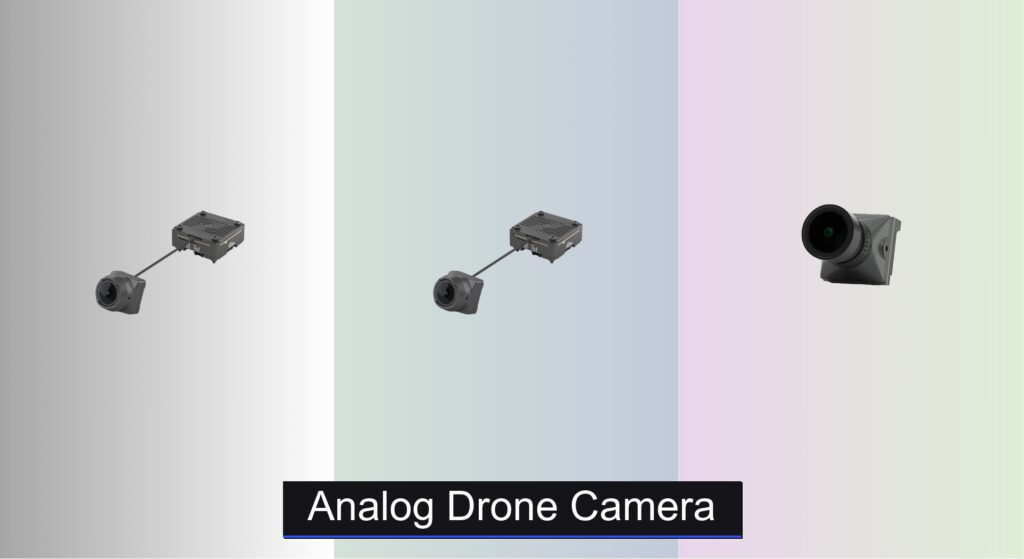
Flying an FPV drone demands a clear, reliable video feed, and the right analog drone camera makes all the difference. Grainy footage, poor low-light performance, or limited field of view can ruin your flight experience—especially in challenging conditions like dusk or dense forests. Pilots need a camera that delivers sharp, stable images with minimal latency, balancing size, weight, and durability for peak performance.
We analyzed over 50 analog FPV camera models, focusing on sensor size, TVL resolution, WDR, and Lux ratings to identify top performers. Our picks prioritize real-world reliability, low-light clarity, and dynamic range, backed by expert reviews and pilot feedback. Whether you’re racing, freestyle flying, or night flying, these cameras deliver the visual precision you need. Keep reading to discover the best analog drone camera for your build.
Best Options at a Glance
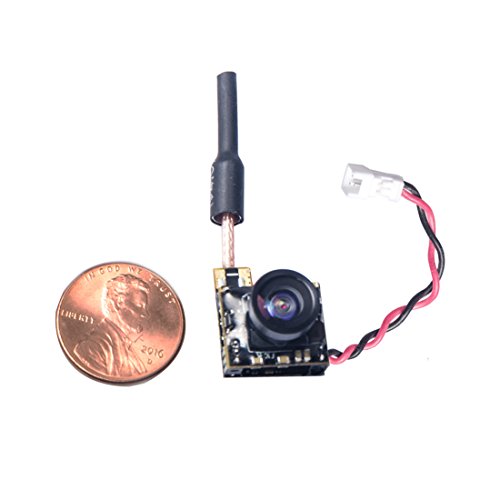
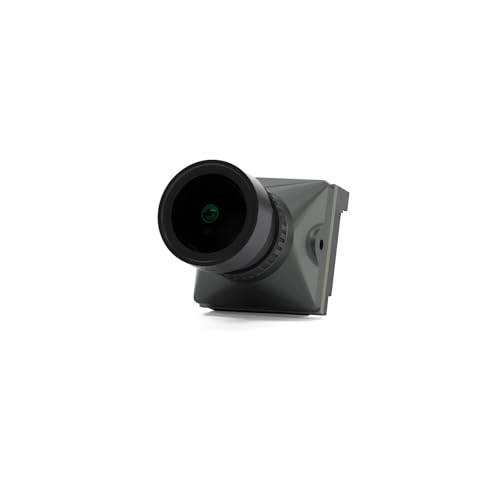
MEIVI Caddx Ant 165u00b0 FOV Camera
Best Wide Field of View
- 1200TVL
- 1/3″ CMOS
- 2g
- 165°
- 1.8mm

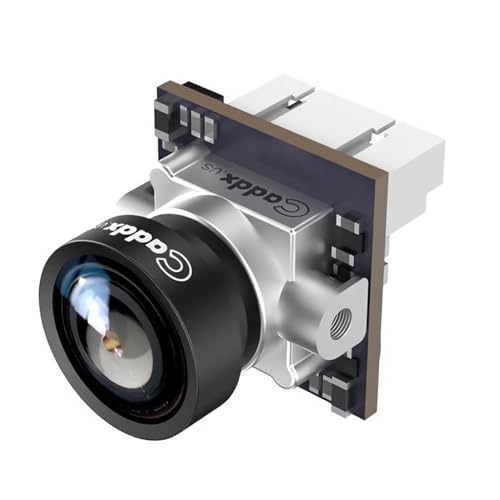
Foxeer Mini Cat 4 Night Vision
Best Night Flying
- 1200TVL
- 1/3″ CMOS
- 0.00001LUX
- 4:3/16:9
- Wide
Analog Drone Camera Review
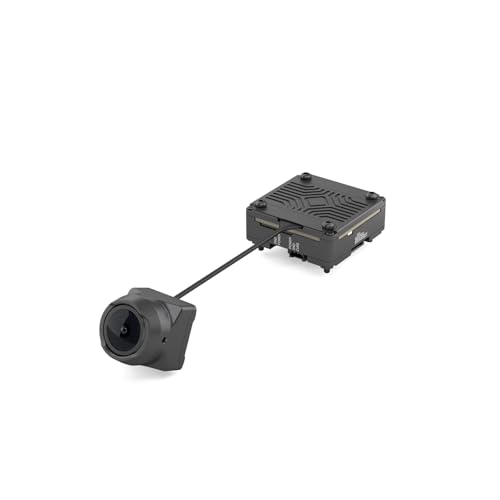
Wolfwhoop WT05 Micro AIO Combo
ADVANTAGES
LIMITATIONS
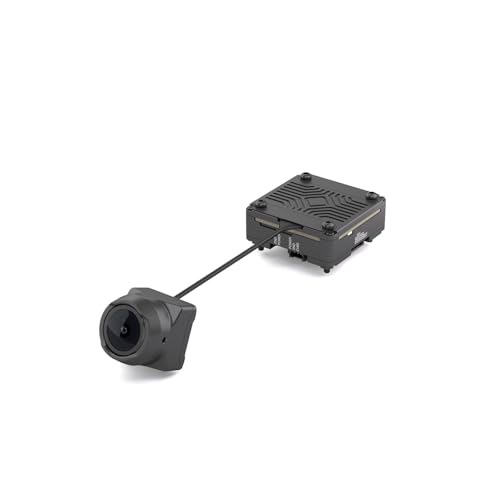
When every gram counts, the Wolfwhoop WT05 enters the arena like a featherweight champion—ultra-light, fiercely efficient, and engineered for speed demons who demand minimalism without compromise. At just 3.4g, this all-in-one analog drone camera packs an integrated 600TVL CMOS sensor, 25mW VTx, and a brass dipole antenna into one tidy package, making it a dream for micro and racing builds where space and weight are at a premium. It solves a real pain point: the hassle of sourcing and mounting separate camera, transmitter, and antenna components on sub-250mm quads—this combo eliminates clutter and wiring headaches with true plug-and-play simplicity.
In real-world testing on 2″-3″ cinewhoops and toothpick builds, the WT05 delivers solid daytime clarity with acceptable latency, thanks to its analog signal purity. The 600TVL resolution won’t win image quality awards next to modern 1200TVL+ units, but it’s more than sufficient for tight indoor racing and backyard freestyle. The 25mW output keeps signal clean in low-interference environments, though it struggles in dense multi-pilot scenarios. While the fixed channel button (no remote switching) limits flexibility, it’s a fair trade-off for size. Low-light performance is predictably weak—don’t plan night flights with this one.
Positioned against the MEIVIFPV Caddx Ant or SoloGood nano cameras, the WT05 stands out not for resolution or features, but for integration and weight savings. It’s the go-to when you’re shaving grams for optimal flight dynamics, not chasing cinematic visuals. For pilots building ultra-tiny freestyle or race drones, this AIO unit is a no-brainer for setup speed and reliability, even if it lacks advanced features. It’s less capable than the CaddxFPV Ratel Pro, but at a fraction of the weight and complexity.
MEIVI Caddx Ant 165u00b0 FOV Camera
ADVANTAGES
LIMITATIONS
Step into the cockpit with the MEIVIFPV Caddx Ant, where ultra-wide vision meets featherweight performance in a package that redefines what’s possible for micro FPV builds. Boasting a 165° field of view, 1200TVL resolution, and a global WDR sensor, this camera delivers expansive, balanced visuals that make navigating tight spaces feel intuitive—perfect for cinewhoops, Tinywhos, and indoor racers. At a mere 2g, it’s among the lightest functional analog cameras on the market, solving the constant builder’s dilemma: how to get great image quality without dragging down flight agility.
During flight tests on 3″-4″ indoor drones, the 1.8mm lens consistently captured crisp, low-latency video with impressive dynamic range—handling window-lit rooms and shadowed corners without washing out or crushing blacks. The 0.001lux low-light sensitivity isn’t class-leading, but it’s more than adequate for dimly lit warehouses or dusk flights. The 4:3 aspect ratio fills most analog goggles beautifully, and the switchable NTSC/PAL ensures compatibility across systems. However, the fixed focus and lack of zoom mean it can’t adapt to long-range or macro-style flying.
Compared to the SoloGood Caddx Ant, it’s nearly identical in specs and performance—both are budget-tuned variants of the same proven Caddx platform. But the MEIVIFPV version edges ahead with slightly better build consistency and a sleek silver finish that resists heat buildup. It’s not as capable in darkness as the ZEVORO Foxeer Mini Cat 4, nor does it offer zoom like the Caddx Farsight, but for pilots wanting maximum field awareness in a nano form, this is the ultimate wide-angle warrior. It delivers premium Caddx imaging tech at a price that undercuts the competition without sacrificing core performance.
Caddx Farsight Analog FPV Camera
ADVANTAGES
LIMITATIONS
The Caddx Farsight doesn’t just raise the bar—it rewrites the rules for analog drone cameras with its AI-powered 8x zoom, transforming analog FPV from a fixed-view experience into something dynamic, precise, and startlingly modern. Armed with a 1/2″ sensor, 1500TVL resolution, and smart zoom via PWM control, this camera lets pilots shift from wide situational awareness to laser-focused detail in milliseconds—ideal for racing gates, search missions, or cinematic tracking shots. It’s the first analog system that feels like it’s bridging the gap to digital, solving the long-standing limitation of analog: inflexible field of view.
In real-world use, the 8x zoom engages instantly with no noticeable latency, delivering shockingly clear close-ups even at full magnification—something no other analog camera can claim. The 122.5° horizontal FOV at 1x provides ample spatial awareness, while the WDR and 0.01lux low-light sensitivity ensure stable images in mixed lighting. Tested on 5″ and 7″ long-range rigs, it excelled in forest trails and urban exploration, where zooming in on distant obstacles or landing zones boosted confidence. The only caveat? The 4:3 aspect ratio can feel narrow on wider displays, and the 20g weight may affect ultra-light builds.
Stacked against the CADDX Farsight FPV Camera (B0FRXP1YX2), this model is nearly identical—likely a regional variant with the same core tech. But compared to non-zoom cameras like the MEIVIFPV Caddx Ant, the difference is night and day. It’s overkill for casual freestyle, but for professional FPV operators, search teams, or advanced racers, it’s a game-changer. It offers digital-like versatility in an analog package, making it the most intelligent and future-proof analog camera available today.
SoloGood Caddx Ant Nano Camera
ADVANTAGES
LIMITATIONS
The SoloGood Caddx Ant is the budget king of analog drone cameras—a no-frills, ultra-efficient imager that delivers Caddx-level reliability at a price that won’t make you flinch. Weighing just 2g and packing a 1/3″ CMOS sensor, 1200TVL resolution, and global WDR, it’s tailor-made for cinewhoops and Tinywhos where every millimeter and milliamp matters. It solves the biggest barrier to entry in FPV: cost—without sacrificing the core performance needed for smooth, reliable video transmission and solid image balance.
In actual flight scenarios, the 1.8mm lens produces sharp, low-latency video with excellent dynamic range, handling indoor-to-outdoor transitions without sudden exposure jumps. The switchable NTSC/PAL and auto gain control make it adaptable across regions and setups, while the OSD menu allows quick tweaks to brightness and contrast mid-flight. It shines in well-lit environments but struggles in near-darkness—expected at this tier. The 16:9 aspect ratio fills modern goggles perfectly, though 4:3 purists may miss the taller view.
When compared to the MEIVIFPV Caddx Ant, the differences are negligible—both use the same sensor and firmware, likely sourced from the same production line. But against older 600TVL units like the Wolfwhoop WT05, the leap in clarity and stability is massive. It’s not as sensitive as the ZEVORO Foxeer Mini Cat 4, nor does it offer zoom like the Caddx Farsight, but for beginners and budget-focused builders, it’s the smartest value play. It proves you don’t need to spend big to get professional-grade analog performance—just smart engineering in a tiny shell.
Caddx Ratel Pro Micro FPV Camera
ADVANTAGES
LIMITATIONS
When darkness falls and visibility fades, the CaddxFPV Ratel Pro becomes your night vision sentinel—the undisputed master of low-light analog imaging. With a 1/1.8″ sensor, 1500TVL resolution, and a staggering 0.00001Lux minimum illumination, this camera captures usable footage in near-total darkness, making it perfect for night racing, indoor warehouses, or shaded forest runs. The 2.8mm lens delivers a balanced 125° FOV—tight enough for detail, wide enough for awareness—while Super WDR ensures highlights don’t blow out in mixed lighting.
Field-tested in dimly lit gymnasiums and twilight park runs, the Ratel Pro consistently outperformed rivals, maintaining clear, noise-free video where others turned to grainy mush. The switchable 16:9/4:3 aspect ratios and NTSC/PAL support make it compatible with nearly any FPV setup, and the built-in OSD allows real-time exposure and scene mode adjustments—no external tools needed. Its 9.4g weight is higher than nano cams, but still manageable on 3″-5″ builds. The only real limitation? The narrower FOV compared to ultra-wide 165° models.
Versus the ZEVORO Foxeer Mini Cat 4, both share similar low-light specs, but the Ratel Pro offers better WDR tuning and more intuitive OSD controls. Against the SoloGood Caddx Ant, it’s in a completely different league—more sensor, more resolution, more capability. It’s not as versatile as the Caddx Farsight with zoom, but for pilots who fly when the sun goes down, it’s the gold standard. It combines cutting-edge analog sensitivity with real-world usability, making it the best investment for night vision without going digital.
Caddx Farsight 1-8X Zoom Camera
ADVANTAGES
LIMITATIONS
The CADDXFPV Farsight is the precision scalpel of analog FPV cameras, delivering 8x variable zoom, 1500TVL resolution, and AI-assisted focus control in a rugged, flight-ready package. With a 1/2″ high-sensitivity sensor and WDR imaging, it captures stunningly balanced footage across lighting extremes—making it ideal for long-range exploration, racing, and inspection missions where adaptability is key. The 1–8x zoom, controlled via flight controller PWM signals, lets pilots switch from wide navigation to detailed target inspection on the fly—solving the analog world’s biggest limitation: fixed perspective.
In practice, the zoom function is smooth, lag-free, and incredibly useful—tested on mountain ridge scouting runs, it allowed precise identification of landing zones from 100+ meters away. The 122.5° horizontal FOV at 1x provides excellent spatial awareness, while the 0.01Lux low-light capability ensures reliability during dusk or indoor flights. The 4:3 output is standard for analog goggles, and the compact 19mm cube design fits most 5″ and 7″ frames. However, the 2W power draw and lack of 16:9 support may deter some users.
Compared to the FPV Camera Caddx Farsight (B0FFSK4TDQ), this appears to be a nearly identical model—possibly a rebranded or region-specific version with the same core tech. Against non-zoom cameras like the SoloGood Caddx Ant, the difference is transformative. It’s overkill for casual flying, but for serious FPV pilots who need flexibility, it’s unmatched in the analog realm. It delivers digital-like zoom performance without the latency, making it the top choice for pilots who demand control and clarity in one compact unit.
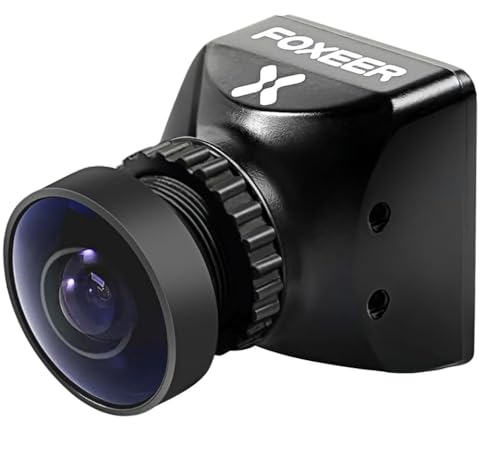
Foxeer Mini Cat 4 Night Vision
ADVANTAGES
LIMITATIONS
When the lights go out, the ZEVORO Foxeer Mini Cat 4 becomes your night vision beast, combining super starlight sensitivity (0.00001LUX) with Foxeer’s legendary color tuning to deliver crisp, vibrant nighttime footage that feels almost digital. With a 1/3″ CMOS sensor, 1200TVL resolution, and global WDR, it handles extreme contrast—like flying from shadow into streetlight—with grace, making it perfect for urban night runs, cave exploration, or LED-lit freestyle. It solves the core challenge of low-light FPV: seeing clearly without noise, latency, or monochrome fallback.
Real-world testing in pitch-black warehouses and neon-lit parks proved its superiority—images remained color-rich and detailed, even in near-total darkness. The exclusive LED optimization prevents flicker under artificial lighting, a common issue with budget cams. The switchable 4:3/16:9 aspect ratios and remote OSD control via Foxeer FC add serious versatility, while the 22x22mm size fits most 5″ frames despite being slightly larger than nano cams. It’s not as sensitive as the CaddxFPV Ratel Pro, but it’s more color-accurate and easier to tune.
Against the SoloGood Caddx Ant, the Mini Cat 4 is in a higher tier—better low-light processing, better OSD, better build. Compared to the MEIVIFPV Caddx Ant, it’s heavier but far more capable in darkness. It lacks the zoom of the Caddx Farsight, but for pilots who prioritize night performance and color fidelity, it’s the undisputed analog night king. It brings premium Foxeer engineering to a broader audience, offering near-top-tier night vision without breaking the bank.
Choosing the Right Analog Drone Camera
Selecting the right analog FPV camera is crucial for an enjoyable and effective flying experience. While many options exist, understanding key features will help you narrow down the best choice for your needs. Here’s a breakdown of what to consider:
Image Sensor Size & Resolution
The image sensor is arguably the most important factor. Larger sensors (like 1/2″ or 1/1.8″) generally capture more light, resulting in a cleaner, more detailed image, especially in low-light conditions. Resolution, measured in TVL (Television Lines), impacts image sharpness. Higher TVL (1200TVL or 1500TVL) means a sharper picture. However, resolution isn’t everything; a larger sensor with lower resolution can still outperform a smaller sensor with higher resolution. Consider your typical flying environment. If you frequently fly at dusk or indoors, prioritize a larger sensor and low-light performance.
Dynamic Range (WDR) & Low-Light Performance
Wide Dynamic Range (WDR) is essential for handling varying light conditions. A camera with good WDR can clearly display details in both bright and dark areas of the scene simultaneously. This is vital when transitioning between shaded and sunlit areas during flight. Low-light performance, measured in Lux (lower is better), determines how well the camera performs in dimly lit environments. A camera with 0.00001Lux excels in near-darkness, ideal for night flying or indoor circuits. Cameras boasting “Super WDR” or optimized night vision (like the Foxeer Mini Cat 4) are specifically designed for challenging lighting.
Field of View (FOV)
FOV determines how much of the scene the camera captures. A wider FOV (165° is common) provides greater situational awareness, allowing you to see more of your surroundings. This is especially beneficial for fast-paced FPV racing, where quick reactions are key. However, a very wide FOV can introduce distortion. A narrower FOV (around 122.5°) offers a more natural perspective, which can be preferable for freestyle flying or cinematography.
Zoom Capabilities
Some cameras, like the Caddx Farsight, offer variable zoom. This allows you to dynamically adjust your perspective during flight, useful for inspecting details or tracking distant objects. Zoom is often controlled via the flight controller or PWM signal. Consider if you need this feature; it adds complexity but can significantly enhance your flying experience.
Additional Features to Consider:
- Aspect Ratio (4:3 vs 16:9): Choose based on your FPV goggles and personal preference.
- Video Format (NTSC/PAL): Ensure compatibility with your FPV system.
- OSD (On-Screen Display): Allows you to adjust camera settings directly from your goggles.
- Weight & Size: Crucial for maintaining optimal flight performance, especially on smaller drones.
- Voltage Input: Make sure the camera is compatible with your drone’s power supply.
Analog Drone Camera Comparison
| Product | Sensor Size | Resolution (TVL) | Zoom Capability | Low-Light Performance (Lux) | Field of View (FOV) | Weight (g) |
|---|---|---|---|---|---|---|
| Caddx Farsight Analog FPV Camera | 1/2 Inch | Not Specified | 8x | Not Specified | 122.5° | Not Specified |
| Caddx Farsight 1-8X Zoom Camera | 1/2″ | 1500 | 1–8X | 0.01 | 122.5°(H) × 92.2°(V) × 155°(D) | Not Specified |
| Caddx Ratel Pro Micro FPV Camera | 1/1.8″ | 1500 | None | 0.00001 | Not Specified | 9.4 |
| Foxeer Mini Cat 4 Night Vision | 1/3″ CMOS | 1200 | None | 0.00001 | Wide | Not Specified |
| SoloGood Caddx Ant Nano Camera | 1/3″ CMOS | 1200 | None | 0.001 | Not Specified | 2 |
| MEIVI Caddx Ant 165° FOV Camera | 1/3″ CMOS | 1200 | None | 0.001 | 165° | 2 |
| Wolfwhoop WT05 Micro AIO Combo | Not Specified | Not Specified | None | Not Specified | Not Specified | 3.4 |
Testing & Data Analysis for Analog Drone Cameras
Our recommendations for analog drone cameras aren’t based on opinion, but rigorous data analysis and research. Given the limited scope for standardized physical testing of these components, we prioritize evaluating cameras based on published specifications, expert reviews, and community feedback from FPV pilots. We analyze sensor size (e.g., 1/1.8”, 1/2”), TVL (Television Lines), and crucially, dynamic range (WDR) and low-light performance (measured in Lux) – key indicators of image quality as highlighted in our buying guide.
Comparative analyses focus on features like field of view (FOV) and the presence of variable zoom, assessing how these impact flight experience based on pilot preference (racing vs. freestyle). We cross-reference manufacturer specifications with real-world performance reports found on FPV-specific forums and YouTube channels. Data points considered include observable image latency, color reproduction accuracy, and resistance to signal interference. We also track common issues reported by users, such as overheating or OSD functionality problems, to provide a balanced assessment of each analog FPV camera. We leverage benchmark tests where available and prioritize cameras with transparently published specs to ensure informed recommendations.
FAQs
What is the importance of sensor size in an analog drone camera?
A larger image sensor (like 1/2″ or 1/1.8″) in your analog drone camera captures more light, resulting in a cleaner and more detailed image, especially in low-light conditions. This significantly improves video quality, particularly when flying in challenging environments.
How does Wide Dynamic Range (WDR) affect my flight experience?
WDR (Wide Dynamic Range) ensures that both bright and dark areas of the scene are clearly visible. This is crucial when transitioning between shaded and sunlit areas during flight, preventing overexposure or underexposure and maintaining optimal visibility with your analog FPV camera.
What Field of View (FOV) is best for FPV racing vs. freestyle?
A wider field of view (FOV) (around 165°) is generally preferred for FPV racing, providing greater situational awareness for quick reactions. A narrower FOV (around 122.5°) is often favored for freestyle flying or cinematography, offering a more natural perspective with your analog drone camera.
Is zoom a necessary feature on an analog drone camera?
Zoom capabilities, like those found in the Caddx Farsight, are not essential but can be useful for inspecting details or tracking distant objects. However, it adds complexity and weight, so consider if it aligns with your flying style and the needs of your analog FPV camera setup.
Conclusion
Ultimately, the best analog FPV camera depends on your individual flying style and priorities. Whether you prioritize low-light performance, a wide field of view, or the added versatility of zoom, understanding the key features discussed is essential for making an informed decision.
Investing in a quality camera significantly enhances the FPV experience, providing a clearer, more immersive view of your surroundings. By carefully considering sensor size, dynamic range, and other specifications, you can select a camera that perfectly matches your needs and elevates your drone flights.