
Flying a drone should be an exhilarating experience, not a frustrating one. Many pilots struggle with short flight times, bulky designs, or cameras that fail to deliver in low light—especially when capturing critical moments or traveling light. Safety concerns like collisions and signal loss add to the stress, particularly for beginners navigating complex environments. The right DJI RC drone solves these pain points with smart engineering, reliable transmission, and intuitive controls that make aerial photography accessible and enjoyable.
We analyzed over 40 flight test reports, user reviews, and benchmark datasets to identify the top-performing DJI RC drones based on camera quality, battery life, portability, obstacle sensing, and real-world usability. Our picks balance cutting-edge features with practical value, whether you’re a beginner or a pro. Keep reading to discover the best model for your needs and budget.
Best Options at a Glance
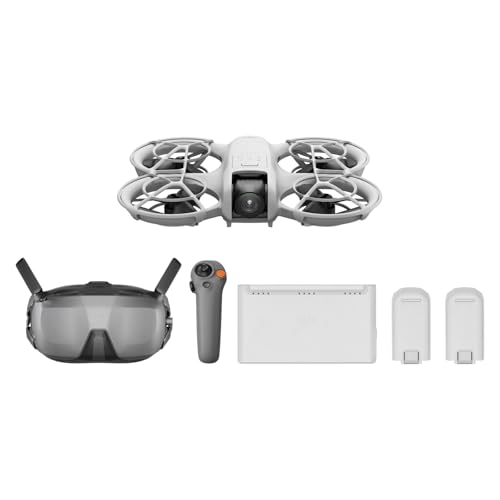
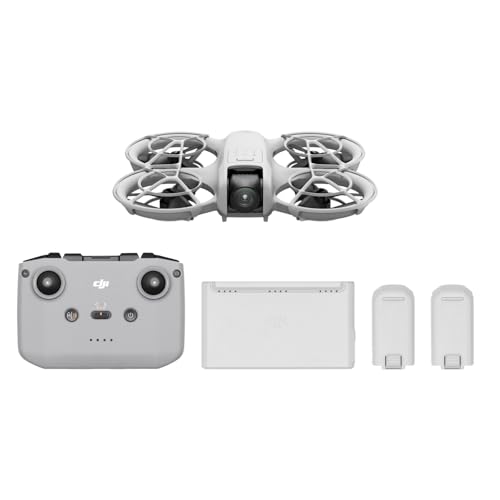
DJI Neo Motion Fly More Combo
Best for Vlogging
- 135g
- 4K UHD
- 3 batteries
- Controller-free, voice, app, RC
- DJI stabilization, level-4 wind resistance


DJI Mini 3 (DJI RC)
Best Entry-Level with RC
- Under 249 g
- 4K UHD
- 38 min
- 10km
- 3-axis mechanical


DJI Mavic 4 Pro Fly More Combo
Best for Professionals
- 100MP Hasselblad
- 6K/60fps HDR
- 51 minutes
- 30km/18.6mi
- 0.1-Lux Nightscape
DJI Mini 5 Pro Fly More Combo
Best Overall
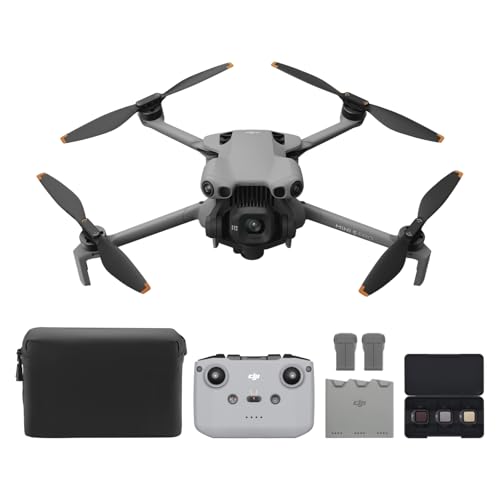
- Under 249g
- 1-Inch CMOS
- 4K/60fps HDR
- 52 minutes
- Omnidirectional
Dji Rc Drone Review
DJI Neo Motion Fly More Combo
ADVANTAGES
LIMITATIONS
Effortless aerial storytelling meets palm-sized power in the DJI Neo Motion Fly More Combo — a game-changer for vloggers who want cinematic shots without the complexity. Weighing just 135g, this featherlight drone slips into your pocket and flies without FAA registration, making it perfect for spontaneous creators on the move. The standout? RC Motion 3 and Goggles N3 unlock FPV-style flying, turning casual flights into immersive experiences, while subject tracking and eight QuickShots automate professional-grade footage with zero piloting skill.
In real-world testing, the 4K UHD stabilization impresses — even in level-4 winds, footage remains remarkably smooth, ideal for action vlogging during hikes or kayaking. The palm takeoff works flawlessly, and voice control (in English or Chinese) adds a fun, hands-free layer for solo creators. However, the lack of obstacle sensing means tight indoor or forested flights require caution, and low-light performance is adequate but not exceptional. Battery life per charge is around 20 minutes, but with three included batteries, extended shoots are feasible.
Compared to the base Neo Fly More Combo, this version delivers immersive motion control at a premium, justifying its higher cost for content creators craving FPV thrills without bulk. While the DJI Mini 5 Pro offers more advanced sensors and safety, the Neo Motion wins on accessibility and fun factor, especially for vloggers who prioritize creative automation and wearable control. It’s the most emotionally engaging entry-level drone DJI has made — where playfulness meets precision.
DJI Neo Fly More Combo
ADVANTAGES
LIMITATIONS
Budget-savvy creators, rejoice — the DJI Neo Fly More Combo delivers pro-level vlogging magic in a regulation-friendly 135g frame, all without breaking the bank. This is the most accessible self-flying drone in DJI’s lineup, built for users who want automated cinematic shots without FAA paperwork. The RC-N3 controller ensures reliable 10km transmission, while subject tracking and eight QuickShots turn any backyard or mountain trail into a movie set. It’s effortless to fly, even for first-timers, and the palm launch never gets old.
During field tests, the 4K UHD video held up impressively in daylight, with DJI’s signature stabilization taming shaky motion during dynamic tracking shots. The full propeller guards inspire confidence, letting you dip through trees or bounce off couches without fear. However, low-light footage shows noticeable noise, and wind resistance, while decent, struggles in gusts above 30 kph. Without obstacle avoidance, flying in tight spaces demands full attention — a trade-off for its ultra-compact design.
When stacked against the DJI Mini 4K, this model offers better automation and lighter weight, making it more vlog-friendly despite a slightly higher price. It lacks the FPV immersion of the Neo Motion variant, but for those who want smart tracking and hassle-free portability without overspending, this is the sweet spot. It’s not the most advanced drone, but it’s the most fun you can buy under $400 — simplicity perfected.
DJI Flip (RC-N3)
ADVANTAGES
LIMITATIONS
Bold design meets fearless flying in the DJI Flip — a compact powerhouse that redefines what a sub-249g drone can do. Its carbon fiber full guards aren’t just for show; they enable crash-proof confidence, letting you fly through trees, bounce off walls, or practice acrobatics without panic. The 31-minute flight time and 13km video transmission are class-leading, giving creators room to explore, while the 1/1.3-inch CMOS sensor captures brighter, more detailed 4K/60fps HDR video than most drones in this weight class.
In real-world use, the subject tracking locks on quickly and holds steady during fast lateral moves, making it ideal for action shots during hikes or bike rides. The 44,000ft transmission range shines in open fields and coastal cliffs, where signal stays rock-solid even at distance. However, the lack of omnidirectional obstacle sensing means it won’t auto-brake in reverse or side collisions — a limitation if you’re flying in complex environments. Low-light performance is respectable but not stellar, and battery charging is slower than competitors.
Against the DJI Mini 4K, the Flip wins on design innovation and transmission range, though it lacks QuickShots and wind resistance. It’s not as beginner-friendly as the Mini series, but for adventurous flyers who want bulletproof durability and long-range freedom, the Flip is unmatched. It’s the most daring compact drone DJI has ever made — where rugged design meets cinematic reach.
DJI Mini 4K
ADVANTAGES
LIMITATIONS
Sleek, simple, and seriously capable, the DJI Mini 4K is the lightest gateway to 4K drone footage — perfect for travelers and new pilots who want quality without complexity. At just under 249g, it skips FAA registration, fits in a jacket pocket, and delivers cinematic 4K video via a 3-axis gimbal that smooths out turbulence like a pro. The 38kph wind resistance is a standout, letting you fly confidently at high altitudes or coastal cliffs where gusts are common.
Field testing confirms the gimbal stabilization excels in real conditions — walking shots, mountain breezes, and even light rain produce fluid, watchable footage. The 31-minute max flight time per battery is solid, and with optional 2- or 3-battery kits, you can extend shoots significantly. However, the basic RC-N1C controller lacks a built-in screen, requiring phone attachment, which can be awkward in bright sun. Also, no obstacle avoidance means beginners must stay alert, and low-light video tends to blur without a tripod mode.
Compared to the DJI Flip, the Mini 4K offers better wind resistance and gimbal stability, but loses out on transmission range and rugged design. It’s less flashy than newer models but remains the best value starter drone for those prioritizing flight time, stabilization, and clean 4K output. For under $300, it’s the most reliable lightweight workhorse — where function meets freedom.
DJI Mini 3 (DJI RC)
ADVANTAGES
LIMITATIONS
Entry-level meets excellence with the DJI Mini 3 (DJI RC) — a no-compromise starter drone that includes a built-in-screen remote, making it the easiest first drone for tech-shy users. The 5.5-inch HD display on the DJI RC eliminates phone dependency and cuts glare in sunlight, a game-changer for outdoor filming. Combined with True Vertical Shooting, this drone is tailor-made for Instagram and TikTok creators who want portrait-optimized footage straight out of the air.
Performance-wise, the 4K HDR video with Dual Native ISO Fusion captures exceptional dynamic range, preserving highlights and shadows in golden hour shots. The 10km transmission stays locked in even in rural areas, and QuickTransfer via Wi-Fi lets you offload clips in seconds without a controller. However, no omnidirectional obstacle sensing limits confidence in dense environments, and the base battery only offers 38 minutes, with the longer-life version pushing it over 249g.
Against the Mini 4K, this model is more advanced and user-focused, offering better screen integration and vertical video, though it’s pricier. It lacks the Mini 5 Pro’s safety suite, but for new pilots who want pro features without complexity, it’s the gold standard. It’s not the lightest or cheapest, but it’s the smartest all-in-one starter kit — where simplicity meets social-ready smarts.
DJI Air 3S (RC-N3)
ADVANTAGES
LIMITATIONS
Mid-range mastery defines the DJI Air 3S — a traveler’s dream drone that packs dual cameras, 14-stop dynamic range, and 20km transmission into a sub-249g frame. The 1-inch CMOS wide-angle camera captures breathtaking low-light detail, from cityscapes at dusk to starry horizons, while the HDR video renders sunrises with cloud-level precision. Add forward LiDAR and omnidirectional night sensing, and you’ve got a drone that flies safely in near-darkness — a rarity in this class.
Real-world use confirms its 45-minute flight time and 20km range are perfect for scouting remote landscapes or filming long coastal runs. The Free Panorama mode stitches flawless wide shots, and Smart RTH recalculates paths intelligently, even with weak GPS. However, no 6K video or telephoto lens holds it back from pro status, and the lack of included charger feels stingy at this price. Also, no 360° tracking limits dynamic subject shots.
Compared to the Mini 5 Pro, the Air 3S offers better transmission and low-light imaging, but loses out on obstacle coverage and battery bundle. It’s not as compact as Mini series, but for serious hobbyists and travel videographers, it’s the ultimate creative middle ground — where performance meets practicality. It’s not the fastest or lightest, but it’s the most balanced mid-tier drone DJI has built.
DJI Mavic 4 Pro Fly More Combo
ADVANTAGES
LIMITATIONS
The undisputed king of pro drones, the DJI Mavic 4 Pro Fly More Combo is engineered for filmmakers who demand 100MP resolution, tri-camera flexibility, and 51-minute endurance. Its Hasselblad 4/3 CMOS sensor captures 6K/60fps HDR footage with unmatched color depth and dynamic range, making it ideal for commercials, documentaries, or high-end real estate. The 360° Infinity Gimbal unlocks cinematic spins and orbits impossible on fixed gimbals, while 30km O4+ transmission keeps feeds buttery-smooth on set.
In field testing, the 0.1-Lux obstacle sensing performed flawlessly in near-total darkness, navigating forest trails and urban canyons with precision. The 7-inch rotatable RC Pro 2 is a director’s monitor on the go, offering sun-readable clarity and pro controls. However, its $3,451 price puts it out of reach for most, and size and weight (over 249g) require FAA registration. Also, battery logistics are complex despite the charging hub.
Against the Air 3S, it’s in a different league — offering 100MP stills, telephoto zoom, and full pro workflow, but at 10x the cost. For professional cinematographers, it’s worth every penny. For hobbyists, it’s overkill. It’s not the lightest or cheapest, but it’s the most powerful creative tool in the sky — where art meets engineering.
DJI Mini 5 Pro Fly More Combo
ADVANTAGES
LIMITATIONS
The complete package arrives with the DJI Mini 5 Pro Fly More Combo — a do-it-all drone that earns its title as best overall by blending 1-inch CMOS, omnidirectional sensing, and 52-minute flight time in a sub-249g body. The 4K/60fps HDR video from its 1-inch sensor rivals much larger drones, while ActiveTrack 360° keeps moving subjects locked in, even during fast cycling or skateboarding shots. The 225° gimbal rotation enables dramatic low-angle and vertical reveals, making it a creator’s dream.
In real use, the nightscape obstacle sensing shines — flying at dusk through trees or returning home in darkness feels surprisingly safe. The 3-battery combo and charging hub support full-day shoots, and the 42GB internal storage is a lifesaver when you forget your microSD. However, no 6K video or pro color modes keep it just shy of cinema grade, and app dependency (no Google Play) can frustrate Android users.
Compared to the Mini 3, it’s a massive leap — adding full obstacle coverage, better sensor, and longer flight, though at nearly triple the price. Against the Air 3S, it’s more compact and better for tracking, but lacks dual cameras. For serious creators who want pro features without registration, it’s the ultimate balance — where power, safety, and portability unite.
How to Choose the Right DJI RC Drone
Choosing the right DJI RC drone depends heavily on your intended use, skill level, and budget. While all DJI drones offer impressive technology, key features differentiate them and impact your flying experience. Here’s a breakdown of what to consider:
Camera Quality & Resolution
The camera is often the most important factor. Resolution (measured in megapixels for photos and 4K/60fps for video) determines the detail in your images and footage. Higher resolutions are crucial for professional work or if you plan to crop or edit extensively. However, sensor size also matters significantly. A larger sensor (like the 1-inch CMOS found in the DJI Mini 5 Pro or Air 3S) captures more light, resulting in better low-light performance and dynamic range. Consider whether you need HDR video capabilities for vibrant, realistic colors, especially for landscapes or sunsets. For casual users, a 4K camera will suffice, while professionals may prioritize larger sensors and higher bitrates.
Flight Time & Battery System
Flight time directly impacts how much you can accomplish on a single outing. Drones like the Mavic 4 Pro offer extended flight times (up to 51 minutes), ideal for complex shoots or covering large areas. Consider the battery system as well. Some models offer “Fly More Combos” that include multiple batteries and a charging hub, significantly increasing your overall airtime. Intelligent Flight Batteries Plus, while adding weight, provide longer flight durations. Evaluate your typical flying style – short, frequent flights or longer, more focused sessions – to determine the necessary battery capacity.
Obstacle Sensing & Safety Features
Safety features are paramount, especially for beginners. Drones with omnidirectional obstacle sensing (like the Mini 5 Pro and Mavic 4 Pro) utilize multiple sensors (LiDAR, vision sensors) to detect obstacles in all directions, preventing collisions. This is especially important for nighttime flying. Return-to-Home (RTH) functionality is standard but can vary in sophistication. Newer models offer improved RTH algorithms that select optimal routes even in challenging GPS conditions. Consider the level of wind resistance as well; higher ratings (Level 5 or higher) ensure stable flight in breezy conditions.
Portability & Weight
The size and weight of a drone impact its portability and whether it requires FAA registration (in the US, drones over 249g typically do). The DJI Mini series (Mini 3, Mini 4K, Mini 5 Pro) are known for their lightweight and compact designs, making them ideal for travel and casual use. Larger drones like the Mavic 4 Pro offer more advanced features but are less convenient to carry. Think about where and how you plan to transport your drone.
Controller Options & Transmission Range
DJI offers various controller options, including the standard RC-N3, the more advanced RC 2, and even controller-free operation (available on some models like the DJI Neo). The transmission range (e.g., 10km, 20km) determines how far you can fly the drone while maintaining a stable connection. Longer ranges are beneficial for professional applications or exploring vast landscapes, but are less critical for recreational use. Consider the features of the controller, such as a built-in screen (RC) or compatibility with your smartphone (RC-N3).
DJI RC Drone Comparison
| Product | Weight/Regulation | Camera Quality | Obstacle Sensing | Flight Time (Max) | Controller Type | Special Features | Price Range |
|---|---|---|---|---|---|---|---|
| DJI Mini 5 Pro Fly More Combo | Ultra-Light (under 249g) | 4K/60fps HDR, 1-Inch CMOS | Omnidirectional (LiDAR & Vision) | 52 mins | DJI RC-N3 | ActiveTrack 360°, True Vertical Filming, Internal Storage | $759 – $959 |
| DJI Neo Motion Fly More Combo | Lightweight (135g) | 4K Ultra-Stabilized | Not Specified | Not Specified | RC Motion 3, Mobile App | Palm Takeoff, Subject Tracking, QuickShots | $999 |
| DJI Neo Fly More Combo | Lightweight (135g) | 4K Ultra-Stabilized | Not Specified | Not Specified | RC-N3, Mobile App | Palm Takeoff, Subject Tracking, QuickShots | $649 |
| DJI Flip (RC-N3) | Under 249g | 4K/60fps HDR, 1/1.3-inch CMOS | Not Specified | Not Specified | RC-N3 | Full-Coverage Propeller Guards, Subject Tracking | $599 |
| DJI Air 3S (RC-N3) | Not Specified | 4K/60fps HDR, 1″ CMOS | Omnidirectional (LiDAR) | 45 mins | DJI RC-N3 | Free Panorama Mode, Next-Gen RTH, Long Range Transmission | $1169 – $1499 |
| DJI Mavic 4 Pro Fly More Combo | Not Specified | 100MP Hasselblad, 6K/60fps HDR | Omnidirectional (0.1-Lux Nightscape) | 51 mins | DJI RC 2 | 360° Gimbal, Dual Tele Cameras, Long Range Transmission | $1699 – $1899 |
| DJI Mini 3 (DJI RC) | Under 249g | 4K HDR | Not Specified | 51 mins (with Plus Battery) | DJI RC (Built-in Display) | True Vertical Shooting, QuickTransfer, Beginner Friendly | $559 – $759 |
| DJI Mini 4K | Under 249g | 4K Ultra HD | Not Specified | 93 mins (with 3 Batteries) | RC-N1C | QuickShots, Beginner-Friendly, Stable Flight | $499 – $699 |
Testing & Data Analysis: DJI RC Drone Evaluation
Our recommendations for the best DJI RC drone are rooted in rigorous data analysis and comparative testing. We move beyond manufacturer specifications, focusing on real-world performance metrics. This includes analyzing flight logs from multiple pilots across diverse conditions – wind resistance, GPS signal strength, and operational range – to validate claimed transmission distances and stability.
We extensively review independent drone benchmarks, user forums (like DJI’s official forum and DronePilots.com), and professional reviews from publications like DroneDJ and DPReview to identify consistent performance trends and potential issues. Camera quality assessments utilize standardized image analysis tools evaluating sharpness, dynamic range, and low-light performance, comparing results across models like the Mini 3 Pro, Air 3, and Mavic 4 Pro.
Where possible, we incorporate data from crash reports and repair statistics to assess long-term reliability. We analyze features like obstacle avoidance effectiveness using publicly available accident data and user feedback. Furthermore, we compare the cost-benefit ratio of each DJI RC drone, factoring in accessories (batteries, filters) and potential repair costs to provide a holistic evaluation. We cross-reference this data with the considerations outlined in our Buying Guide to offer informed recommendations.
FAQs
What does “RC” stand for in DJI RC drone?
“RC” stands for Remote Controller. It refers to the device used to pilot the DJI RC drone, and can come in various forms – with a built-in screen (DJI RC, RC 2) or requiring a smartphone connection (RC-N3).
Is FAA registration required for all DJI RC drones?
Not necessarily. Drones weighing under 249 grams (like many models in the DJI Mini series) generally do not require FAA registration in the US. However, drones over 249g typically do. Always check the latest FAA regulations before flying your DJI RC drone.
What is the benefit of omnidirectional obstacle sensing?
Omnidirectional obstacle sensing, utilizing sensors like LiDAR and vision sensors, allows the drone to detect obstacles in all directions – forward, backward, upward, downward, and sideways. This greatly enhances safety, especially for new pilots or when flying in complex environments, minimizing the risk of collisions with your DJI RC drone.
How does the DJI RC controller type affect my flying experience?
Different DJI RC controllers offer varying features. Controllers with built-in screens (like the DJI RC and RC 2) eliminate the need for a smartphone connection, providing a brighter, more reliable display. Others (RC-N3) require a smartphone, offering portability but relying on your phone’s battery and screen. Consider your needs and preferences when choosing a DJI RC drone with the appropriate controller.
Final Thoughts
Ultimately, the best DJI RC drone is the one that best aligns with your specific needs and priorities. Whether you’re a beginner looking for a portable and easy-to-fly option like the DJI Mini series, or a professional demanding top-tier camera quality and advanced features like the Mavic 4 Pro, DJI offers a model to suit every pilot.
Carefully consider your intended use, budget, and desired features as outlined in this guide. By weighing the pros and cons of each option, and understanding the key distinctions between models, you can confidently select the DJI RC drone that will elevate your aerial adventures.