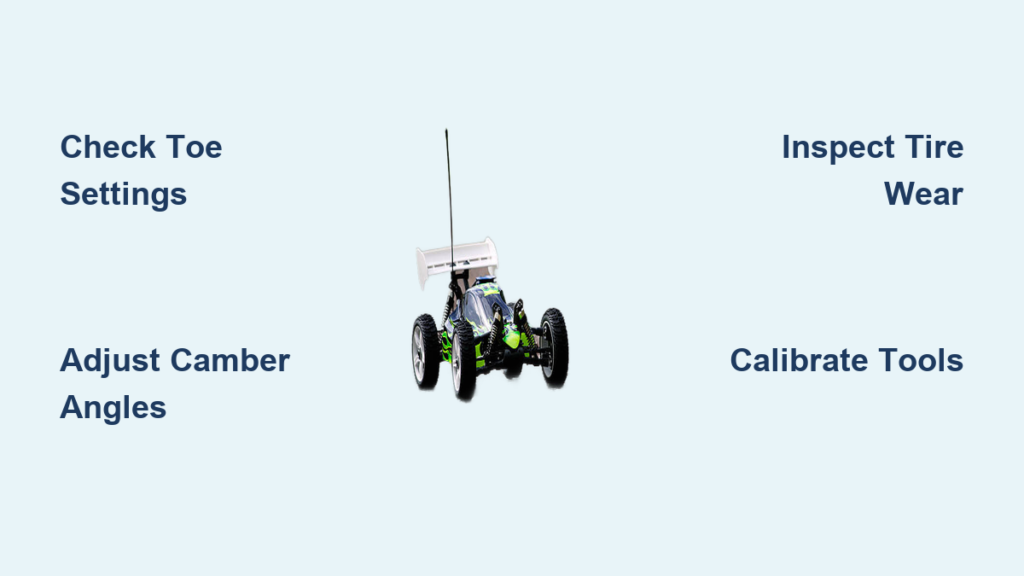
Nothing ruins a great RC racing session faster than a car that pulls to one side or handles unpredictably. When your RC car’s wheels aren’t properly aligned, you’ll experience inconsistent steering, uneven tire wear, and frustrating handling that makes precise driving nearly impossible. Learning how to align RC car wheels correctly transforms your vehicle from a frustrating handful into a predictable performer that responds exactly to your inputs. Whether you’re a weekend basher or competitive racer, proper alignment delivers immediate improvements in stability, cornering grip, and lap times—without spending a dime on new parts.
This guide gives you everything needed to master RC car alignment with simple tools and proven techniques. You’ll discover exactly how to measure and adjust toe and camber settings for your specific track conditions, diagnose common alignment problems from tire wear patterns, and maintain consistent handling throughout your racing season. By the end, you’ll have the confidence to fine-tune your RC car’s alignment in under 10 minutes, ensuring peak performance every time you hit the track.
Why Incorrect Toe Settings Cause Your RC Car to Pull Off Course
Toe alignment directly impacts your RC car’s straight-line stability and turn-in response. When your front wheels point slightly toward each other (toe-in), your car tracks straighter at high speeds but turns more sluggishly. Conversely, toe-out (wheels pointing away from each other) creates razor-sharp turn-in but reduces stability on straights. Most beginners struggle with excessive toe-out that makes their car feel twitchy and unpredictable.
How to Measure and Adjust Front Toe in 4 Simple Steps
- Place your RC car on a completely flat surface with the battery installed
- Attach a quality aluminum toe board to both front wheels, ensuring it sits flush against the rims
- Measure the distance between the boards at the front and rear edges using digital calipers
- Adjust the steering turnbuckles by rotating them equally in opposite directions to achieve your target setting
For casual driving, set 2-4mm total toe-in (1-2mm per side) for stable, predictable handling. Competitive racers on low-traction surfaces often prefer 0-2mm total toe-out for quicker turn-in response. After adjusting, roll your car forward slightly and recheck measurements—suspension settling can change your readings. Always document your final settings in a setup notebook for future reference.
Rear Toe Mistakes That Cause Unstable Corner Exits
Many RC enthusiasts focus solely on front alignment while ignoring rear toe settings that dramatically affect corner rotation. Too much rear toe-in creates a stable but reluctant cornering attitude, while excessive toe-out makes the rear end swing out unpredictably during acceleration. The most common mistake is running identical rear toe settings regardless of track conditions.
Set rear toe between 0-2mm total toe-out for most racing applications to promote smooth rotation through corners. For bashers prioritizing stability, 0-2mm total toe-in keeps the car tracking straight during high-speed runs. Check rear toe after every significant crash—impacts often shift rear suspension components without visible damage.
Fixing Camber Issues That Destroy RC Car Tires in Minutes
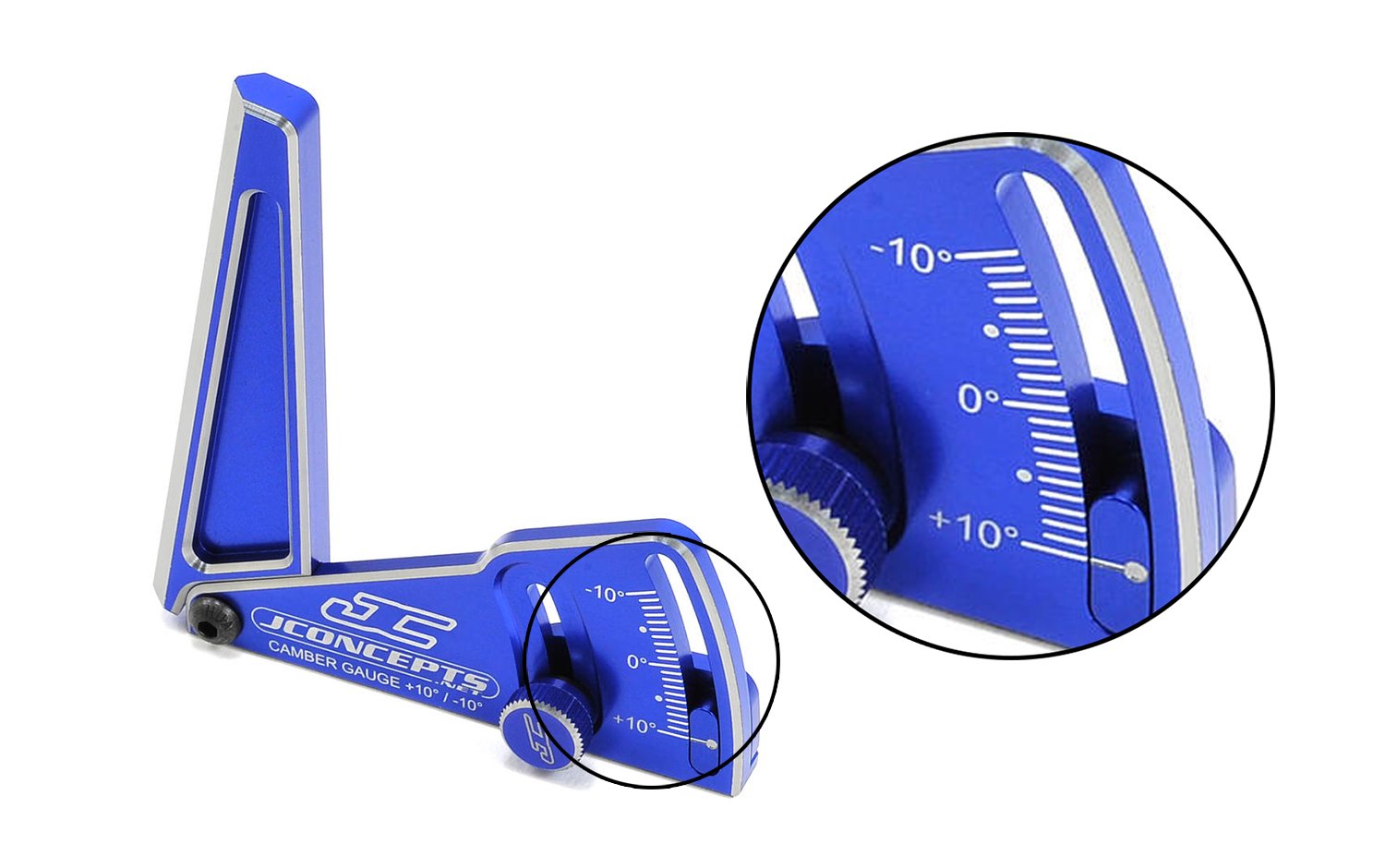
Improper camber alignment is the #1 cause of premature tire wear in RC vehicles. When your wheels tilt too far inward (excessive negative camber), the inner edges of your tires wear down rapidly while reducing straight-line grip. Too little negative camber sacrifices cornering traction as the tire rolls onto its outer edge during turns.
How to Set Perfect Front Camber for Any Track Surface
- Calibrate your digital camber gauge on a flat surface before measuring
- Attach the gauge to the inside of your front wheel rim, perpendicular to the chassis
- Read the camber angle—negative values indicate inward tilt at the top
- Adjust via upper suspension arm shims or eccentric washers in 0.5° increments
For high-grip carpet tracks, run -3° to -4° front camber to maximize cornering bite. On loose dirt surfaces, reduce to -1.5° to -2.5° to prevent excessive inner tire wear. Never exceed -4° without specific guidance for your track conditions—this extreme setting wears tires 3x faster with diminishing grip returns.
Rear Camber Settings That Balance Grip and Tire Life

Rear camber requires special attention because it affects both cornering performance and tire longevity. Excessive negative camber on the rear causes rapid inner-edge wear during acceleration out of corners, while insufficient camber reduces traction when you need it most.
Start with -2° rear camber as your baseline setting for most applications. On high-bite surfaces, increase to -2.5° for more rotation through corners. For loose conditions, reduce to -1.5° to maintain consistent rear traction. Check tire wear patterns after each run session—inner edge wear means you need less negative camber, while outer edge wear indicates more camber is required.
Diagnose RC Car Alignment Problems From Tire Wear Patterns
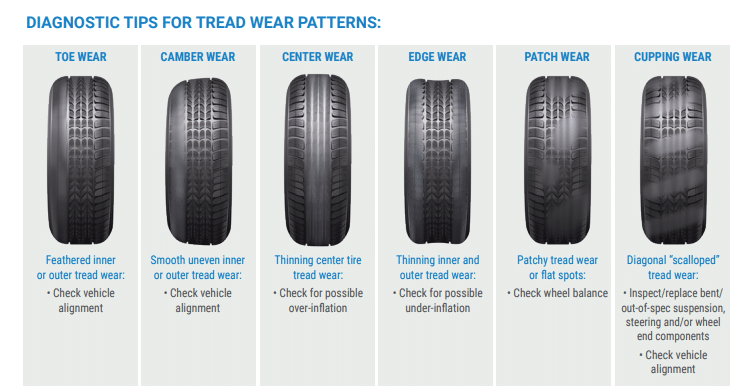
Your tires provide a visual record of alignment issues that would otherwise go unnoticed. Learning to read these wear patterns saves hours of guesswork and prevents unnecessary component replacements. Properly aligned RC cars show even tire wear across the tread surface with consistent wear rates between all four tires.
Inner Edge Wear: The Telltale Sign of Excessive Negative Camber
When the inner edges of your tires wear down significantly faster than the center or outer edges, you’re running too much negative camber. This common mistake sacrifices straight-line traction while creating dangerous handling imbalances. Reduce camber by 0.5° increments until wear becomes more even across the tire surface.
Feathered Tread: How Toe Settings Affect Tire Longevity
Feathering—where the tire tread feels smooth in one direction but rough in the opposite direction—indicates your tires are being dragged sideways during operation. This typically results from excessive toe-in combined with high-powered motors. Reduce total toe by 0.5mm increments until feathering disappears while maintaining acceptable straight-line stability.
Uneven Wear Between Left and Right Tires
When one tire shows significantly more wear than its counterpart on the same axle, your alignment is inconsistent between sides. This thrust angle problem causes your car to pull to one side and creates unpredictable handling. Measure and adjust both sides individually until they match within 0.2mm of toe and 0.2° of camber.
Essential RC Car Alignment Maintenance Schedule
Alignment isn’t a one-time setup—it requires regular checks to maintain peak performance. Build these simple procedures into your pre-race routine to ensure consistent handling throughout your competition season.
Pre-Race Alignment Checklist (5 Minutes)
- Verify all suspension components are tight and undamaged
- Measure front and rear toe settings against your baseline
- Check camber angles on all four wheels
- Inspect tires for wear patterns indicating alignment issues
- Roll car forward and recheck measurements after suspension settles
Perform this quick check before every race day and after any significant crash. Even minor impacts can shift alignment settings enough to affect handling without visible damage to components.
Alignment Tool Calibration: The Secret Top Racers Swear By
Your measurements are only as accurate as your tools. Professional RC teams calibrate their alignment equipment before every major event. Zero your digital camber gauge on a verified flat surface and check your toe board for straightness against a precision ruler. Many racers carry a small glass plate specifically for tool calibration—glass provides the most consistently flat reference surface available.
Final Note: Proper RC car alignment delivers immediate handling improvements without expensive upgrades. Start with conservative settings (-2° camber, 2mm toe-in front, 0mm toe rear) as your baseline, then adjust based on track conditions and tire wear patterns. Document every change you make and its effect on handling—this log becomes your most valuable tuning resource. Remember that alignment works with your entire setup: tire compound, shock oil, and spring rates all interact with your alignment settings. When your RC car handles perfectly, you’ll know you’ve mastered the art of how to align rc car wheels for championship-winning performance.