Finding the perfect motor for your RC car can make the difference between an underwhelming experience and pure driving joy. With so many options flooding the market, selecting the right powerplant feels overwhelming for beginners and even seasoned hobbyists. The motor you choose directly impacts acceleration, top speed, battery life, and overall driving experience—making it arguably the most crucial component in your RC build. Whether you’re building your first crawler or upgrading a race truck, understanding motor specifications ensures you get exactly the performance you need without wasting money on incompatible parts. This guide cuts through the technical jargon and gives you a clear roadmap to selecting the ideal motor for your specific RC application.
Brushed vs. Brushless: Making the Critical Technology Choice
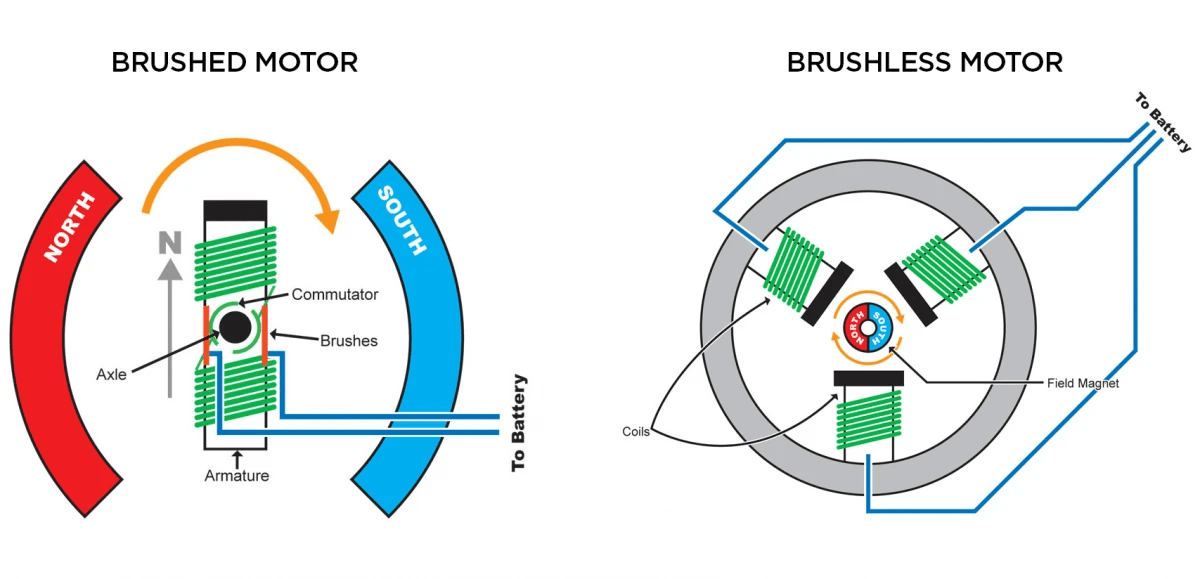
Your motor selection journey starts with choosing between brushed and brushless technology—a decision that affects everything from performance to maintenance requirements. Brushed motors remain popular entry points for beginners thanks to their straightforward design and lower price points. These work through physical contact between carbon brushes and a commutator, creating the electrical connection needed to spin the armature. While reliable for casual backyard bashing, brushed motors generate significant heat and friction, wear out faster, and typically deliver only 60-70% efficiency compared to their modern counterparts.
Brushless motors have become the standard for serious RC enthusiasts by eliminating the physical contact points that limit brushed performance. Without brushes to wear down, these motors achieve 85-90% efficiency, translating to noticeably longer run times and higher power output from the same battery. The two main brushless variants—sensored and sensorless—serve different driving styles. Sensored brushless systems include hall effect sensors that provide precise rotor position feedback to the ESC, delivering buttery-smooth low-speed control essential for rock crawling and technical trail driving. Sensorless brushless motors skip these sensors for simpler wiring and higher top-end performance, making them ideal for speed runs and circuit racing where low-speed finesse matters less.
Consider your budget versus long-term value when making this choice. While a quality brushless system might cost 50-100% more upfront than a comparable brushed setup, the reduced maintenance and superior performance often justify the investment for regular drivers. If you plan to drive weekly or compete, brushless delivers better value over time despite the higher initial cost.
Why Your Driving Style Determines Motor Type
Your typical driving environment should heavily influence whether sensored or sensorless brushless technology suits you best. Technical rock crawlers navigating steep inclines at walking pace benefit immensely from sensored motors’ ability to maintain consistent torque at extremely low RPMs without cogging. Without sensors, brushless motors often stutter below 10% throttle—a dealbreaker when precise control determines whether your rig clears an obstacle or flips over.
Racers seeking maximum speed on smooth surfaces gain little from sensored systems’ complexity. Sensorless brushless motors reach higher peak RPMs and handle sustained high-throttle conditions better, making them the preferred choice for 1/10 scale stadium trucks tearing around dirt ovals or on-road touring cars hitting triple-digit speeds. The simplified wiring also means fewer potential failure points during intense competition.
KV Ratings and Turns Explained for Real-World Performance
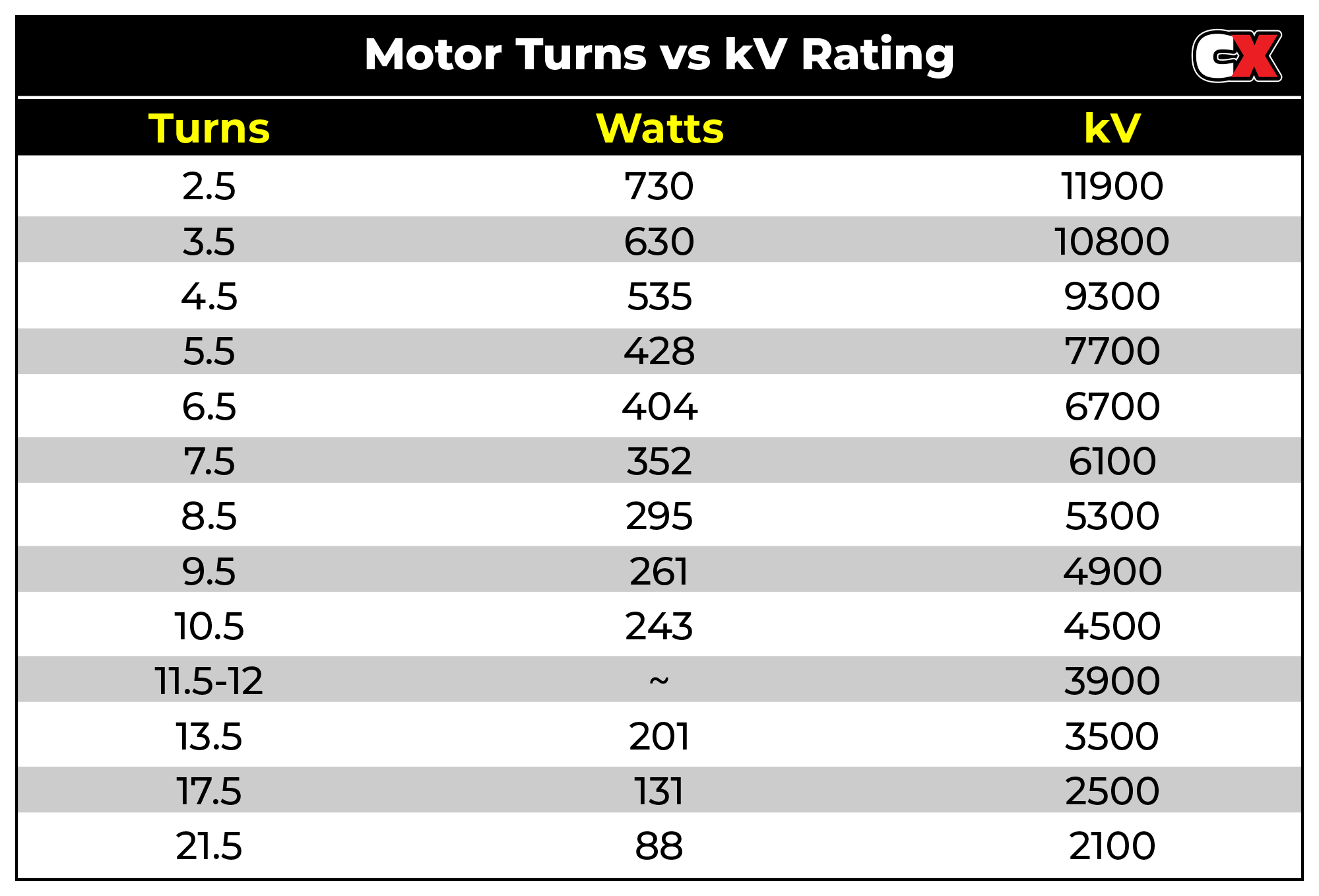
Understanding motor specifications prevents costly mismatches between your expectations and actual performance. The KV rating—often misunderstood as “kilovolts”—actually measures revolutions per minute per volt applied (RPM/V). A 3500KV motor on a standard 11.1V 3S LiPo battery theoretically spins at 38,850 RPM with no load. Higher KV ratings deliver more top speed but sacrifice low-end torque, making them suitable for lightweight on-road vehicles where acceleration matters less than maximum velocity.
Turn ratings (expressed as “T” values like 13.5T) indicate the number of wire windings around the motor’s armature. Contrary to intuition, lower turn counts mean more power—fewer windings use thicker wire that handles higher current with less resistance. A 10.5T motor produces significantly more torque than a 21.5T motor but draws more amperage and generates more heat. Most beginners err by selecting too low a turn count, overwhelming their ESCs and batteries with excessive current demands.
Matching Motor Specs to Your Vehicle Type
The perfect motor specification depends entirely on your RC car’s weight, intended use, and gear ratio. Heavy rock crawlers tackling 1:1 scale obstacles need low KV ratings (under 2000KV) paired with high turn counts (22.5T-35T) to generate the torque required for slow-speed crawling without overheating. A typical trail truck performs best with mid-range specifications like 2800-3500KV and 13.5T-17.5T, balancing speed and torque for varied terrain.
On-road race cars chasing lap records benefit from high KV ratings (4000-6000KV) combined with low turn counts (5.5T-10.5T) to maximize top speed on smooth surfaces. The key insight many beginners miss: your transmission gearing multiplies motor characteristics. A high-KV motor with conservative gearing can deliver excellent torque, while a low-KV motor with aggressive gearing achieves surprising speed—giving you flexibility to tune performance after installation.
Ensuring Perfect System Compatibility
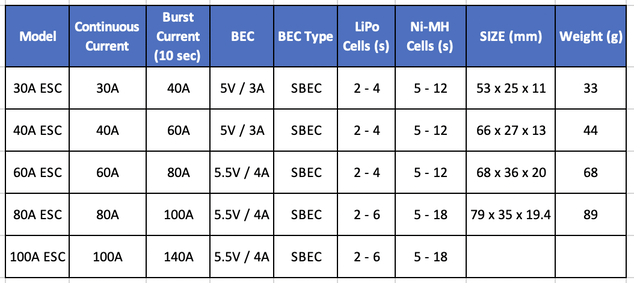
Choosing a motor in isolation guarantees compatibility issues down the road—your selection must integrate seamlessly with your entire power system. Electronic speed controllers (ESCs) require careful matching to motor type and current demands. A 120A brushless ESC provides ample headroom for most 1/10 scale vehicles, while crawlers might only need 60-80A due to lower sustained current draw. Crucially, never pair a brushless motor with a brushed ESC or vice versa—the electrical requirements differ fundamentally.
Battery selection directly impacts motor performance and longevity. A 3500KV motor performs optimally on 3S (11.1V) LiPo batteries for most 1/10 scale trucks, while the same motor on 2S (7.4V) feels sluggish and underpowered. Exceeding the motor’s voltage rating—such as running a 4S (14.8V) pack on a 3S-rated motor—creates excessive heat that degrades magnets and windings over time. Always verify both motor and ESC voltage compatibility before purchasing.
Gearing: The Hidden Performance Tuner
Your spur and pinion gear combination dramatically affects how your motor performs in practice. Larger pinion gears (more teeth) increase top speed but strain the motor, while smaller pinions improve acceleration at the cost of maximum velocity. After installing a new motor, monitor its temperature during initial runs—consistently exceeding 60°C (140°F) indicates excessive strain requiring gear reduction. Most manufacturers provide recommended starting gear ratios based on common applications, giving you a safe baseline for fine-tuning.
Physical Compatibility and Installation Essentials
Even the perfect motor becomes useless if it doesn’t physically fit your chassis. The 540-size motor (36mm diameter, 50mm length) remains the universal standard for 1/10 scale vehicles, but check your manual—some crawlers and short course trucks use longer 550-size motors for increased torque. Measure your motor mount space before ordering, especially when upgrading from brushed to brushless, as some brushless motors feature slightly different dimensions despite sharing the “540” designation.
Shaft diameter compatibility affects pinion gear selection—most 540-size motors use 3.175mm (1/8″) shafts, but some high-torque models step up to 5mm. Verify your pinion’s bore size matches before installation to avoid damaging components. During mounting, ensure proper alignment between motor shaft and transmission—misalignment creates binding that wears gears prematurely and robs power through friction.
Top Motor Brands Worth Considering
Castle Creations dominates the high-performance market with their 1415 series sensored motors, offering exceptional thermal management and programmable features through their配套 ESCs. Their motors excel in technical crawling applications where precise control matters most. For racers seeking maximum speed, Traxxas’ Velineon 3500 provides excellent value with reliable performance right out of the box, especially when paired with Traxxas vehicles.
Budget-conscious builders find solid options in Hobbywing’s Quattro series, which delivers 80% of premium motor performance at half the price. These work particularly well for bashers who prioritize durability over competition-level precision. Leopard’s 2200KV sensored motor has gained popularity among trail drivers for its balanced torque and speed characteristics without breaking the bank.
Maximizing Motor Longevity Through Proper Care
Even the best RC motor fails prematurely without proper maintenance. After every run, inspect the motor for debris buildup—dirt and grass restrict airflow and cause overheating. Use compressed air to clear vents without disassembling the unit. Periodically check mounting screws for tightness, as vibration gradually loosens fasteners, leading to misalignment issues.
Temperature monitoring proves crucial for preventing thermal damage. Invest in an infrared thermometer to check motor temperatures after runs—consistently exceeding 80°C (176°F) indicates excessive strain requiring gear ratio adjustment or improved cooling. For heavily used vehicles, replace motor bearings annually; worn bearings create friction that reduces efficiency and accelerates internal wear.
Final Decision-Making Checklist
Before purchasing any RC motor, run through this critical checklist: First, confirm physical compatibility with your chassis—measure available space and verify shaft dimensions. Second, match electrical specifications to your existing components, ensuring ESC current ratings exceed the motor’s maximum draw by at least 20%. Third, align performance characteristics with your driving style—don’t buy a high-KV racing motor if you primarily crawl rocks.
Most importantly, consider your long-term plans. If you might transition from casual bashing to organized racing, investing in a versatile sensored brushless system provides upgrade paths that cheaper motors don’t. The right motor shouldn’t just meet today’s needs but accommodate your evolving RC journey—turning every drive into the thrilling experience you deserve.