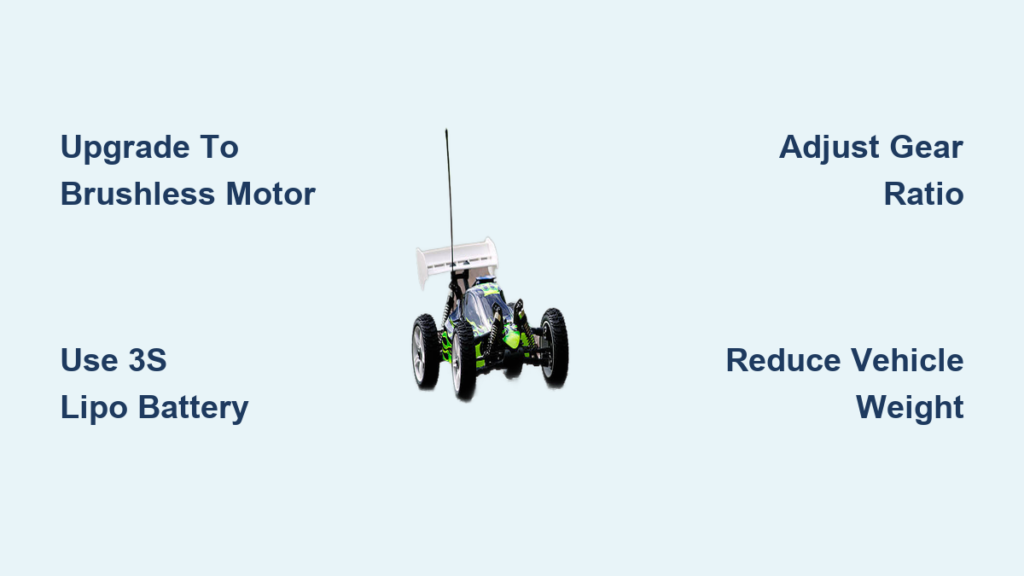
Your RC car used to zip around the track with impressive speed, but now it feels sluggish and underpowered. You’re not alone—thousands of RC enthusiasts face this frustrating issue every season. Whether your vehicle has lost its pep over time or you’re simply craving more adrenaline-pumping velocity, you need practical, tested methods to boost performance. This guide delivers exactly that: actionable techniques to increase RC car speed using proven modifications that work across most hobby-grade models. You’ll discover how simple adjustments to your gearing ratio, battery selection, and motor setup can transform your driving experience without requiring an engineering degree or emptying your wallet.
Upgrade to a Brushless Motor System for Maximum Power
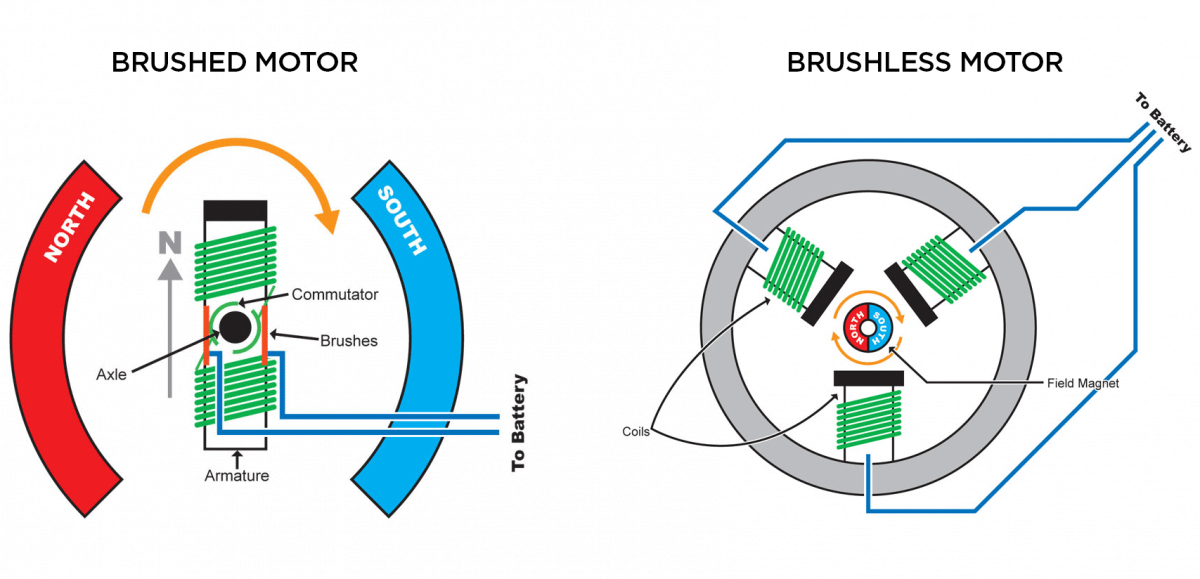
Switching from a brushed to a brushless motor represents the single most effective way to dramatically increase your RC car’s top speed and acceleration. Brushless motors deliver significantly higher efficiency—typically 85-90% compared to 75-80% for brushed systems—which translates directly to more power reaching your wheels. These advanced motors eliminate the friction and electrical resistance caused by brushes contacting a commutator, resulting in less heat buildup and longer runtime between charges.
How to Choose the Right Brushless Motor for Your RC Car
Selecting the appropriate brushless motor requires understanding the KV rating system, which indicates how many RPMs the motor produces per volt. Higher KV numbers mean more speed but less torque, while lower KV values provide stronger acceleration at the expense of top speed. For 1/10 scale buggies, a 3500-4000KV motor offers an excellent balance for most track conditions. Always verify your electronic speed controller (ESC) can handle the motor’s current draw—most brushless systems require ESCs rated for at least 120A for serious speed applications.
Installation Process and Compatibility Checks
Before purchasing, confirm your RC car chassis can physically accommodate a brushless motor of the desired size. Measure your current motor mount dimensions and compare them to potential upgrades. During installation, ensure proper heat dissipation by applying thermal paste between the motor and its heatsink, and never operate without adequate cooling. Connect the three motor wires to the ESC in any order—simply reverse any two wires if your motor spins in the wrong direction. After installation, perform a brief bench test without the wheels attached to verify proper operation before taking your RC car to the track.
Optimize Your Battery Setup for Instant Power Boost
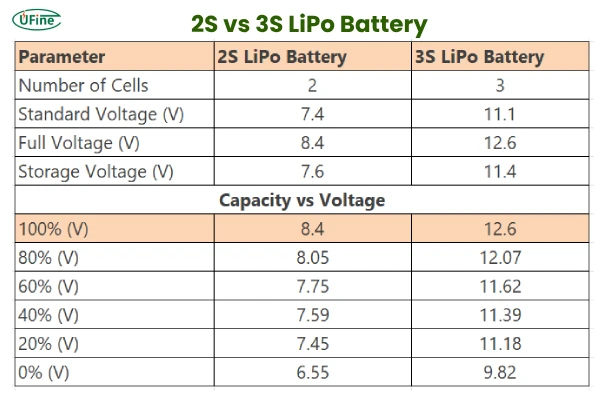
The right battery configuration can provide an immediate and noticeable increase in RC car speed without any permanent modifications to your vehicle. Lithium Polymer (LiPo) batteries have become the standard for speed enthusiasts due to their superior discharge rates and energy density compared to older NiMH technology.
Why 2S vs 3S LiPo Batteries Make a Critical Difference
Upgrading from a 2S (7.4V) to a 3S (11.1V) LiPo battery pack delivers approximately 50% more voltage, directly translating to higher top speeds and stronger acceleration. However, this upgrade requires verifying your ESC and motor can handle the increased voltage—most modern brushless systems support 3S, but always check manufacturer specifications first. The additional power comes with trade-offs: 3S batteries typically have shorter runtimes and generate more heat, so monitor your components’ temperature during initial test runs.
Essential Battery Maintenance for Consistent High Performance
Maximize your speed gains by implementing proper battery care practices. Always charge LiPo batteries on a fireproof surface using a balance charger, and never leave them charging unattended. Store batteries at 3.8V per cell when not in use for extended periods to preserve lifespan. Before each run, inspect for puffing (swelling) which indicates a damaged, potentially dangerous battery that should be retired immediately. Properly maintained batteries deliver consistent power output throughout their discharge cycle, ensuring your RC car performs at its peak from the first lap to the last.
Perfect Your Gear Ratio for Targeted Speed Gains
Your RC car’s gear ratio—the relationship between the pinion gear on the motor and the spur gear on the transmission—directly controls how motor RPM translates to wheel speed. This simple mechanical adjustment offers tremendous customization potential without expensive component replacements.
How to Calculate and Adjust Your Ideal Gear Ratio
Increasing the pinion gear size (more teeth) or decreasing the spur gear size creates a higher numerical gear ratio that improves acceleration but reduces top speed. Conversely, a smaller pinion or larger spur gear lowers the numerical ratio, sacrificing initial punch for higher maximum velocity. For pure speed applications, aim for a lower numerical ratio by installing a smaller pinion gear. Start with a reduction of 1-2 teeth from your current setup, test the results, and make incremental adjustments until you achieve your desired balance of acceleration and top speed.
Warning: Avoid Overgearing That Damages Your Motor
Pushing your gear ratio too far in pursuit of speed can lead to catastrophic component failure. Signs you’ve overgeared include excessive motor heat (too hot to touch after a short run), reduced runtime, and that distinctive burning smell of overheating electronics. Always monitor motor temperature after making gear changes—a safe operating temperature stays below 60°C (140°F). When in doubt, err on the side of slightly undergeared rather than overgeared, as the former merely limits performance while the latter can destroy expensive components.
Reduce Weight Through Strategic Component Selection

Every gram counts when optimizing RC car speed—lighter vehicles accelerate faster, brake more efficiently, and maintain higher speeds through corners. Strategic weight reduction focuses on removing unnecessary mass while preserving structural integrity and handling characteristics.
Most Effective Weight Reduction Areas to Target First
Prioritize removing mass from rotating components and high points on your vehicle, as these have the greatest impact on performance. Replace heavy metal parts with lightweight alternatives: aluminum motor mounts with carbon fiber versions, steel suspension arms with titanium equivalents, and bulky body clips with minimalist retention systems. Focus particularly on unsprung weight (components not supported by suspension) like wheels and tires, as reducing mass here improves traction and responsiveness more dramatically than equivalent reductions elsewhere.
Critical Balance: Maintaining Stability While Shedding Pounds
Avoid the common mistake of removing too much weight, which can make your RC car unstable at high speeds. Maintain adequate battery weight low in the chassis to preserve center of gravity, and never compromise structural elements that protect electronics during crashes. After significant weight reduction, you may need to adjust suspension settings to compensate for the changed dynamics. Test modifications incrementally, evaluating handling characteristics at progressively higher speeds to ensure your lightweight setup remains controllable.
Maintain Your RC Car for Consistent Peak Performance
Regular maintenance represents the most cost-effective speed enhancement available to every RC car owner. A well-maintained vehicle performs closer to its theoretical maximum speed than a neglected one, regardless of component quality.
Essential Monthly Maintenance Checklist for Speed Optimization
Disassemble and clean your drivetrain components monthly, removing built-up dirt and old grease that create parasitic drag. Inspect and replace worn bearings—gritty or stiff-spinning bearings can cost you significant speed. Lubricate transmission gears with lightweight synthetic grease designed for RC applications. Check all screws and fasteners for tightness, as even slightly loose components create vibration that wastes power. Clean motor cooling vents and ensure proper airflow to prevent thermal throttling during extended high-speed runs.
Pre-Run Inspection Routine for Maximum Speed Sessions
Before every high-speed session, perform a 5-minute inspection: verify tire pressure (slightly lower pressure often improves grip at speed), check wheel hex tightness, confirm proper gear mesh (gears should have minimal play but spin freely), and ensure all electronics connectors are secure. These quick checks prevent minor issues from developing into speed-robbing problems during your run, ensuring you extract every possible mile per hour from your current setup.
Final Note: Achieving greater RC car speed requires a systematic approach that balances multiple factors rather than relying on a single modification. Implement these techniques in sequence—starting with maintenance, then battery optimization, followed by gear ratio adjustments, and finally considering motor upgrades—for the most dramatic yet sustainable speed improvements. Remember that safety should always come first; as your RC car becomes faster, ensure you have adequate space to operate it and wear appropriate eye protection. With these proven methods, you’ll transform your RC driving experience, enjoying noticeably higher speeds while maintaining reliable performance session after session.