Nitro RC cars deliver adrenaline-pumping performance that electric models struggle to match, but they require a specific starting procedure. Most beginners learn to use a starter box—that convenient tool that spins the engine’s flywheel until combustion takes over. However, you might find yourself without a starter box at the track, or perhaps you want to simplify your setup for backyard bashing. Whatever the reason, learning to start your nitro RC car without a starter box is a valuable skill that every RC enthusiast should master. This guide covers multiple methods, essential tools, and critical safety considerations to get your engine running reliably using only your hands and a few basic accessories.
The techniques outlined here work for most nitro RC cars, including popular brands like Traxxas, HPI, and Kyosho. Whether you drive a short course truck, buggies, or monster trucks, these starting methods apply to your vehicle. We’ll walk through hand starting, drop starting, and pull start conversions, helping you choose the approach that best fits your situation and experience level.
Why Skip the Starter Box
Starter boxes serve a legitimate purpose—they provide consistent engine rotation at the proper speed for reliable ignition. So why would you want to skip this convenient tool? Several practical scenarios make hand starting skills valuable, and understanding these situations helps you decide which method suits your needs.
Track environments often present limited power access or crowded pit areas where starter boxes become impractical. Without reliable electricity or space constraints, a portable hand-starting solution keeps you in the action. Some racers prefer the lightweight approach, carrying only essential tools rather than bulky equipment. Additionally, starter boxes add cost to your setup, and beginners might redirect that money toward upgrades or spare parts they need more urgently.
Beyond convenience, learning hand-starting techniques builds a deeper understanding of your engine’s behavior. You develop a feel for proper fuel mixture, glow plug performance, and engine response that serves you well during troubleshooting. When your starter box fails at an event, you’ll be the one still running laps while others scramble for solutions.
Essential Tools for Hand Starting
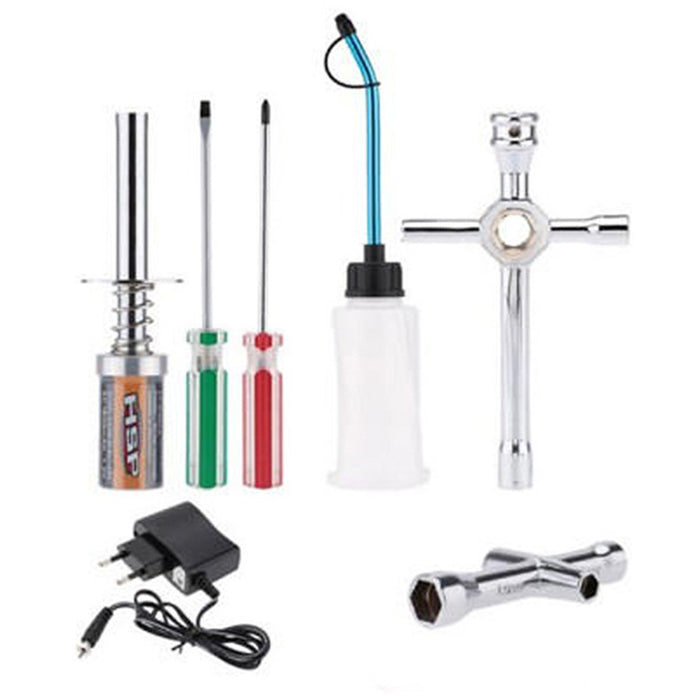
Successful hand starting requires the right equipment gathered before you attempt ignition. These tools work across multiple starting methods, so assembling a complete kit ensures you’re prepared for any situation that arises at the track or in your backyard.
A quality glow plug igniter tops your list of essential items. This battery-powered tool heats the glow plug element, enabling combustion when combined with fuel and proper compression. Invest in a reliable igniter with good battery contact—cheap units often deliver inconsistent heating that leads to frustrating starting attempts. Keep spare batteries in your tool bag, as weak igniters cause more starting failures than any other single factor.
Fuel is equally critical, and understanding nitro fuel characteristics affects your starting success. Most nitro RC engines run on fuel containing 10% to 30% nitromethane, with 20% being a common starting point. The nitromethane content affects combustion characteristics, and beginners should stick with the fuel their engine manufacturer recommends. Old or contaminated fuel causes hard starting and poor performance, so inspect your fuel before each session and replace questionable supplies.
You’ll also need a clean rag for protecting your hands during the pull start motion, needle-nose pliers for adjusting the carburetor’s high-speed needle, and a small screwdriver for low-speed adjustments. A flashlight helps inspect the glow plug and carburetor opening in low-light conditions. Finally, keep a set of RC car zip ties and basic tools for quick repairs when starting problems escalate into mechanical issues.
Hand Start Your Nitro RC Car
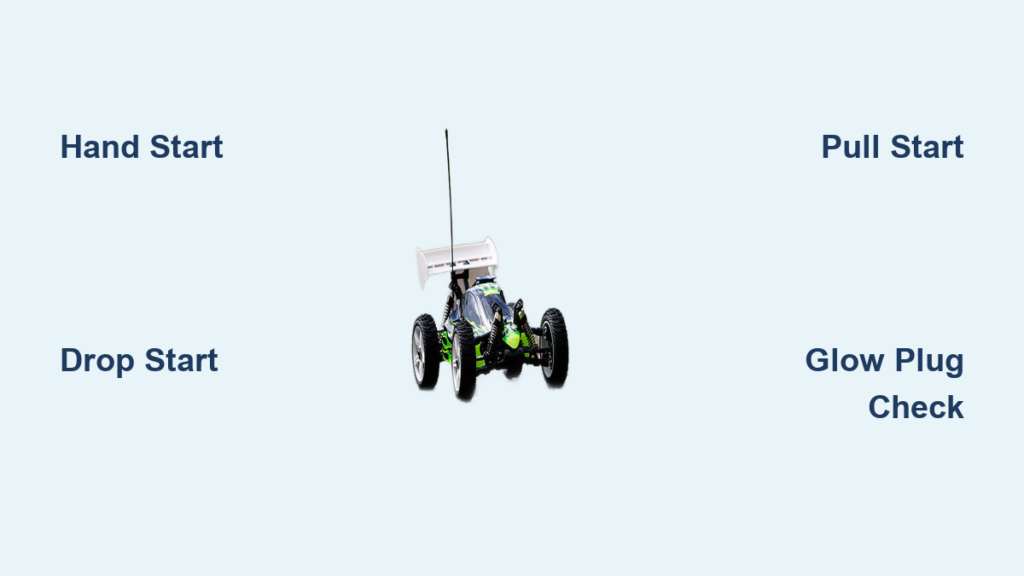
The hand start method involves manually spinning the engine’s flywheel using your fingers or a starting tool. This technique requires practice to master, but it provides the most direct replacement for starter box functionality without permanent modifications to your vehicle.
Begin by ensuring your fuel tank is primed. Squeeze the fuel line bulb to draw fuel through the carburetor until you see fuel visible in the clear tubing. This priming step saturates the engine with fuel, reducing the cranking time needed for ignition. Without proper priming, you’ll spin the engine fruitlessly as it draws fuel from an empty line.
Next, install your glow plug and connect the igniter. The glow plug tip should glow bright orange when tested—dim red indicates weak batteries requiring replacement. Screw the glow plug snugly into the cylinder head using your needle-nose pliers, being careful not to over-tighten which can damage the threads. Connect the igniter leads to the glow plug terminals, ensuring solid electrical contact.
Now comes the hand starting motion itself. Wrap your fingers around the flywheel circumference, positioning your thumb against the chassis for stability. Give the flywheel a firm, rapid clockwise spin—you’re looking for speed rather than force, as excessive pressure risks stripping the starter gears or damaging the pull start mechanism. A good spin should produce two to three full rotations before your hand loses momentum.
Pro tip: For better grip, try wrapping a rubber band around the flywheel teeth before spinning—it provides extra traction without damaging components.
After spinning, watch for immediate signs of ignition. A successful start typically produces a brief cough or sputter as the fuel-air mixture catches. If the engine fires briefly but dies, repeat the spin while holding the throttle trigger at half position, providing additional air and fuel mixture. Most engines start within three to five attempts when the glow plug, fuel, and technique are correct.
Drop Start Technique Explained
Drop starting offers an alternative approach that many experienced racers prefer for its reliability and reduced physical effort compared to pure hand spinning. This method uses the engine’s own momentum combined with gravity to achieve the rotational speed necessary for ignition.
The drop start technique requires a small elevated surface—often a wooden board, toolbox, or specially made starting stand. Place your RC car on this surface with the front wheels hanging slightly over the edge. The elevation allows you to release the car while simultaneously giving the flywheel a manual spin, combining your input force with gravitational pull.
Execute the drop start in a coordinated motion. First, hold your RC car firmly with one hand while using your other hand to spin the flywheel rapidly. As you release the car from the elevated position, the wheels begin spinning freely, and the drivetrain multiplies your initial flywheel rotation. This combined momentum often produces faster engine speeds than hand starting alone.
Critical timing tip: Release the car just as your fingers leave the flywheel—this timing maximizes the transfer of your spinning energy into the drivetrain.
Keep your RC car pointed away from obstacles and people during this process. A successful drop start launches your vehicle forward, so position yourself to the side and release cleanly toward open space. Practice this motion at low throttle settings until you develop consistent timing—rushing the release or spinning too slowly both reduce success rates.
The drop start works particularly well for larger displacement engines that demand higher cranking speeds. Small engines might start with minimal effort, but .25 cubic inch and larger engines benefit significantly from the increased rotational momentum this technique provides. Many buggies and monster trucks are specifically designed with this starting method in mind, featuring chassis layouts that make drop starting comfortable and efficient.
Pull Start Conversion Options

Permanent pull start conversions transform your RC car into a self-starting machine without external equipment. These modifications install a recoil starter mechanism directly onto your engine, similar to what you find on gasoline-powered lawn mowers and chainsaws. The conversion allows instant starting with a simple yank of the starter cord.
Pull start kits are available for most common nitro engine sizes, typically costing between thirty and seventy dollars depending on quality and engine compatibility. Look for kits designed specifically for your engine brand and displacement—generic options often require modification or fit improperly. Quality matters here, as cheap pull start mechanisms can snap during use or fail to engage properly with the engine’s flywheel.
Installation involves removing the original backplate and replacing it with the pull start assembly. You’ll need to expose the flywheel, which usually means detaching the exhaust manifold and backplate from your engine. The pull start kit includes a new backplate with the recoil mechanism, a modified flywheel with starter teeth, and the pull cord assembly. Follow the kit instructions carefully, ensuring proper alignment of the starter gears with the flywheel teeth.
Installation pro tip: Apply a light coat of high-temperature grease to the starter pawls before assembly—this reduces friction and extends the life of your pull start mechanism.
Once installed, pull starting is straightforward. Hold your RC car securely with one hand while grasping the pull start handle with the other. Give a quick, firm pull—aim for a one-second motion that unspools the cord fully. The mechanism engages the flywheel teeth, spinning the engine rapidly for ignition. Most engines start within one or two pulls when properly tuned and with a good glow plug.
Safety First: Critical Precautions
Nitro engines present real hazards that demand respect and proper safety measures. Understanding these risks protects you and those around you while ensuring your RC car operates reliably for years to come. Never skip these essential precautions, regardless of how eager you are to get running.
Eye protection is non-negotiable during any starting procedure. Engines can backfire unexpectedly, and the rotating flywheel can throw debris with considerable force. Safety glasses or goggles rated for impact protection should be worn every time you attempt to start your engine, regardless of method. Contact lenses are acceptable under proper eye protection, but glasses alone provide insufficient shielding.
Fueling requires careful handling due to nitromethane’s toxicity and flammability. Never fuel your RC car in enclosed spaces, and keep fuel containers sealed when not in use. Spilled fuel on your skin should be washed immediately, as prolonged contact causes irritation. The fumes are also harmful when inhaled in concentrated amounts, so fuel in well-ventilated areas away from sparks or open flames.
Emergency tip: Keep a small container of baking soda nearby—it neutralizes spilled nitro fuel and reduces fumes.
Hot engines present burn risks that catch many beginners off guard. The engine housing and exhaust manifold reach temperatures capable of causing serious burns within seconds of running. Allow your engine to cool completely before touching any metal components, and never reach under a running vehicle. Keep loose clothing and hair secured away from rotating components, as the flywheel can snag and cause severe injuries.
Troubleshooting Starting Problems
When your RC car refuses to start despite proper technique, systematic troubleshooting identifies the root cause quickly. Most starting failures trace to a handful of common issues, and working through this checklist saves frustration and prevents unnecessary part replacements.
Glow plug failure ranks as the most frequent starting problem culprit. A dead or dying glow plug won’t heat sufficiently to ignite the fuel mixture, regardless of your starting technique. Test your glow plug by connecting it to the igniter outside the engine—it should glow bright orange within seconds of contact. Replace plugs that show dim glow, inconsistent heating, or visible damage to the element. Carry spare glow plugs to every session, as failure can occur without warning.
Fuel delivery problems prevent combustion even when your glow plug works perfectly. Check that your fuel tank contains fresh, clean fuel with the correct nitro percentage for your engine. Inspect the fuel lines for cracks, kinks, or disconnections that interrupt fuel flow. Prime the fuel line thoroughly, squeezing the bulb until you see fuel reaching the carburetor. Air bubbles in the fuel line can also cause starting issues—keep priming until the line runs bubble-free.
Quick fix: If you suspect air bubbles, pinch the fuel line between the tank and carburetor and squeeze the bulb firmly—this often forces air pockets back toward the tank.
Starting your nitro RC car without a starter box opens up new possibilities for convenient, portable bashing and racing. Whether you master hand starting, prefer the drop start technique, or install a pull start conversion, these skills ensure you’re never grounded by missing equipment. Focus on safety, maintain your engine properly, and develop consistent technique—your RC car will fire up reliably session after session, delivering the nitro-powered performance that makes radio control cars so thrilling to drive. Most importantly, remember that practice makes perfect; after your first few successful hand starts, you’ll wonder why you ever relied on a starter box in the first place.