Nitro-powered RC cars deliver thrilling speed and performance, but knowing how to stop them properly is critical for safety and equipment preservation. Unlike electric RC models that simply cut power when the transmitter throttle is released, nitro RC vehicles require specific shutdown procedures due to their combustion engines running on flammable nitromethane-based fuel. Many beginners accidentally damage their expensive nitro vehicles by using improper stopping techniques or panic when standard methods fail during operation. This comprehensive guide covers the correct procedures to safely stop your nitro RC car under normal conditions and emergency situations, helping you protect your investment and prevent dangerous runaways.
Essential Safety Gear Before Attempting Shutdown
Before learning stopping techniques, you must have proper safety equipment. Handling a running nitro RC car requires specific precautions that many hobbyists overlook until an incident occurs. The high-temperature engine, spinning drivetrain components, and flammable fuel create multiple hazards that demand appropriate protection.
Mandatory Safety Equipment Checklist
- Heat-resistant gloves rated for at least 300°F to protect from exhaust and engine heat
- Safety glasses with side shields to prevent fuel splashes or debris from entering eyes
- Long-sleeve natural fiber clothing (cotton or wool) to minimize fire risk
- Fire extinguisher rated for flammable liquids within immediate reach
- Fuel-safe container for any emergency fuel drainage
Critical Warning: Never attempt to stop a running nitro RC car with bare hands. The exhaust pipe typically reaches 300-500°F during operation and can cause severe burns instantly. The clutch bell spins at thousands of RPM and can severely cut unprotected skin.
Standard Engine Shutdown Procedures
The proper way to stop your nitro RC car depends on whether you’re performing a routine shutdown or dealing with an emergency situation. Most beginners make the mistake of thinking the throttle trigger alone controls the engine completely, but nitro engines have specific shutdown requirements.
Normal Shutdown Sequence: Step-by-Step
- Reduce throttle to idle position on your transmitter for 15-20 seconds to allow engine cooldown
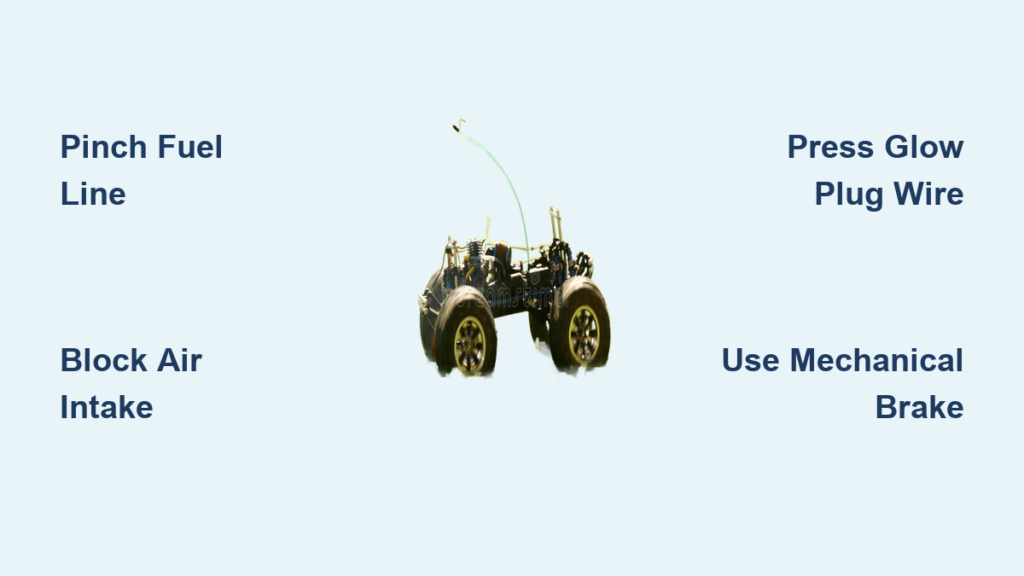
- Locate the engine’s glow plug wire on the top of the engine head
- Gently press the wire downward toward the engine head using an insulated tool
- Hold in place for 3-5 seconds until engine RPM drops and stops completely
- Verify engine has stopped by listening for complete silence from the exhaust
Pro Tip: Always perform shutdowns on a hard, flat surface away from flammable materials. Grass or carpet can catch fire from hot exhaust or spilled fuel during the process.
Why Simply Releasing the Throttle Doesn’t Stop Nitro Engines
Unlike electric RC cars, nitro vehicles don’t immediately stop when you release the transmitter trigger. The engine continues running at idle speed because:
- The carburetor maintains a small fuel-air mixture flow
- The glow plug remains hot enough to ignite this mixture
- There’s no electronic cutoff like in brushless systems
This idle operation serves an important purpose – allowing the engine to cool gradually – but requires intentional action to fully stop.
Emergency Stop Techniques for Runaway Vehicles
When standard shutdown methods fail or you face an immediate danger situation, you need reliable emergency stopping techniques. Runaway nitro RC cars can reach speeds over 60 mph and cause significant damage or injury if not stopped quickly.
Three Reliable Emergency Stop Methods
Method 1: Fuel Line Pinch Technique
- Locate the fuel supply line running from the fuel tank to the carburetor
- Use needle-nose pliers (with heat-resistant grips) to firmly pinch the line
- Compress completely for 10-15 seconds until engine sputters and stops
- Maintain pressure for an additional 5 seconds to ensure complete fuel cutoff
Visual Cue: Watch for decreased engine RPM and sputtering exhaust as the fuel supply is restricted.
Method 2: Air Intake Blockage Method
- Identify the air filter or intake tube on the carburetor side of the engine
- Completely cover the intake with your gloved hand or a heat-resistant cloth
- Maintain full coverage for 8-10 seconds until engine stalls from lack of oxygen
- Remove hand immediately after engine stops to prevent potential backfire
Warning: Never use this method if the vehicle is moving toward you at high speed – position yourself safely to the side.
Method 3: Drag Brake Application
- Activate the mechanical brake on your transmitter (if equipped)
- Apply gradual pressure rather than slamming the brake
- Combine with fuel pinch for fastest stopping
- Be prepared for potential skidding on smooth surfaces
Expert Note: Most competition-level nitro RC cars have separate brake and throttle triggers, but many beginner models combine these functions. Know your specific vehicle’s control layout before an emergency occurs.
Common Stopping Mistakes and How to Avoid Them
Many nitro RC enthusiasts damage their vehicles through improper stopping techniques that seem logical but actually cause mechanical stress or safety hazards.
Top 3 Stopping Errors That Damage Your RC Car
- Abruptly cutting ignition without cooldown – Causes thermal shock to the engine block
- Pouring water on a hot engine – Creates dangerous steam explosions and warps metal components
- Grabbing spinning tires with bare hands – Results in severe cuts and potential loss of vehicle control
Pro Tip: Always allow 20-30 seconds of idle time before complete shutdown during normal operation. This prevents “after-run” where residual heat continues combustion after shutdown.
Post-Stop Procedures: What to Do After Your Nitro Car Stops
Proper procedure continues after the engine stops. Many hobbyists think their job is done once the vehicle halts, but critical maintenance steps follow to ensure longevity.
Essential Post-Operation Steps
- Wait 2 minutes before handling the vehicle to allow residual heat dissipation
- Inspect for fuel leaks around the tank, lines, and carburetor
- Check tire condition for damage from emergency braking
- Clean any spilled fuel with appropriate solvent before storage
- Run after-run oil through the engine if storing for more than 48 hours
Expert Note: If you used emergency stopping methods, perform a complete mechanical inspection before your next run. Pinching fuel lines can cause micro-fractures that lead to future leaks.
Preventing Runaway Situations: Proactive Measures
The best emergency procedure is avoiding emergencies altogether. Implement these preventive measures to minimize situations where you need emergency stopping techniques.
Runaway Prevention Checklist
- Weekly fuel system inspection for cracks or loose connections
- Throttle trim calibration before each use session
- Radio range check in open area before high-speed runs
- Fresh fuel with proper oil content (never use old or contaminated fuel)
- Secure body mounting to prevent covers from flying off and jamming controls
Critical Maintenance Tip: Replace fuel lines every 6-8 tanks of fuel. Nitro fuel degrades rubber components over time, leading to unexpected leaks and performance issues.
Troubleshooting Common Stopping Problems

When your nitro RC car doesn’t respond to standard stopping procedures, these diagnostic steps can identify and resolve the issue.
Why Your Nitro Car Won’t Stop: Quick Reference
- Engine continues running after glow plug wire pressed
- Cause: Damaged or disconnected kill switch circuit
-
Fix: Check wire connection to engine head and transmitter circuit
-
Vehicle keeps moving after throttle release
- Cause: Stuck throttle servo or binding linkage
-
Fix: Clean and lubricate throttle linkage, check servo operation
-
Brakes fail to engage properly
- Cause: Worn brake pads or contaminated discs
- Fix: Replace brake components and clean disc surfaces
Pro Tip: Carry a small multi-tool specifically for nitro RC maintenance that includes pliers for fuel line pinching and screwdrivers for quick adjustments.
Final Safety Reminder: Nitro RC vehicles contain flammable fuels under pressure and operate at high temperatures. Always treat a running nitro engine with the same respect as full-sized combustion equipment. Never attempt to stop a vehicle by stepping on it or using your body to block movement. Keep spectators at a safe distance during operation, especially when testing new setups or after maintenance. By following these proper stopping procedures, you’ll extend the life of your nitro RC car while keeping yourself and others safe during the exciting experience of nitro-powered radio control. Remember that prevention through regular maintenance is always better than emergency procedures when it comes to nitro RC operation.