Your Power Craze RC car suddenly won’t respond when you press the throttle. The lights might be on, but the wheels refuse to turn. You’ve charged the batteries, double-checked everything, and still nothing works. Before you give up and toss your RC car aside, this guide will help you diagnose and fix the most common problems with simple solutions you can implement right now.
RC cars contain multiple interconnected systems that must work together perfectly. When one component fails, the entire vehicle can become unresponsive. The good news is that most Power Craze RC car issues have straightforward fixes that don’t require advanced technical skills. By following this systematic troubleshooting approach, you’ll be able to identify whether the problem lies in the power system, radio controls, motor, or mechanical components—and get your car back on track in no time.
Battery Connection Failures
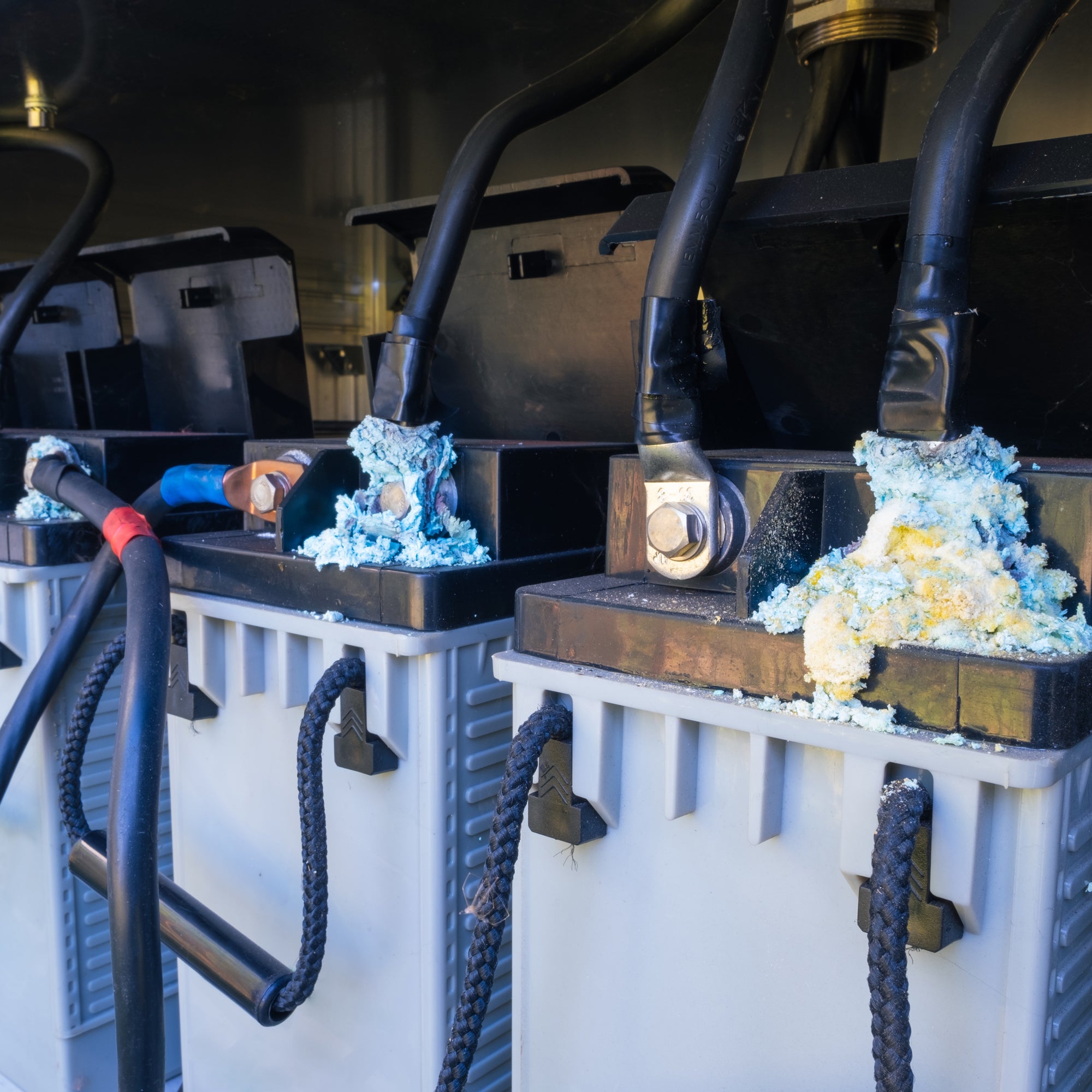
Loose or corroded battery connections account for nearly half of all “Power Craze RC car not working” issues. Before diving into complex diagnostics, always start with the simplest possibilities that take less than two minutes to check.
Check Battery Polarity and Seating
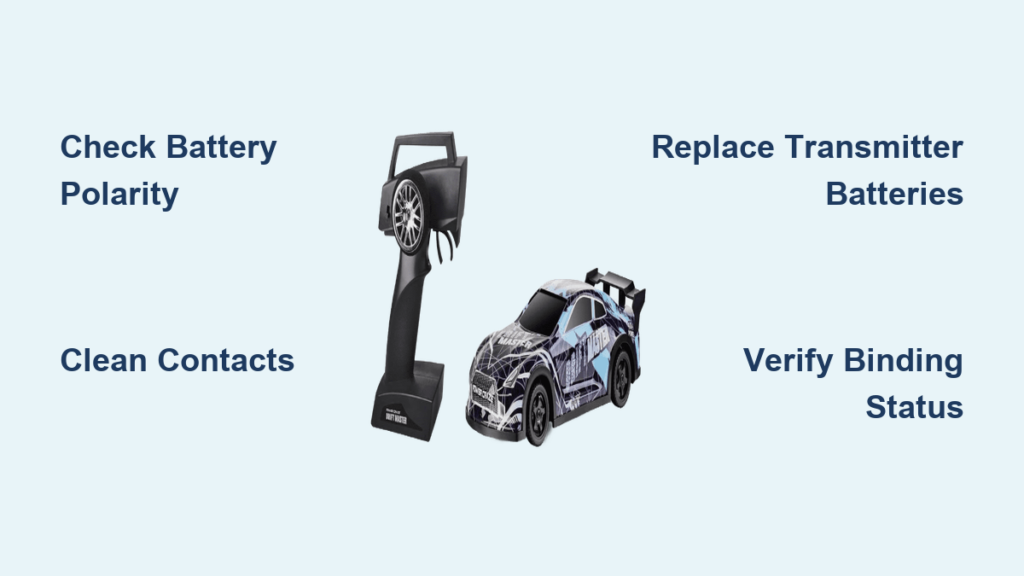
Remove the battery pack and inspect both the battery terminals and the car’s battery compartment. Bent terminals, reversed polarity, or poor contact can completely prevent power from reaching your RC car’s systems. Ensure the red wire connects to the positive terminal (+) and the black wire to the negative terminal (-). Gently press the battery into place until you hear a secure click or feel it seat properly. Many Power Craze models have spring-loaded contacts that lose tension over time—bend these contacts slightly upward with a small flathead screwdriver to improve connection.
Inspect for Corrosion and Damage
Examine both battery terminals and car contacts for white or greenish crusty buildup, which indicates corrosion. This insulating layer prevents proper electrical flow even when connections appear secure. Clean corrosion using a cotton swab dipped in white vinegar or isopropyl alcohol, then dry thoroughly with a clean cloth. Check for melted plastic around terminals, which signals previous overheating that may have damaged internal wiring. Replace any battery with swollen cells immediately—this is especially critical for LiPo batteries, which can become fire hazards when damaged.
Transmitter and Receiver Troubleshooting
When your Power Craze RC car shows power (lights on) but doesn’t respond to controls, the communication between your transmitter (controller) and receiver is likely compromised. This radio link failure represents about 30% of non-responsive RC car cases.
Replace Transmitter Batteries First
Always begin with the most common cause: weak transmitter batteries. Even if your controller lights up, insufficient voltage prevents proper signal transmission. Install brand new alkaline batteries rather than rechargeables, as they maintain higher voltage throughout their lifespan. Test battery voltage with a multimeter—below 1.3V per cell indicates inadequate power for reliable operation. After installing fresh batteries, power on both transmitter and car while holding them close together (within 3 feet) to maximize signal strength during initial testing.
Verify Proper Binding Status
Your Power Craze RC car’s receiver must be correctly “bound” to your specific transmitter. If the binding has failed (often after battery changes or storage), the car won’t recognize your controller commands. Locate the bind plug or button on your receiver (typically near the antenna wire) and follow these steps:
1. Insert the bind plug or press the bind button
2. Turn on your transmitter
3. Wait 5-10 seconds for the receiver LED to change pattern
4. Remove the bind plug or release the button
5. Turn off both transmitter and receiver
6. Power on transmitter first, then the car
A successful bind shows a solid or steady-flashing LED on the receiver rather than rapid blinking. Consult your specific Power Craze model manual for exact binding procedures as they vary between models.
Motor and Drive System Checks
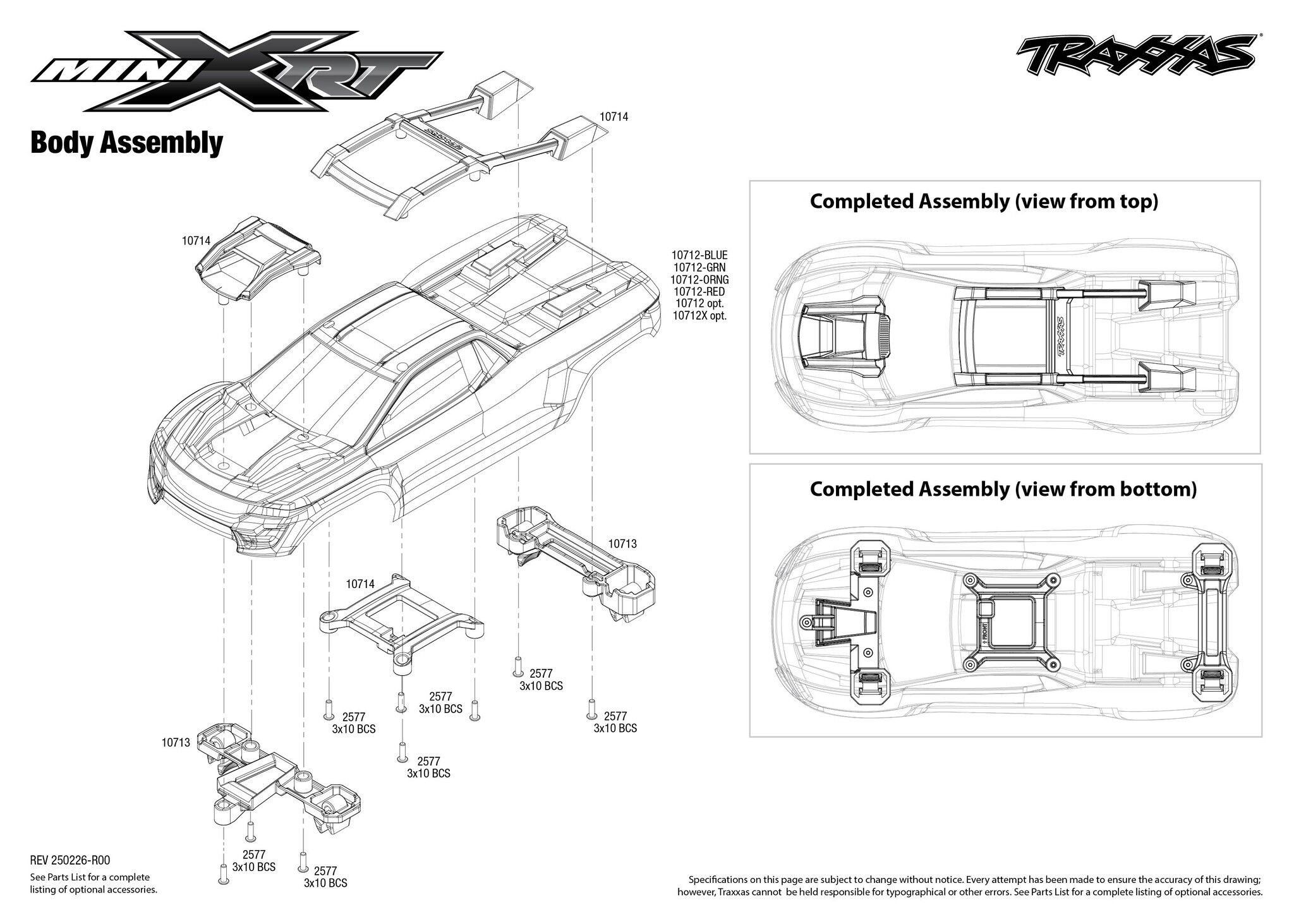
When your Power Craze RC car powers on but the wheels won’t turn, the problem likely lies in the motor, Electronic Speed Controller (ESC), or physical drive components. These mechanical and electrical failures account for approximately 15% of non-working RC car cases.
Test Motor Direct Connection
Bypass the ESC temporarily to determine if your motor still functions. Disconnect the motor wires from the ESC and connect them directly to your battery pack (observe correct polarity). If the motor spins when connected directly:
– Your ESC has failed and needs replacement
– Check for burnt components or melted wires on the ESC circuit board
– Verify the ESC’s programming matches your motor type (brushed vs. brushless)
If the motor doesn’t spin even with direct battery connection:
– Inspect motor shaft for binding or physical obstruction
– Check for damaged commutator segments (brushed motors)
– Test for continuity between motor terminals with a multimeter
Inspect Gear Train and Drivetrain
Physical obstructions in the transmission often mimic electrical failures. Remove the body shell and visually inspect the entire drivetrain while manually rotating the wheels. Look for:
– Jammed pebbles or debris between gears
– Broken or stripped gear teeth (common in plastic differentials)
– Disconnected drive shafts or universal joints
– Binding suspension components restricting wheel movement
Lubricate all moving parts with lightweight RC-specific grease, avoiding wheel bearings which require dry graphite lubricant. Replace any visibly damaged gears immediately—continuing to run with stripped gears causes cascading damage to multiple expensive components.
Common User Mistakes to Avoid
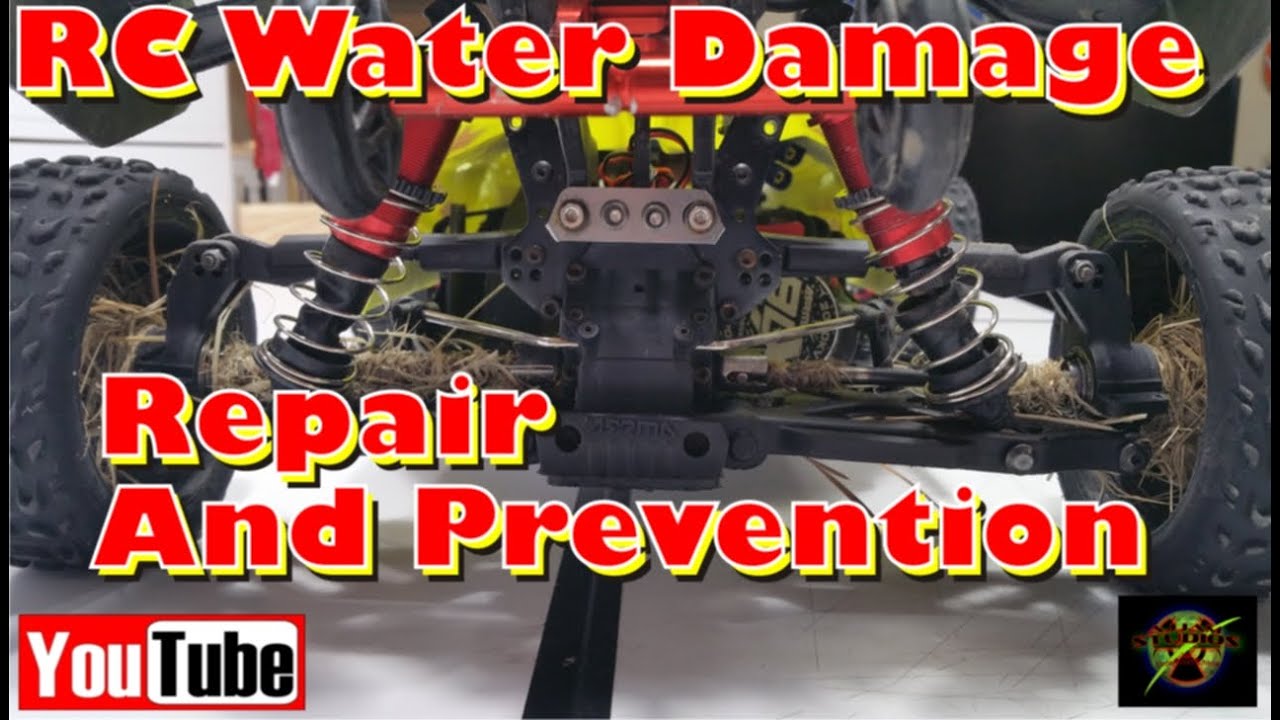
Many Power Craze RC car problems stem from simple user errors rather than component failures. Recognizing these common mistakes can save you hours of unnecessary troubleshooting.
Water Exposure Damage
Never operate your Power Craze RC car in wet conditions unless it’s specifically rated as waterproof. Moisture intrusion causes corrosion that progressively worsens over time, creating intermittent failures that seem to appear randomly. If your car gets wet:
1. Immediately remove the battery
2. Disassemble accessible components
3. Dry thoroughly with compressed air
4. Apply electrical contact cleaner to all connectors
5. Allow 48 hours of complete drying before reassembly
Incorrect Battery Storage
Storing LiPo batteries fully charged or completely drained significantly reduces lifespan and creates safety hazards. Always store LiPo batteries at approximately 3.8V per cell (about 50% charge). Use your charger’s storage mode function or manually discharge/charge to proper storage voltage. Never leave batteries in your car during storage—temperature fluctuations accelerate degradation.
Maintenance Tips to Prevent Future Failures
Implement these simple maintenance practices after every use to dramatically reduce future “Power Craze RC car not working” incidents:
- Clean after each run: Use compressed air to remove dirt from chassis, gears, and electronics
- Check fasteners: Tighten loose screws on motor mounts, suspension, and body posts
- Inspect wiring: Look for frayed or pinched wires that could short circuit
- Lubricate moving parts: Apply appropriate lubricants to gears, bearings, and suspension pivots
- Verify tire pressure: Properly inflated tires prevent excessive drivetrain strain
For longer storage periods (more than two weeks), remove the battery and store your Power Craze RC car in a cool, dry place away from direct sunlight. Check all rubber components (tires, suspension bushings) periodically for dry rot or cracking.
When to Seek Professional Help
Some Power Craze RC car problems require professional expertise. Consider professional repair when:
– You detect burnt components or melted wiring on circuit boards
– Water damage has affected multiple electronic components
– The chassis has sustained structural damage from crashes
– You’ve systematically tested all other possibilities without success
Professional RC repair shops have specialized diagnostic equipment and component-level repair capabilities that make certain fixes more economical than replacement. For older Power Craze models, professionals can often source discontinued parts or recommend compatible upgrades that improve performance while solving your immediate problem.
Don’t let a non-working Power Craze RC car discourage you from the hobby. By following this systematic approach—starting with the simplest possibilities and working toward more complex diagnostics—you’ll solve most issues yourself. Remember that 80% of “Power Craze RC car not working” cases resolve with basic battery, connection, or transmitter fixes that take less than five minutes. Keep this guide handy for your next troubleshooting session, and get ready to enjoy the thrill of RC driving again!