Picture this: you’re in the final lap of a championship race, tires screeching, heart pounding, when suddenly your RC car spins out on the last corner. That frustrating moment separates casual hobbyists from podium finishers. Competitive RC car racing demands precise vehicle control, strategic thinking, and technical knowledge that transforms good drivers into consistent winners. This guide delivers actionable RC car racing tips from professional competitors that will immediately improve your lap times and race results, regardless of your current skill level. You’ll learn techniques that address the most common performance killers in RC racing and discover how small adjustments create significant competitive advantages on the track.
The difference between finishing mid-pack and standing on the podium often comes down to consistency rather than raw speed. Top drivers don’t rely on occasional brilliant laps but instead repeat identical circuits within fractions of a second, lap after lap. This guide focuses on RC car racing tips that build this crucial consistency through proper technique, vehicle setup, and mental preparation. By implementing these strategies, you’ll develop the habits that transform random good runs into predictable high-performance racing, whether you’re competing in local club races or preparing for regional championships.
Perfect Your Throttle Control for Maximum Track Grip

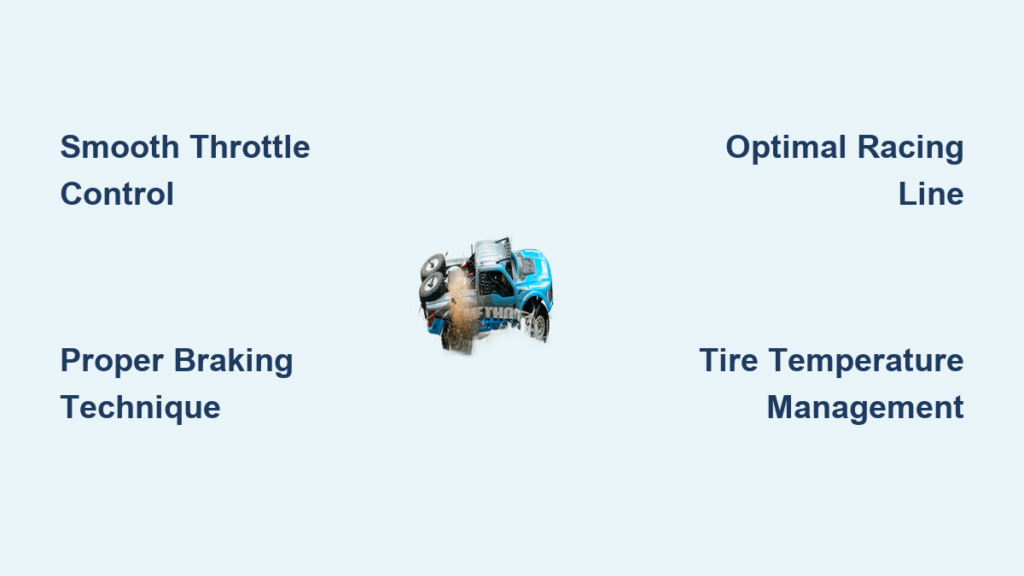
Smooth throttle application represents the single most impactful skill separating competitive RC racers from casual hobbyists. Jerky inputs cause wheel spin and disrupt chassis balance, while progressive modulation maintains optimal traction through every section of the track. When entering corners, aim for 60-70% throttle as you begin turning, then reduce to 30-40% through the apex before gradually applying full power on exit. This approach minimizes weight transfer and keeps your vehicle planted during critical cornering phases.
How to Feather the Throttle During Technical Sections
Professional racers develop an intuitive feel for “feathering” the throttle in tight sections to prevent sudden weight shifts that break the rear end loose. Imagine pressing the trigger through layers of thick butter rather than stabbing at it aggressively—these subtle movements produce consistent results while jerky inputs create handling instability. Practice this technique during warm-up laps by maintaining constant speed without using brakes, focusing on micro-adjustments that keep your car balanced. This exercise builds the fine motor control needed for precision throttle management when every tenth of a second counts.
Adjust Throttle Technique Based on Track Surface Conditions
The optimal throttle application varies dramatically depending on track surface conditions. High-grip carpet tracks allow more aggressive inputs without wheel spin, while dusty or low-traction surfaces demand conservative modulation. Monitor your tire sounds during acceleration—if you hear consistent squealing or see visible wheel spin, reduce throttle application slightly. Experienced racers constantly adapt their throttle style based on real-time feedback as track rubber accumulates throughout the day. Learn to recognize the subtle handling cues that indicate you’re approaching the traction limit and adjust accordingly.
Master Braking Techniques to Avoid Corner Exit Mistakes
Understanding weight transfer dynamics transforms braking from simple speed reduction into a handling optimization tool that directly impacts corner exit speed. Apply brakes progressively rather than suddenly to prevent excessive chassis pitch that unloads rear tires and sacrifices grip. The ideal braking point varies by surface—typically 2-3 car lengths before corner entry on carpet tracks and 3-4 lengths on asphalt surfaces. Begin with light pressure and gradually increase to your target deceleration rate for smoother transitions.
Combine Steering Input with Braking for Better Turn-In
The most effective technique involves applying light brakes while simultaneously initiating your turn rather than braking in a straight line then steering. This combined input keeps weight more evenly distributed between axles and improves initial turn-in response. On high-grip surfaces, lighter braking pressure often proves more effective than aggressive deceleration because it maintains more weight over the rear tires for better traction stability. Practice threshold braking during practice sessions to identify where your tires first begin to lock up, then back off slightly to find your optimal braking limit.
Adapt Braking Points for Different Corner Types
Different corners demand distinct braking approaches that experienced racers recognize instinctively. Hairpin corners require early, firm braking to scrub sufficient speed for the tight turning radius, while fast sweeper corners often need only light braking or rolling off the throttle to maintain momentum through the extended curve. Practice identifying consistent braking zones by selecting fixed reference points on track boundaries or barrier positions—repeating the same braking point creates consistent corner entry conditions essential for fast lap times. As you gain experience, you’ll develop the ability to adjust braking points based on tire wear, battery voltage, and track evolution.
Find the Fastest Racing Line for Every Track Configuration
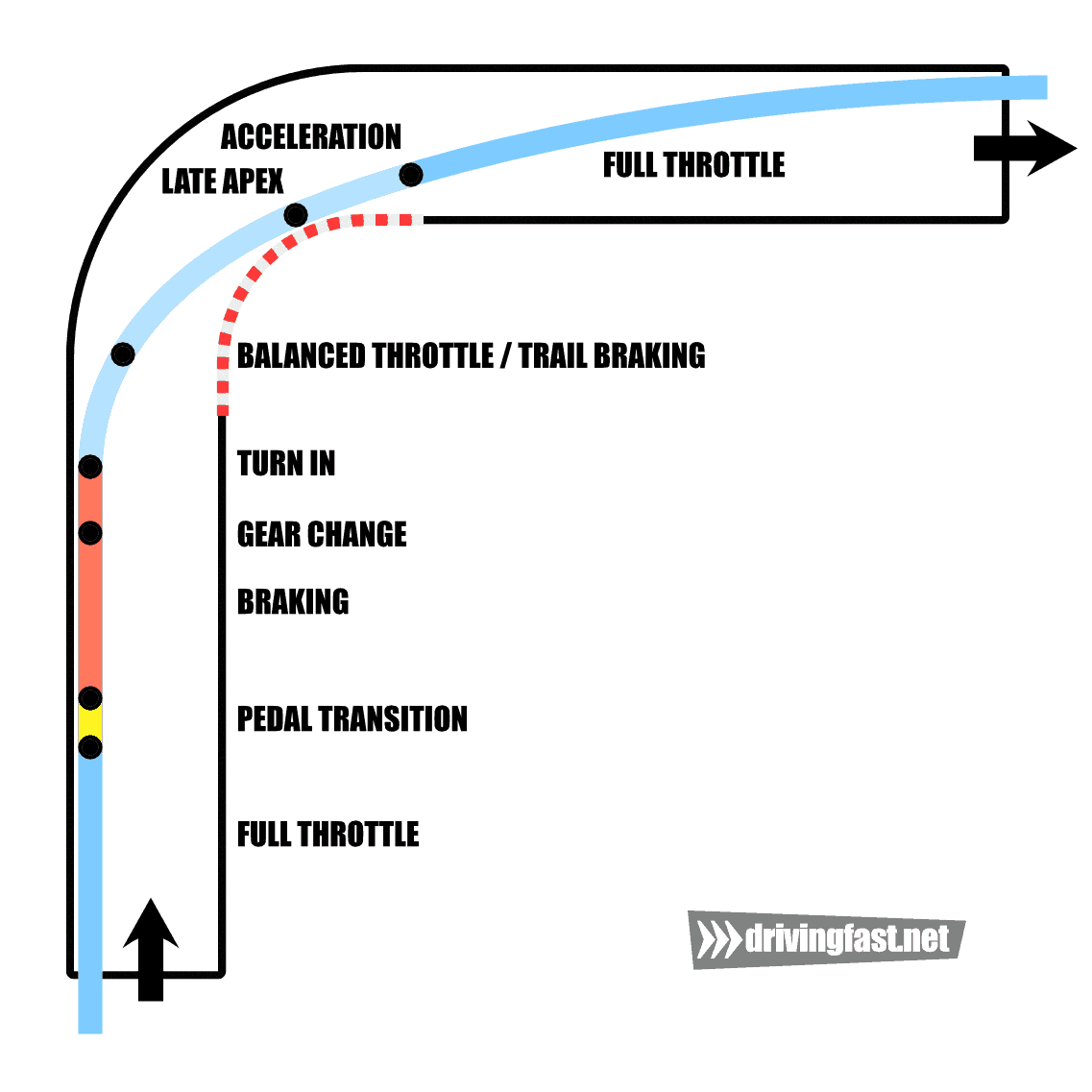
The path your vehicle takes through corners determines lap times more dramatically than straight-line speed, making racing line optimization essential for competitive performance. The late apex technique provides the foundation for most cornering strategies: turn in later than instinct suggests, pass through the apex point midway through the corner, then track out toward the exit. This approach maximizes the radius through the turn, providing higher exit speed that translates directly into faster overall lap times.
Identify Visual Apex Reference Points for Consistent Lines
Visual apexing provides a practical method for executing consistent lines. Pick a specific spot on the inside of each corner—a tile seam, painted mark, or barrier joint—and commit to passing through that point at the corner’s midpoint. This focused approach prevents the common mistake of targeting the apex too early, which forces you to tighten your line through the corner’s exit and sacrifices speed. During practice sessions, deliberately vary your turn-in points and observe the impact on exit speed and overall lap time to discover the optimal line for your specific vehicle setup.
Adapt Cornering Approach for Different Corner Types
Different corner categories require adapted line selection strategies. Hairpin corners benefit from early braking and taking the tightest possible inside line, as the reduced radius makes exit speed less impactful than entry efficiency. Fast sweeper corners reward maintaining momentum with a wider entry and exit arc, accepting slightly slower mid-corner speed to carry more speed onto the following straight. The key principle across all corner types is consistency—once you identify the optimal line for a specific corner, repeat it precisely lap after lap rather than experimenting during race runs.
Optimize Suspension Setup for Current Track Conditions
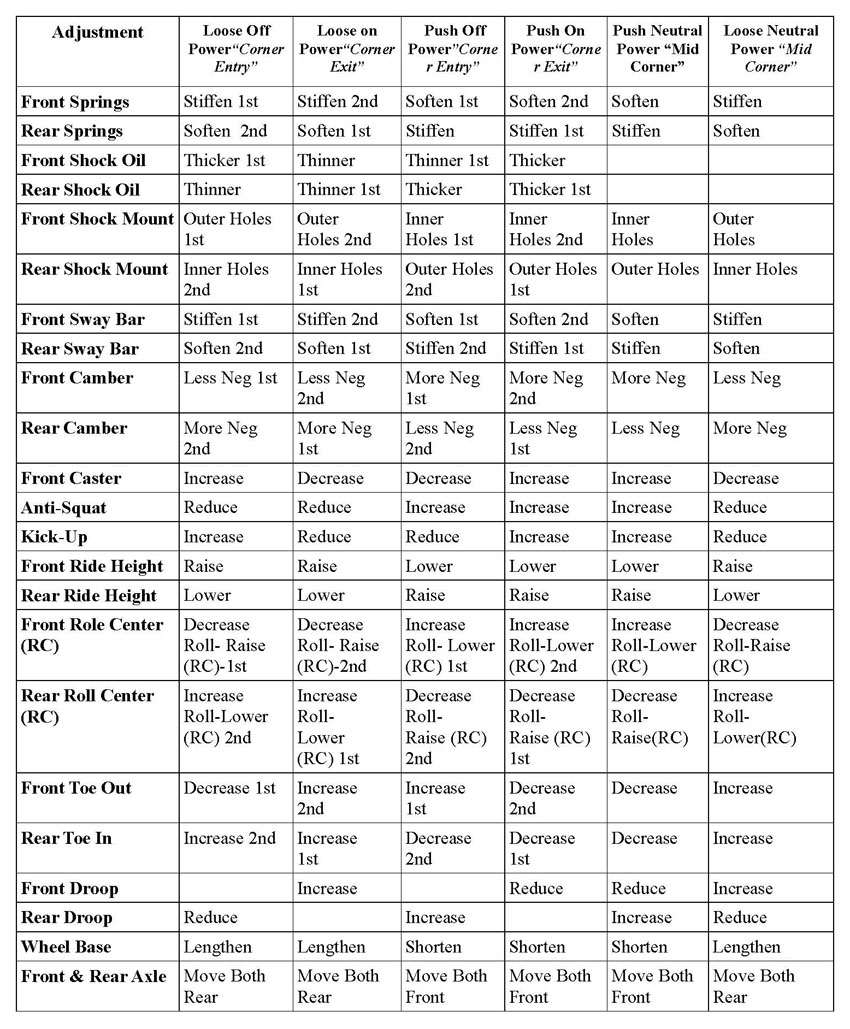
Suspension configuration dramatically affects handling characteristics and must be precisely tuned for current track conditions. Shock oil viscosity determines damping rates—thicker oil (higher weight number) provides firmer damping for high-grip tracks and prevents excessive chassis roll, while thinner oil offers more compliance for bumpy surfaces and low-grip conditions. Standard starting points include 30wt oil for indoor carpet tracks and 40wt for outdoor asphalt surfaces, with adjustments based on your specific track’s characteristics.
Match Shock Piston Size to Oil Weight for Balanced Handling
Shock piston hole size works synergistically with oil weight to determine overall damping characteristics. Larger holes allow more oil flow during compression, creating softer initial damping that firms up progressively as flow rate increases. Smaller holes restrict oil flow more dramatically, producing firmer damping that responds quickly to chassis movement. Matching piston holes to oil weight requires experimentation—larger holes require thicker oil to prevent excessive chassis movement, while smaller holes allow thinner oil without sacrificing control. Record your settings meticulously in a logbook to build a reference library of what works on different surfaces.
Select Spring Rates Based on Track Surface Characteristics
Spring rate selection controls initial ride height and chassis roll stiffness, directly impacting how your vehicle responds to track surface variations. Softer springs improve traction on uneven surfaces by allowing the chassis to conform to track irregularities, but can cause bottoming on jumps or aggressive compressions. Stiffer springs provide more consistent handling on smooth tracks by maintaining stable chassis attitude, though they reduce compliance over bumps and rough sections. The relationship between spring rate and handling is progressive—small changes produce subtle effects while significant adjustments can transform vehicle behavior entirely.
Select and Manage Tires for Peak Performance
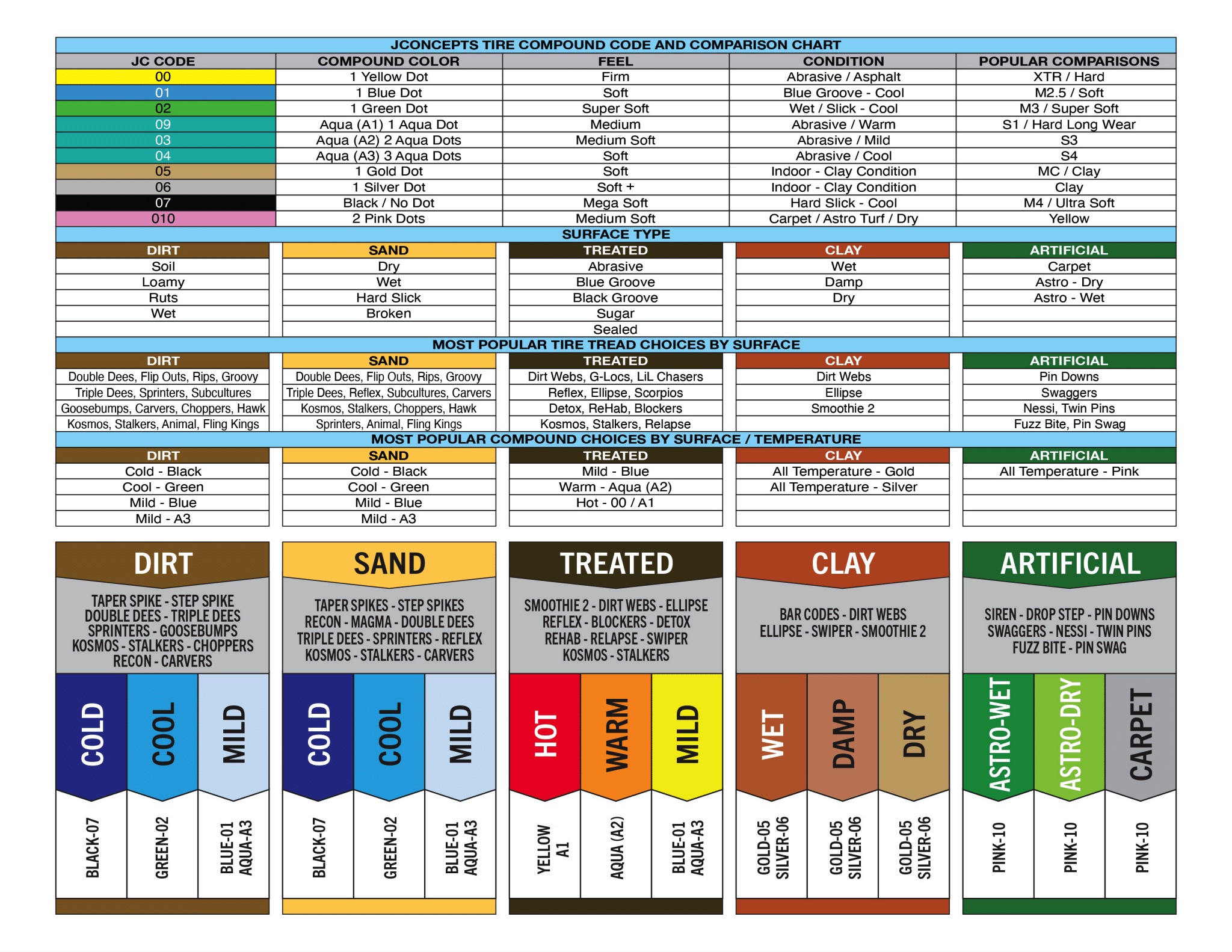
Tire choice provides the most significant performance variable in RC racing, often determining lap times more than any other component. Compound selection ranges from super soft (maximum grip but rapid wear) to hard (durability but reduced traction), with options typically color-coded by manufacturers. Softer compounds like purple or blue provide 10-15% more grip on carpet surfaces but may only last 5-10 minutes of racing before performance degrades noticeably. Medium compounds offer a practical balance of grip and longevity suitable for most racing conditions.
Choose Tire Inserts Based on Track Surface Conditions
Tire inserts affect how the tire carcass responds to load transfers during cornering and braking. Firm inserts provide more consistent handling by resisting deformation under load, but transmit more impact energy to the chassis over bumps and jumps. Softer inserts offer better compliance over rough surfaces and improve tire contact with the track, but can cause inconsistent handling if they deform excessively during aggressive driving. The optimal insert choice depends on track surface—smooth tracks reward firm inserts while rough surfaces benefit from softer options.
Pre-Warm Tires for Maximum Initial Grip
Cold tires produce significantly less grip than warmed tires, particularly in the first few laps of a race when surface temperatures may be below optimal. Several aggressive warm-up laps at reduced intensity bring tires to operating temperature without excessive wear. Directional tread patterns must be mounted with correct rotation direction—if your tires have arrow indicators, ensure arrows point in the direction of forward rotation. Mounting directional tires incorrectly reduces effectiveness and accelerates uneven wear patterns that degrade performance.
Key Takeaways for Immediate RC Racing Improvement
Mastering RC car racing requires developing skills across multiple dimensions simultaneously. Throttle control and braking strategy form the foundation of consistent lap times, while understanding racing line selection transforms good laps into fast laps. Vehicle setup knowledge allows you to adapt your car to track conditions and extract maximum performance from your equipment. The most important RC car racing tip for beginners is to focus on consistency rather than speed—a driver who can repeat identical laps within fractions of a second will always outperform someone who occasionally posts brilliant laps surrounded by inconsistent runs.
Experienced racers should focus on the marginal gains that separate podium finishers from the rest of the field. Small improvements in throttle modulation, brake point consistency, and line selection compound into significant lap time improvements when executed repeatedly. Build your skills systematically—master smooth throttle application before attempting late apex cornering, establish reliable pre-race routines before optimizing qualifying strategy, and develop mental discipline before attempting advanced race craft techniques. Patient skill development creates a foundation for sustained improvement rather than frustrating plateaus. Implement these RC car racing tips consistently, and you’ll see measurable improvement in your race results with each track session.