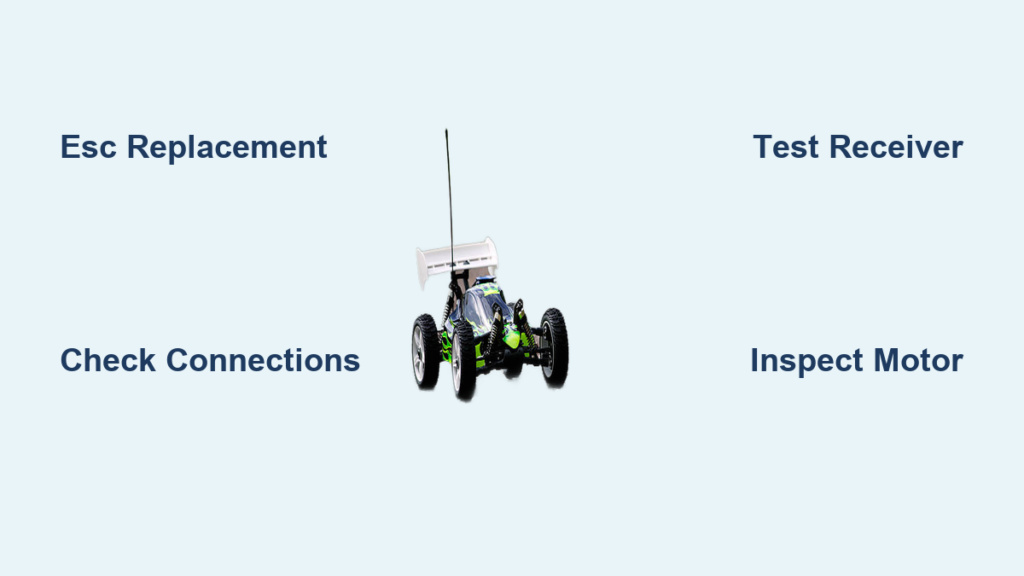
You’ve just unboxed your new RC car, eager to hit the track. The steering works perfectly—wheels turn sharply left and right with every twitch of the transmitter. But when you pull the trigger for throttle? Nothing. No forward movement, no backward crawl, just silent frustration. This common scenario leaves countless RC hobbyists wondering: Is my vehicle broken, or did I accidentally buy a steering-only model? Understanding why your RC car has steering but no throttle—and how to fix it—separates quick solutions from hours of unnecessary troubleshooting.
The reality is that RC vehicles with functional steering but no throttle fall into two distinct categories: purpose-built steering-only models designed specifically for training or specialized applications, and standard RC cars experiencing specific throttle system failures. This guide cuts through the confusion with precise diagnostic steps, repair procedures, and maintenance strategies. You’ll learn how to identify whether you have a specialized tool working exactly as designed or a malfunctioning vehicle needing repair—plus exactly what to do in either scenario.
Why Your RC Car Has Steering But No Throttle
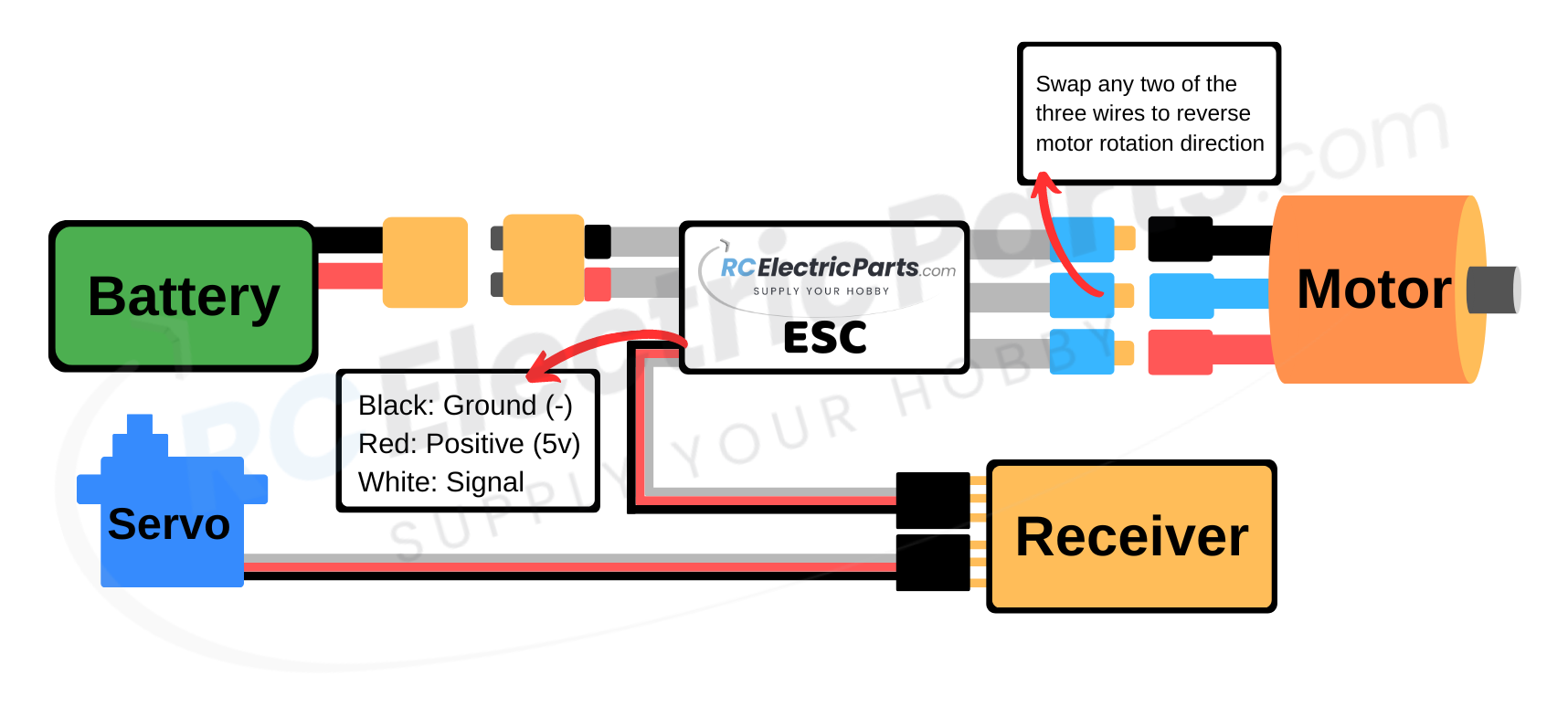
Your RC car’s steering works independently from its throttle system, which explains why one can function while the other fails. Steering relies on the servo, receiver, and linkage system, while throttle depends on the ESC (Electronic Speed Controller), motor, and associated wiring. When steering works but throttle fails, the problem exists specifically within the throttle pathway.
Purpose-built steering-only RC vehicles represent a legitimate product category designed for specific applications like driver training, stunt performance, or industrial uses. These vehicles ship without motor or ESC throttle components entirely—they accept steering input only and rely on external propulsion. If your vehicle steers normally but contains no motor, has no ESC connected to a throttle channel, and came from a supplier advertising steering-only capability, you’ve received a specialized tool rather than a defective product.
Standard RC cars with non-functional throttle typically exhibit specific failure patterns. The steering system operates because it connects to channel 1 of your receiver, while the throttle system uses channel 2. When channel 2 fails but channel 1 works, your vehicle steers but won’t move. This isolation actually simplifies diagnosis—you can focus exclusively on throttle-related components without considering steering electronics.
Recognize These 4 Common Throttle Failure Symptoms

Complete throttle non-responsiveness appears as a vehicle that steers normally but ignores all throttle input. The motor makes no sound or vibration. This symptom points strongly toward ESC failure, receiver throttle channel problems, or disconnected motor leads. Begin diagnosis by verifying your ESC receives power—its status LED should illuminate when powered on. If the ESC LED remains dark, the problem lies in power delivery upstream from the ESC.
Intermittent throttle operation creates frustrating inconsistency where throttle works sporadically, cutting out during use. This typically indicates loose connections, failing batteries, or radio interference. Check all connections between battery, ESC, and receiver, reseating each connection securely. Test with a fully-charged battery to rule out voltage sag under load. If problems persist, rebind your transmitter and receiver to ensure clean communication.
Motor runs but provides no thrust indicates mechanical rather than electrical failure. The motor spins freely under no load but cannot drive the vehicle. This scenario suggests stripped gears, broken drive shafts, or disengaged differentials. Remove the motor and test resistance to drivetrain rotation by manually spinning wheels. Binding, clicking, or abnormal resistance points toward mechanical obstruction requiring disassembly.
Throttle works in one direction only typically results from failed ESC MOSFETs or damaged motor windings. The ESC can handle forward or reverse but not both, indicating asymmetric component failure. This pattern also appears with reversed motor connections, though this usually produces opposite symptoms. Most hobbyists opt for ESC replacement when facing directional throttle failures rather than attempting component-level repairs.
Essential 5-Step Diagnostic Procedure for Throttle Problems
1. Perform visual inspection (2 minutes)
Examine motor wires for cuts, fraying, or burned connections. Check ESC connections to battery, receiver, and motor for looseness or corrosion. Look for signs of overheating including discolored components or burned odors. This quick check identifies most throttle failures without requiring further testing.
2. Test component function in isolation (5 minutes)
Swap your steering servo into the throttle channel—if steering works but the original throttle channel remains non-functional, the problem lies in the receiver or ESC. Connect a known-working ESC to the throttle channel while leaving the original motor connected—if the motor runs, the original ESC failed.
3. Verify radio system operation (3 minutes)
Power on the transmitter first, then the vehicle, and observe receiver LED behavior. A solid LED indicates normal operation; flashing LEDs suggest binding problems. Check throttle channel output using a servo tester—the servo should move through its full range when operating the throttle trigger.
4. Check power delivery (4 minutes)
Use a multimeter to verify voltage at the ESC input terminals when the throttle trigger is pulled. You should see consistent voltage matching your battery’s output. No voltage indicates a problem with battery connections or the ESC’s power input circuitry.
5. Inspect mechanical drivetrain (6 minutes)
Remove wheels and inspect gears, drive shafts, and differentials for damage. Manually rotate the motor while observing the drivetrain—any binding, skipping, or unusual resistance indicates mechanical failure requiring disassembly and repair.
How to Fix the Most Common Throttle Failures
ESC replacement (30-minute repair, moderate difficulty)
Select a replacement ESC rated appropriately for your motor’s power requirements. Installation involves connecting battery leads to the ESC’s input terminals, motor leads to output terminals, and the ESC’s signal wire to the receiver’s throttle channel. Critical tip: Ensure correct polarity on battery connections to prevent ESC damage—reverse polarity instantly destroys most ESCs.
Receiver channel repair (20-minute fix, easy)
If only the throttle channel has failed while other channels work, you can use a servo jumper to map steering channel output to both steering and throttle channels using Y-cables. This approach works for basic vehicles but sacrifices steering precision for vehicles requiring simultaneous steering and throttle input.
Connection repair (15-minute fix, easy)
Fix loose or corroded wiring by stripping wire ends cleanly and soldering connections for permanent repairs. Apply heat shrink tubing over solder joints for insulation and strain relief. Route wiring away from moving components and secure with zip ties to prevent damage during operation.
Motor replacement (25-minute repair, moderate difficulty)
When replacing motors, verify that the new unit’s specifications match ESC capabilities—mismatched motor-ESC combinations cause reliability problems. Brushless motors typically outlast brushed motors but can fail catastrophically if run without proper cooling. Ensure proper motor mounting and gear alignment to prevent premature wear.
Prevent Future Throttle Failures With These Maintenance Tips
After every use session:
– Inspect all steering and throttle linkages for wear or damage
– Check fastener tightness (vibration loosens critical hardware)
– Clean debris from wheel hubs and suspension pivots
– Verify battery connector integrity and contact cleanliness
Monthly maintenance:
– Lubricate suspension pivot points with lightweight bearing oil
– Check servo gears for wear and binding
– Test battery capacity to identify degradation
– Inspect motor brushes (for brushed motors) or bearings (for brushless)
Storage best practices:
Store your RC car in a controlled environment away from extreme temperatures and humidity. Lithium-polymer batteries should be stored at approximately 3.8V per cell (roughly 50% charge) in fireproof containers. Periodically inspect electronic components for corrosion or damage, especially if stored in humid environments.
When your RC car steers perfectly but won’t move, you now have the knowledge to diagnose and resolve the issue efficiently. Whether you’re working with a purpose-built steering-only platform or troubleshooting a malfunctioning standard RC car, understanding the specific failure patterns and repair procedures saves time, money, and frustration. Remember that most throttle failures stem from simple connection issues or component failures that you can identify and fix with systematic testing. By implementing these maintenance practices, you’ll prevent many common throttle problems before they occur, keeping your RC car ready for action whenever you are. The next time you face steering but no throttle, you’ll approach the problem with confidence—knowing exactly what steps to take to get your vehicle back on track.